8 Best Demostack Alternatives for B2B SaaS Teams in 2026


Demostack's standard tier starts at $55,000/year, and that's before per-user fees and the SE time your team burns rebuilding clones every time your product ships an update. When you factor in that 79% of Solutions Engineers spend over an hour per week on demo maintenance, the real annual cost of running Demostack is closer to $70,000–$100,000. No wonder renewal season sends sales engineering leaders straight to Google.
Teams typically switch when one of three things happens: the renewal invoice lands and the CFO starts asking hard questions, a product update breaks every demo environment overnight, or a new use case, outbound video, website tours, ABM personalisation, makes full-stack cloning feel like obvious overkill.
The best Demostack alternatives in 2026 are PuppyDog.io, Storylane, Walnut, Supademo, Reprise, Navattic, Consensus, and Arcade. Some of them are free to start. All of them will have you up and running faster than Demostack's onboarding call.
Demostack vs. Alternatives: Feature Comparison Table
Before diving into individual tools, here's a side-by-side snapshot of how Demostack compares to its top alternatives. Pay close attention to the "Hidden Labour Cost" row. It's the number that rarely shows up in a renewal conversation, but absolutely should.
The contrast is fairly stark. Demostack's architecture was genuinely groundbreaking five or six years ago. In 2026, maintaining a cloned environment on top of a fast-shipping product is closer to punishment than strategy.
Why Teams Are Looking for Demostack Alternatives in 2026
Let's be honest, nobody wakes up excited to rip out their demo infrastructure. Switching tools involves internal sign-off, migration headaches, and time your team doesn't have. So when teams are searching for Demostack alternatives in volume, there's almost always a specific breaking point behind it. Here are the four most common ones.
The Price Is Hard to Justify at Renewal
At $55,000–$150,000/year, Demostack sits firmly in enterprise procurement territory. There's no free trial, no self-serve option, and no way to test the product before committing to a six-figure contract. Even after negotiation, the average deal closes around $32,000/year, and that's just the platform fee. Layer on the hidden SE labour cost of $16,000–$22,000/year in maintenance time, and you're looking at a substantial annual commitment for a demo tool. CFOs tend to have follow-up questions.
The Maintenance Treadmill Becomes Unsustainable
This is the one that actually breaks teams. According to G2 data, 79% of Solutions Engineers spend more than an hour per week maintaining Demostack environments, which amounts to roughly 21 full working days per SE per year. One Solutions Architect described the situation bluntly as "demo hygiene." Every time engineering ships a UI update, the clone breaks and must be rebuilt from scratch. It's not a bug in the traditional sense. It's a structural limitation of the cloning approach, and there's no workaround.
Setup Takes Far Too Long for Modern GTM Velocity
Demostack's onboarding requires active involvement from their technical team to get off the ground. We're talking 4–8 weeks from contract signed to first usable demo. For Product Marketing Managers launching a campaign in two weeks, or SDR teams that need demos live yesterday, that timeline is a dealbreaker before the conversation even starts. Most modern alternatives are same-day or, in some cases, same-hour.
Most Teams Simply Don't Need Full-Stack Cloning
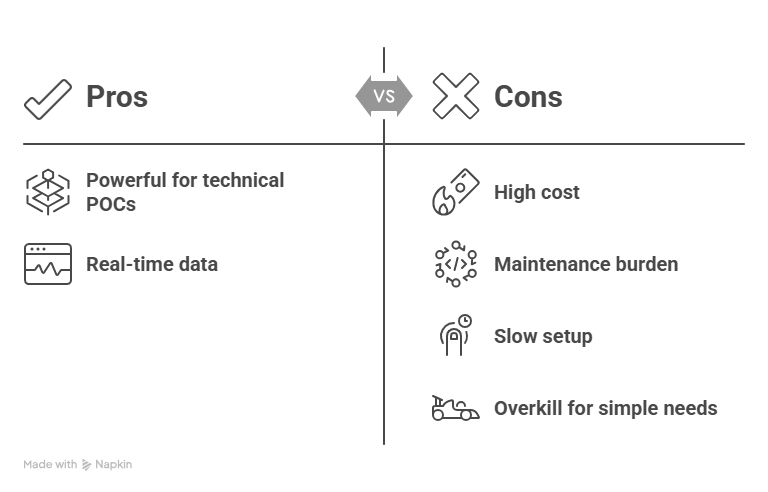
Here's the uncomfortable truth: full-stack environment cloning is genuinely powerful for a specific slice of use cases. If your SEs are running deeply technical enterprise POCs with live data, Demostack makes real sense. But if you need personalised video demos for outbound email sequences, embeddable tours for your product page, or leave-behind assets after a discovery call, you're paying for a Formula 1 car when you actually needed a well-tuned sedan.
The 8 Best Demostack Alternatives in 2026
1. PuppyDog.io: Best for AI-Personalised Video Demos at Scale
If there's one category Demostack doesn't touch at all, it's personalised video outreach. PuppyDog.io was built exactly for that gap. While every other tool on this list tries to replicate or capture a product experience, PuppyDog.io takes a different approach: it generates a fully personalised demo video per prospect using AI, adapting the script, voiceover, and narrative based on job title, industry, and specific pain points automatically.
For SDR teams running high-volume outbound or ABM campaigns, this changes the math entirely. Instead of sending 200 prospects the same generic demo link, your reps can send a video that speaks directly to each person's context. And because PuppyDog.io works from screen recordings rather than cloned environments, there's nothing to rebuild when your product ships an update. No maintenance, no clone breakage, no "demo hygiene."
The pricing is refreshingly accessible compared to anything else in the enterprise demo category, and you can verify what works before committing.
- Best for: SDR teams, outbound sales, and ABM campaigns that need 1:1 video personalisation at scale
- Starting price: Free plan at $0/mo; Pro at $42/mo per user; Enterprise custom
- Setup time: Minutes
- Free trial: Yes
- Standout feature: The only tool in this category that generates a completely different personalised video per prospect automatically
Before you build your first campaign, the guide on product demo video best practices is worth reading. It'll help you get more out of the videos PuppyDog.io creates.
2. Storylane: Best for Fast, Multi-Format Demo Creation
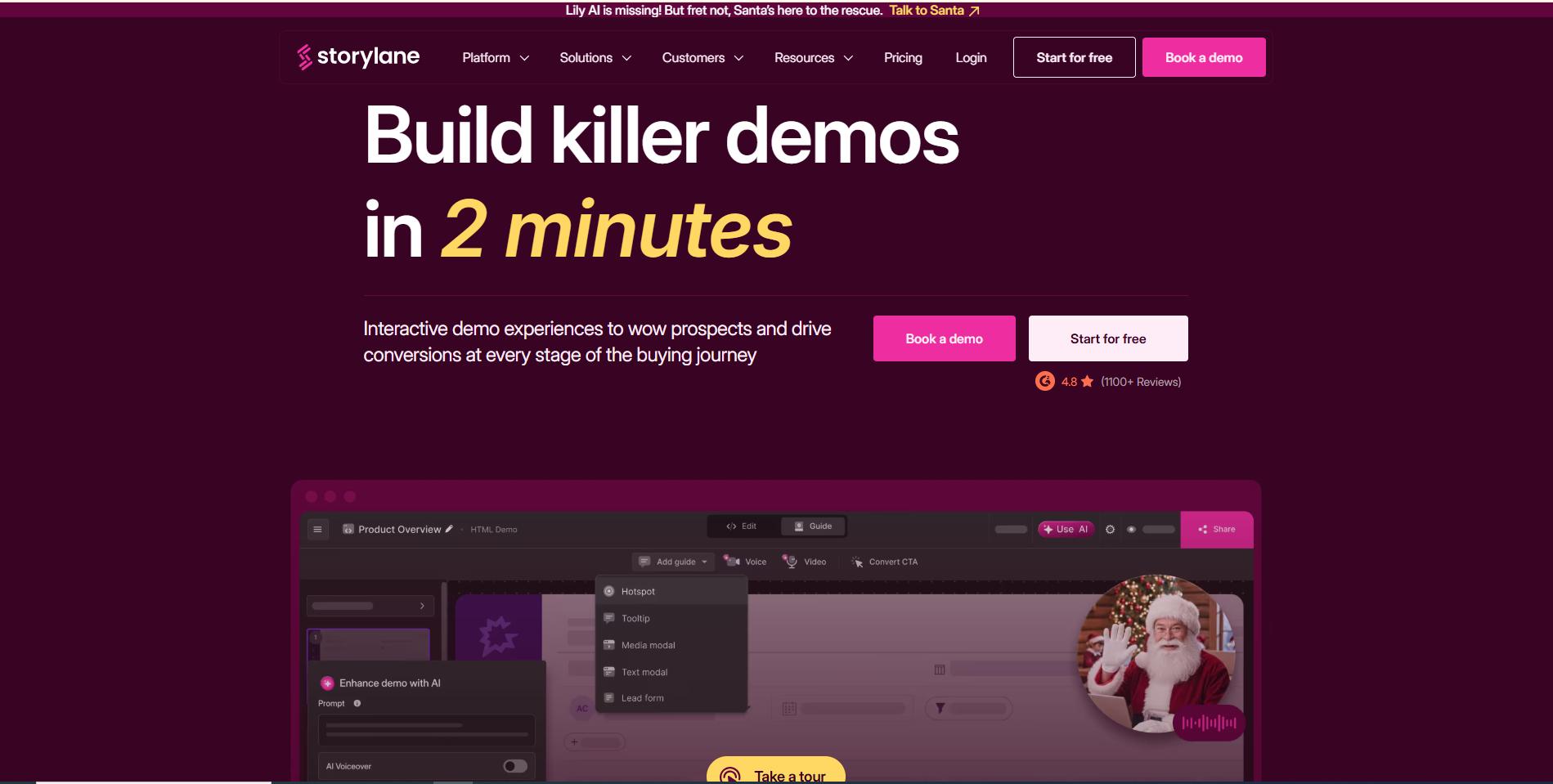
Storylane is the most direct Demostack replacement for teams that need something working this week, not this quarter. It supports screenshots, HTML, and video demos in a single editor, which means your PMMs and SEs can collaborate in the same platform without stepping on each other's toes. The "Buyer Hub" feature, which packages demos alongside PDFs, case studies, and other collateral into one clean shareable link, is genuinely useful for sales teams managing complex, multi-stakeholder deals.
"Lily AI" handles annotations, voiceovers, and element editing through natural language prompts, which meaningfully cuts demo build time for teams that aren't starting from a technical background. Same-day setup is realistic for most teams.
The main caveat: advanced HTML and AI features are gated behind the $500/mo+ tiers. The free and Starter plans are great for evaluation, but budget for the Growth tier if you're planning serious scale.
- Best for: GTM teams needing a flexible, all-format demo platform for both website tours and sales leave-behinds
- Starting price: $40/user/month (free plan with 1 published demo)
- Setup time: Same day
- Free plan: Yes (1 published demo)
- Standout feature: Multi-format support, screenshot, HTML, and video, all in one editor
3. Walnut: Best for Sales-Led Deals with Deep CRM Integration
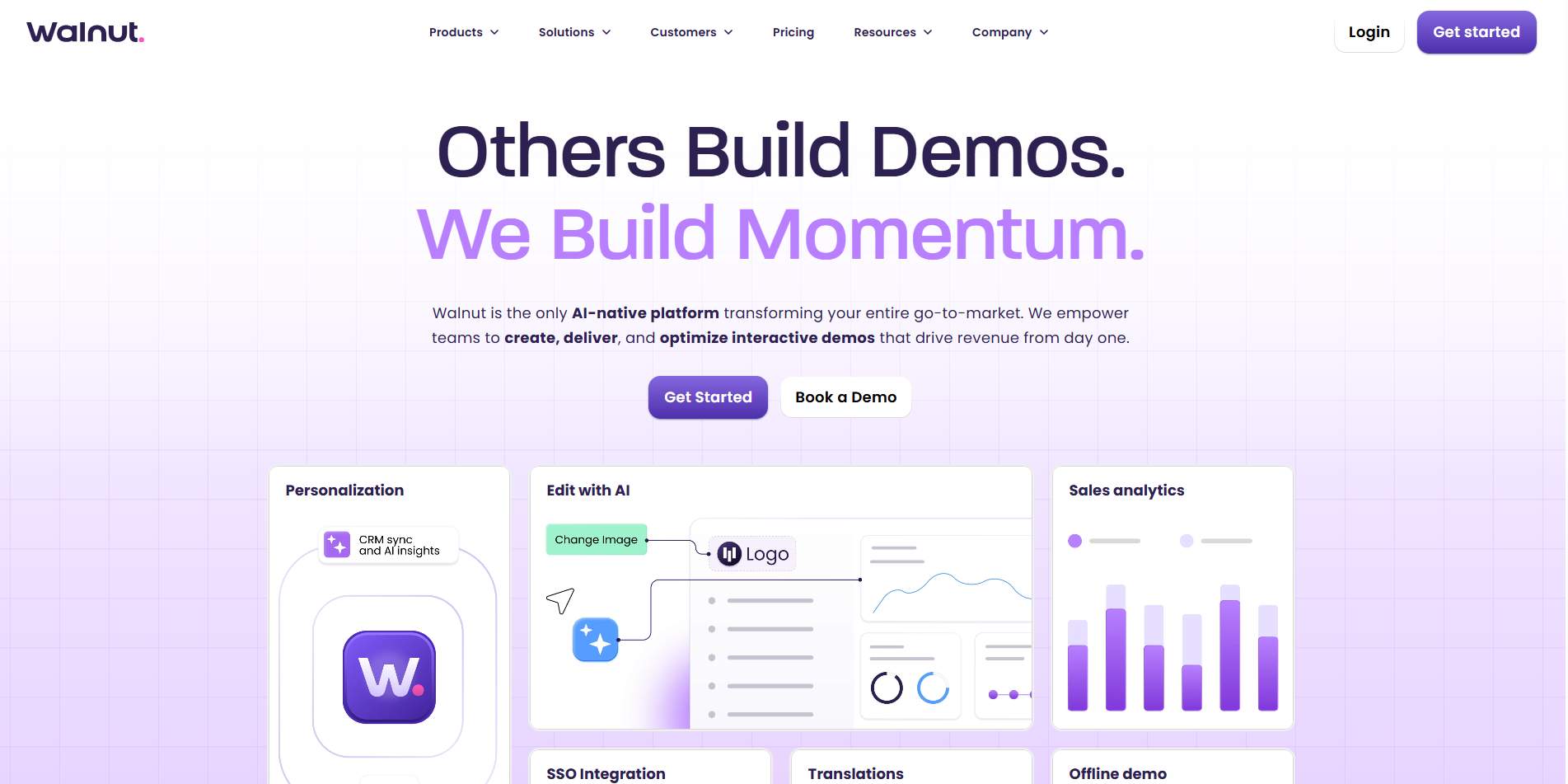
Walnut has quietly repositioned itself as a "Deal Intelligence" platform rather than just a demo tool, which says a lot about where the category is heading. The deep Salesforce and HubSpot integrations mean demo engagement data flows directly into your CRM, so AEs actually know which features a prospect spent time on before picking up the phone. "EditsAI" handles auto-updates to existing demos, reducing (though not eliminating) the maintenance burden that plagues cloning-based tools.
Fair warning: Walnut has a history of performance issues and requires more implementation effort than most alternatives on this list. It's not a same-day solution, and the pricing reflects its enterprise positioning.
- Best for: Mid-market to enterprise sales teams that need per-prospect personalisation tightly integrated with CRM data
- Starting price: $750/month (billed annually)
- Setup time: Hours to days, depending on customisation depth
- Free plan: None
- Standout feature: Native Salesforce/HubSpot integration with deal-level demo engagement analytics
4. Supademo: Best for Speed, Affordability, and Getting Started Fast
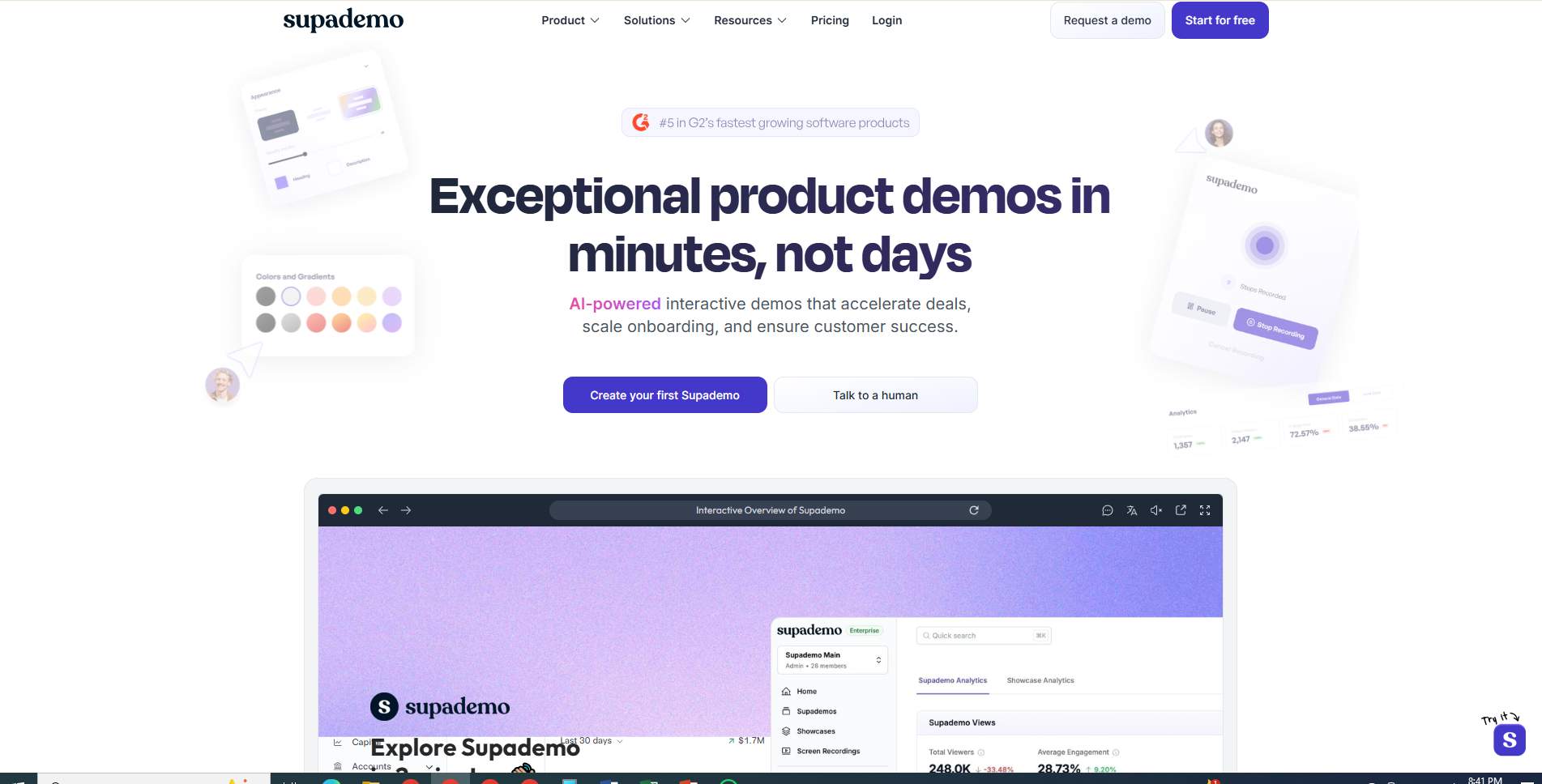
Supademo is the fastest-growing alternative for teams that just need demos done. without a procurement process, without technical implementation resources, and without a budget that requires CFO approval. The free tier (5 demos) is generous enough for most early-stage teams to run a genuine evaluation. AI-generated hotspot text, voiceovers, and automatic translation into 15+ languages are included in paid plans.
Desktop and mobile recording support is a genuine differentiator worth calling out. The majority of HTML-capture tools in this category are web-only, which creates real gaps for teams demoing mobile products.
- Best for: Startups, CS teams for customer onboarding, and PMMs who need fast launch collateral without enterprise overhead
- Starting price: $38/creator/month (free tier with 5 demos available)
- Setup time: Under 5 minutes
- Free plan: Yes (5 demos)
- Standout feature: Most affordable entry point to full demo automation, with native mobile recording support
5. Reprise: Best for Live Demo Overlays During Enterprise Sales Calls
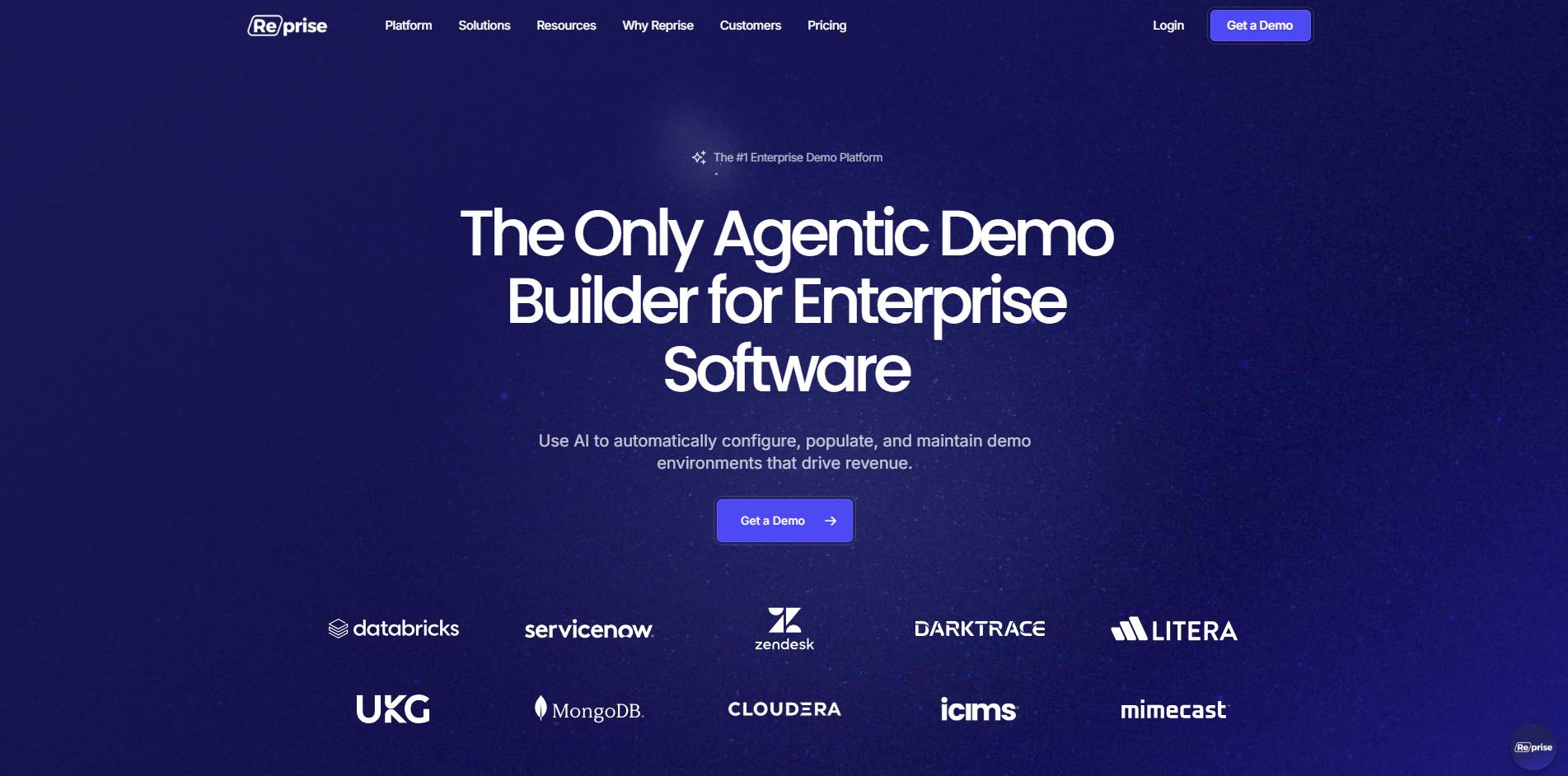
Reprise is the closest architectural parallel to Demostack in this list. It uses a cloning approach ("Replicate") but also offers live overlay functionality ("Reveal") that lets SEs manipulate the real product UI during a call without touching backend data. If your Solutions Engineers are running high-stakes enterprise demos where "it has to look exactly like the real product," Reprise is worth serious evaluation.
That said, the setup typically takes around three months, the learning curve is steep, and reviewers consistently flag the absence of basic features like auto-save. This is a tool for large, well-resourced presales organisations, not a quick Demostack swap.
- Best for: Solutions Engineers in large enterprise organisations with strict security, RBAC, and governance requirements
- Starting price: ~$12,000–$30,000/year (custom pricing)
- Setup time: ~3 months
- Free plan: None
- Standout feature: "Reveal" mode, live demo overlays on the actual product without backend exposure
If you want to understand the underlying technology behind live capture tools like this, the AI screen recording tools guide clearly covers the landscape.
6. Navattic: Best for Website-Embedded Interactive Product Tours
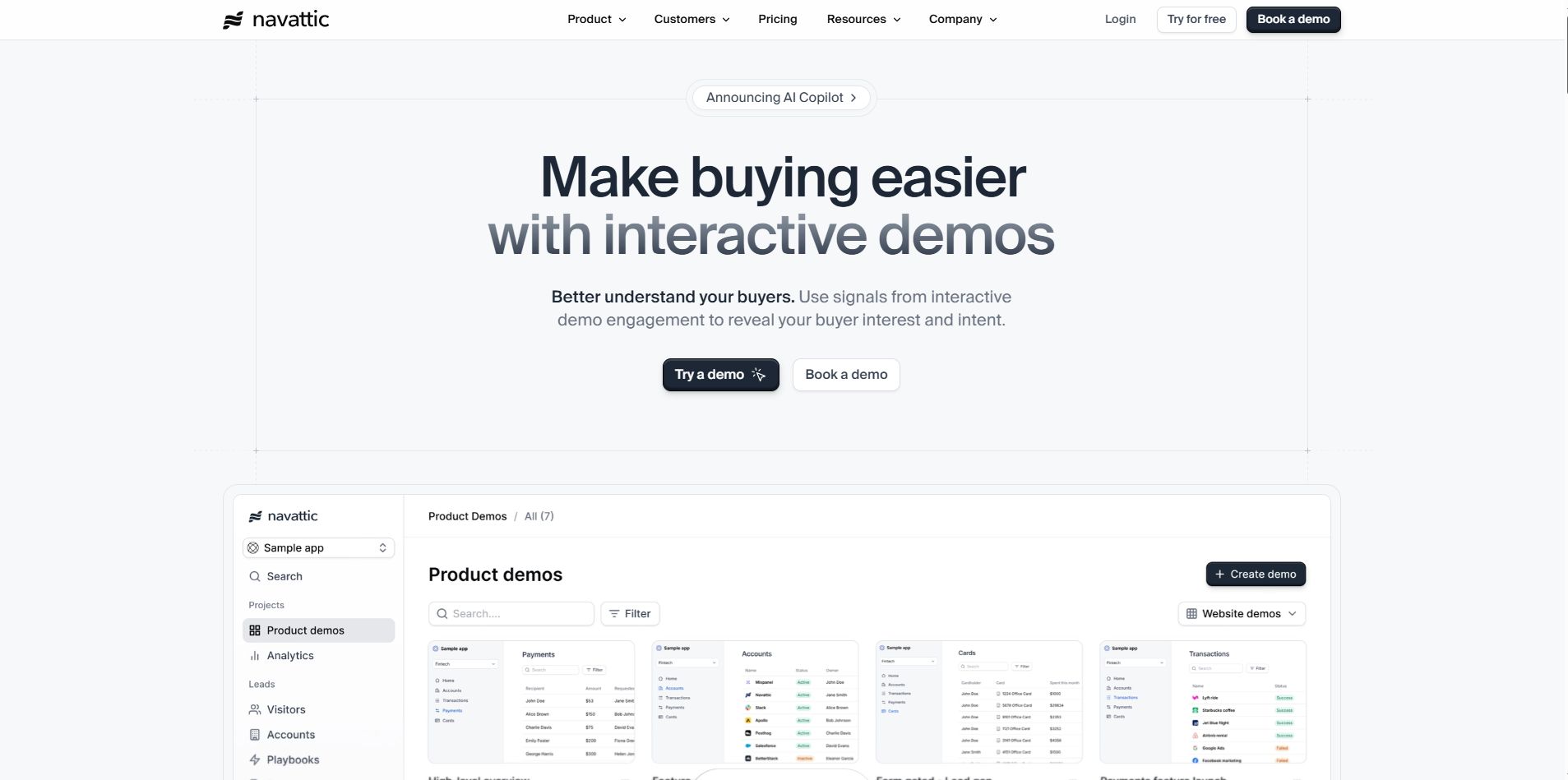
Navattic is the gold standard for pixel-perfect HTML demos embedded directly on marketing pages. If your PMM team wants interactive product experiences as website CTAs, the kind that genuinely let visitors click through a real-feeling product, Navattic consistently delivers the highest fidelity in this format. Account deanonymisation (identifying which companies visited your demo) and a built-in "Launchpad" repository for sales reps make this a strong choice for PLG and inbound-led teams.
The cost is on the higher side for teams that only need basic screenshot tours. Make sure the use case, specifically, high-traffic website demos where conversion lift justifies the spend, matches the investment before signing.
- Best for: Marketing teams building interactive CTAs and self-serve website tours for PLG and inbound conversion motions
- Starting price: $500/month
- Setup time: 1–2 weeks for production-quality demos
- Free plan: None
- Standout feature: Account-level deanonymisation and the highest HTML capture fidelity for web applications
7. Consensus: Best for Complex, Multi-Stakeholder Enterprise Buying Cycles
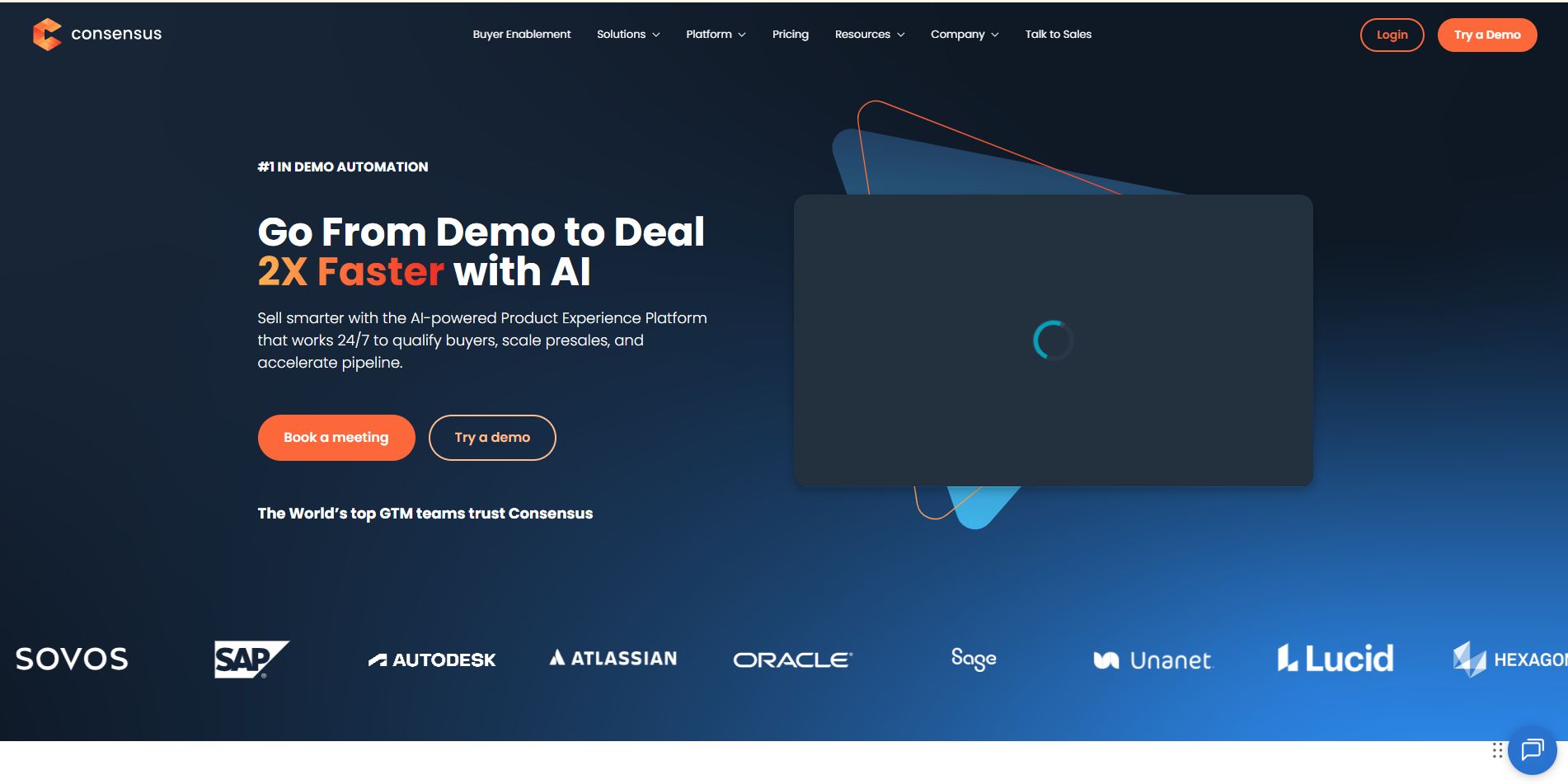
Consensus is building around one of the most persistently painful problems in enterprise sales: deals with 6+ stakeholders, where each person needs to see something slightly different before they'll get on a call. The persona-based branching demo logic means different stakeholders automatically receive the content most relevant to their role and concerns. The claim of reducing sales cycles by up to 80% is ambitious, but the underlying logic, to qualify and educate buyers before they ever talk to a human, is directionally sound and increasingly validated.
The trade-offs are real and worth knowing upfront: zero pricing transparency, no free trial, and a content creation process that G2 reviewers consistently describe as tedious to manage at scale.
- Best for: Enterprise sales organisations navigating complex, multi-stakeholder buying committees with repetitive discovery calls
- Starting price: ~$600/month (enterprise deals typically $25K–$100K+/year)
- Setup time: Weeks, with technical implementation required for full value
- Free plan: None
- Standout feature: Persona-based branching demos that automatically qualify and educate buying committee members at scale
8. Arcade: Best for PMMs Who Need Beautiful, Shareable Demos Fast
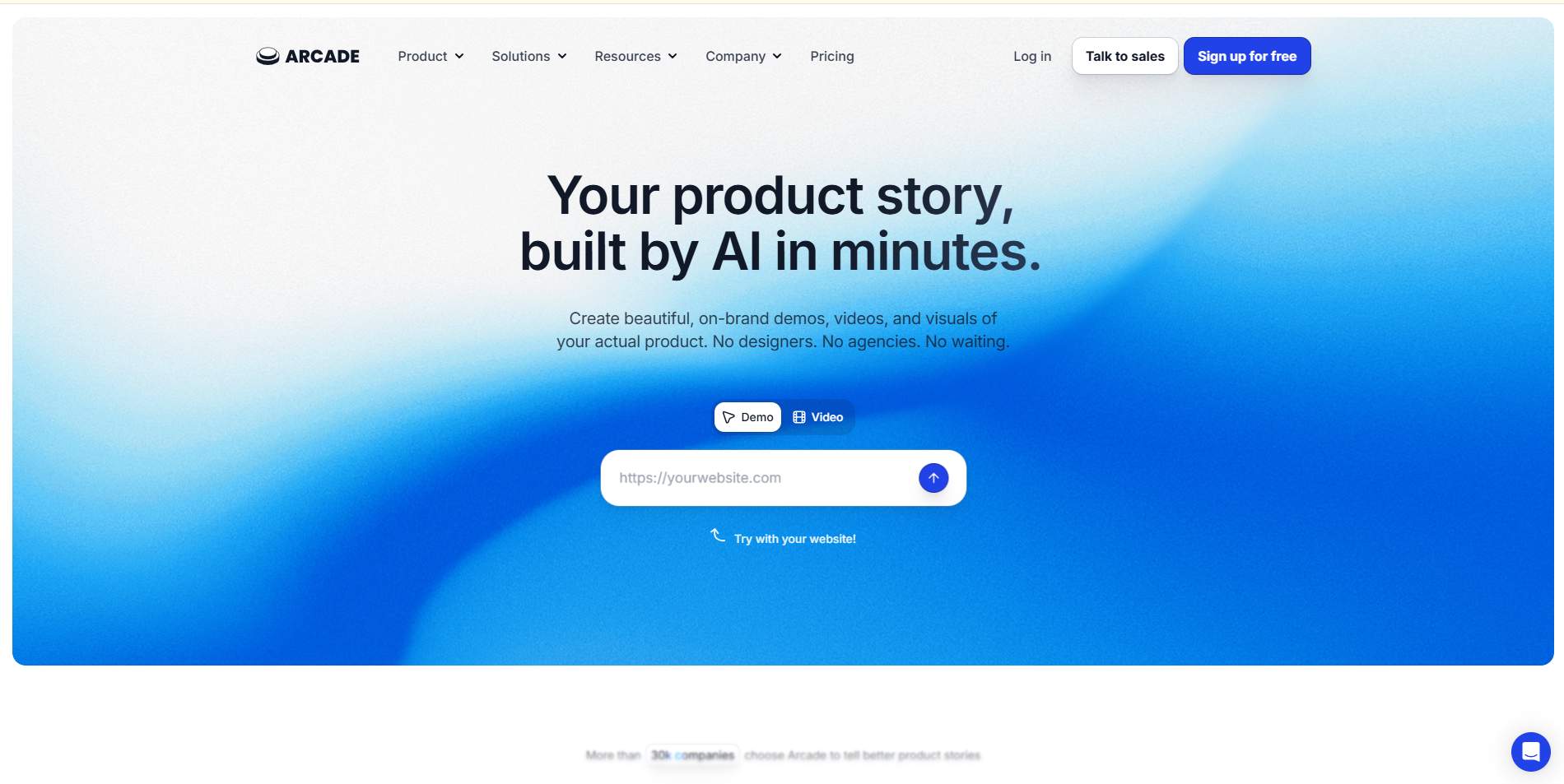
Arcade is the most design-forward tool in this entire category. It takes product workflows and turns them into polished, shareable "Arcades" that load fast, look sharp on social, and integrate cleanly into help documentation. The median publish time of six minutes is genuinely impressive and speaks to how much thought went into reducing friction for non-technical creators. For PMMs who need compelling product storytelling content without pulling in an SE or a video editor, Arcade is typically the easiest internal sell.
The limitations are worth flagging: deep sales-grade attribution is limited compared to tools like Walnut, and custom branding sits behind the Growth tier. Think of it as a marketing tool first, not a sales engineering tool. For teams wanting to explore the broader category, the Arcade alternatives guide covers the full landscape.
- Best for: PMMs and Growth teams focused on visual storytelling, social proof, help documentation, and fast demo content production
- Starting price: $32/user/month (free plan with 3 demos)
- Setup time: ~6 minutes to first published demo
- Free plan: Yes (3 demos)
- Standout feature: Design-first demo creation that loads instantly and performs beautifully on social media and help docs
How to Choose the Right Demostack Alternative for Your Team
Not every team has the same problem, which means there's no single right answer here. The tool that's perfect for a 3-person SDR team is almost certainly wrong for a 50-person enterprise presales organisation. A few useful heuristics to cut through the noise:
- Your renewal is too expensive and setup took months → Storylane (same-day, multi-format) or Supademo (free tier to start, no sales call required)
- You need personalised video for outbound email and LinkedIn sequences → PuppyDog.io (the only tool generating a unique video per prospect automatically)
- Your SEs need live overlay capability during high-stakes enterprise calls → Reprise (not a fast switch, but the right architectural fit)
- You need a full-fidelity sandbox for complex technical POCs → Walnut or Consensus
- Your PMM team needs website-embedded interactive tours → Navattic (highest fidelity) or Arcade (fastest to publish)
- You're building the business case for your CFO → The B2B video marketing strategy guide has the pipeline impact data worth having in that conversation
One thing worth saying plainly: don't overthink the evaluation. The biggest mistake teams make is treating a demo tool selection like an ERP procurement. Most of the tools above have free trials or free tiers. Run a real test with your actual content, your actual prospects, and your actual workflow, then decide. If you're building a demo video for the first time, the guide on how to create a software demo video is worth bookmarking before you start.
Frequently Asked Questions About Demostack Alternatives
What is the best Demostack alternative?
The best Demostack alternative depends on your primary use case. Storylane is the strongest all-rounder for teams needing fast setup and multi-format demos. PuppyDog.io is the best choice for teams that need AI-personalised video demos for outbound sales and ABM. G2 rates Walnut as the most similar product to Demostack in terms of sales workflow depth. Supademo is the most affordable entry point, starting at $38/creator/month with a usable free tier.
How much does Demostack cost compared to alternatives?
Demostack pricing starts at $55,000/year for the Standard tier, with no free trial and no self-serve signup. Including hidden SE maintenance labour, the true annual cost typically lands between $70,000–$100,000+. By contrast, Storylane starts at $40/user/month with a free plan. Supademo starts at $38/creator/month with a free tier. PuppyDog.io starts at $0/month on a genuinely free plan, with Pro at $42/month per user. Walnut, Reprise, Navattic, and Consensus all use custom enterprise pricing.
What do Demostack users most commonly complain about?
Based on G2 and Capterra reviews, the most cited limitations are:
(1) clones must be completely rebuilt from scratch when the product UI changes,
(2) initial setup requires Demostack's technical team and takes 4–8 weeks,
(3) There is no free trial or self-serve plan available.
(4) limited editing flexibility once a demo environment has been built, and
(5) RBAC and analytics gaps that frustrate larger enterprise teams managing multiple user roles.
Is there a Demostack alternative with AI personalisation?
Yes. PuppyDog.io is the only demo tool in this category that generates fully personalised video demos per prospect using AI, adapting the script, voiceover, and content automatically based on the prospect's job title, industry, and pain points. Storylane offers token-based text personalisation within existing demos. Consensus uses persona-based branching paths. None of the other alternatives on this list generates a completely different video per prospect without manual intervention.
What is a Demostack alternative that doesn't break after product updates?
PuppyDog.io regenerates demos from screen recordings, meaning UI changes don't require rebuilding from scratch. The AI simply works from the updated recording. Storylane's HTML capture reflects product changes when recaptured without breaking existing demo links or embed URLs. Arcade and Consensus also reduce rebuild frequency through their respective capture approaches. Demostack's full-stack cloning remains the most fragile architecture in the category. Any meaningful UI change requires recreating the entire environment.
Can I get a Demostack alternative for free?
Yes. Storylane offers a free plan with 1 published demo. Supademo provides a free tier with 5 demos and basic AI features. Arcade allows 3 published demos free, including AI-assisted creation. PuppyDog.io offers an ongoing free plan (1,000 credits) to get started without a credit card. Demostack, by comparison, has no free plan and requires a sales consultation before you can access the product at all.
Conclusion
If your team is spending $55,000/year, or significantly more, once you factor in the SE time quietly disappearing into demo maintenance, on an environment that breaks every time engineering ships a sprint, it's genuinely worth 20 minutes exploring what's available in 2026. The tools in this list aren't just cheaper alternatives. Several of them are meaningfully better for the specific jobs that modern GTM teams actually need done: outbound personalisation at scale, inbound website conversion, multi-stakeholder enterprise buying, and fast content production without SE involvement.
PuppyDog.io is the right choice for teams who want AI-personalised demo videos without the enterprise procurement process, the cloning infrastructure, or the maintenance treadmill. You go from screen recording to personalised prospect video in minutes, not weeks.
Start your free trial: create your first AI-personalised demo video in minutes, no cloning required.

Sarah Thompson is a storyteller at heart and Business Developer at PuppyDog.io. She’s passionate about creating meaningful content that connects people with ideas, especially where technology and creativity meet.