9 Best Storylane Alternatives for B2B SaaS Teams in 2026


Storylane is one of the most popular demo tools in B2B SaaS, but it's not the right fit for every team.
For teams building quick click-through tours for a marketing page, it does the job. But three specific scenarios push teams to start looking elsewhere: when they need actual video output for outbound or social, when brand customization limits start clashing with premium design standards, and when the pricing jumps from $40 to $500 a month, and no one in the room can quite justify it.
The best Storylane alternatives in 2026 are: PuppyDog.io, Arcade, Supademo, Navattic, Reprise, Walnut, HowdyGo, Demostack, and Consensus. Each solves a different piece of the demo problem, from AI-personalized video to full enterprise sandbox environments. Here's a quick-reference summary before we go deeper.
Why Teams Look for Storylane Alternatives
Storylane holds a strong 4.8/5 on G2. Nobody's disputing that. But with 1,300+ reviews comes a clear pattern of friction that becomes more pronounced as teams grow. These aren't dealbreakers for everyone, but if any of these sound familiar, you're probably already mid-search.
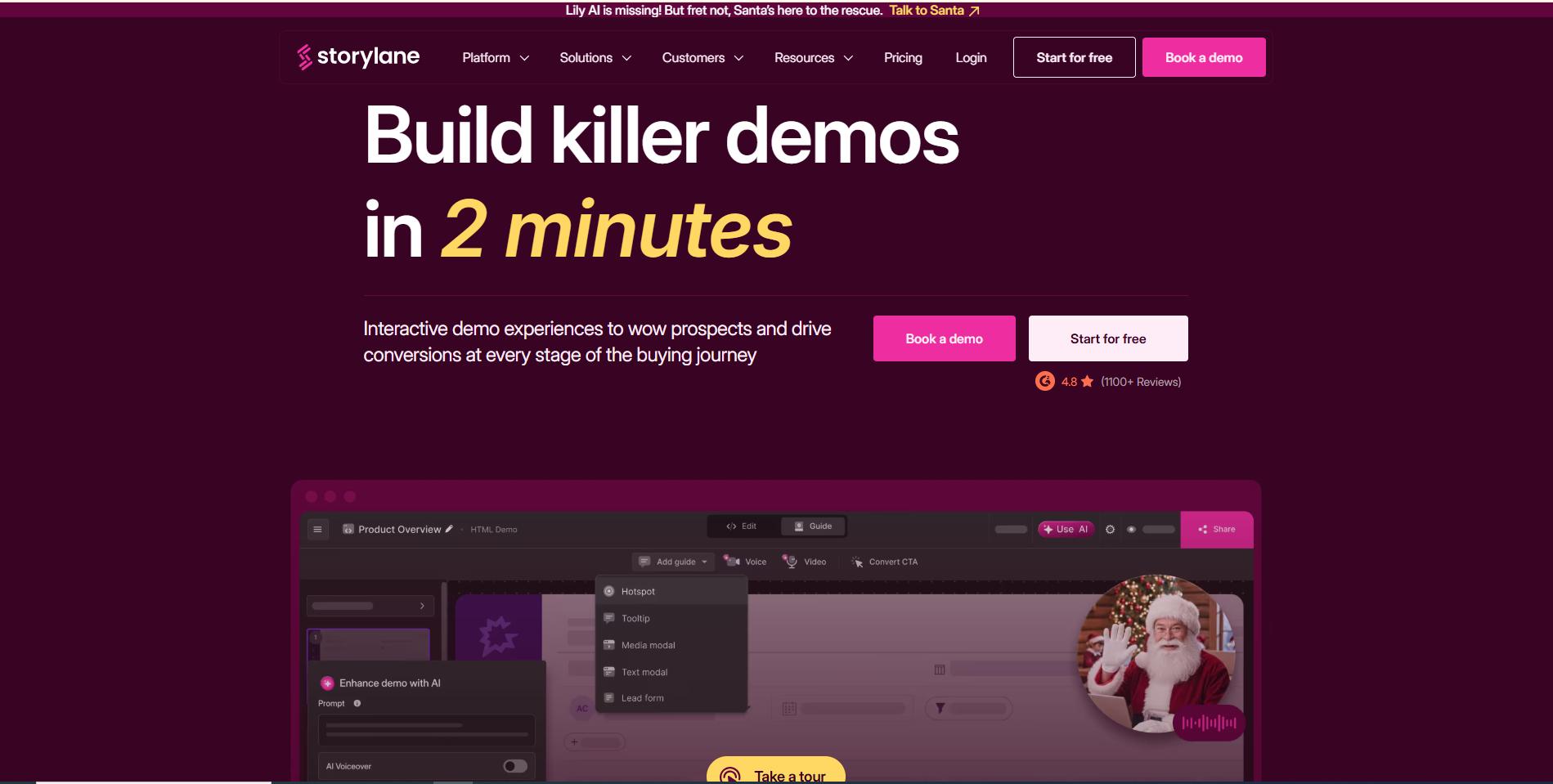
1. Customization Hits a Ceiling
Over 80 G2 reviews specifically call out Storylane's limited design flexibility. Teams that invest in premium brand experiences, custom loaders, bespoke modals, and branded tooltip styles consistently run into a wall. The manual styling approach also makes maintaining consistency across a growing demo library a slow, tedious process. For a premium SaaS brand, "close enough" isn't really good enough.
2. No Real Video or Multimedia Output
Storylane is, at its core, a click-through tour tool. If your SDRs want to drop a personalized demo video into a cold email, or your PMM needs something built for social feeds, Storylane doesn't deliver that natively. This isn't a settings issue, it's a structural gap. And for outbound-heavy teams, it's a dealbreaker.
3. Mobile Demo Support Is Largely Missing
This one stings more than people expect. Storylane's HTML-capture demos frequently break on mobile, touch interactions fail to register, layouts compress awkwardly, and the experience falls apart before the prospect even gets to the good part. Given that a meaningful portion of B2B buyers now review content on their phones (yes, really), a broken mobile demo is a quietly expensive problem.
4. Analytics Depth Gets Gated Quickly
Step-level drop-off data, account-level intent scoring, and CRM sync are locked behind Storylane's higher tiers. Teams on the Starter plan at $40/month are essentially flying blind. And the jump to Growth at $500/month is steep enough that it triggers a full vendor re-evaluation. By the time you're paying $1,200/month for Salesforce integration, you're spending enterprise money on a tool that was originally chosen for its affordability.
The 9 Best Storylane Alternatives in 2026
1. PuppyDog.io: Best for AI-Personalized Video Demos at Scale
PuppyDog.io takes a fundamentally different approach to the demo problem. Instead of building a click-through tour, it uses AI agents to research your prospect and automatically generate a personalized product video, narrated, localized, and specifically tailored to that buyer's industry and pain points. No blank canvas, no manual recording, no "we'll get to it next sprint."
For SDRs and AEs who need demos at volume without sacrificing relevance, this is a meaningful shift. Rather than sending every prospect the same generic walkthrough and hoping it lands, PuppyDog.io builds each video around who's receiving it. If you want to sharpen your thinking before diving in, this guide on product demo video best practices is worth reading first.
Key Features:
- AI-generated scripts and multi-language voiceovers built per prospect, not per template
- Layered video editing, update one UI element without re-recording the whole thing
- Automated demo playlists that bundle short, targeted videos into a structured sequence
Pricing: Free plan available at $0/month (1,000 credits). Pro runs $42/month per user. Enterprise pricing is custom.
Pros:
- Content creation is reported to be up to 90% faster than traditional demo tools or manual interactive tours
- Narrated video consistently sees higher completion rates in outbound sequences than click-through alternatives
Cons:
- Prospects can't click through a live UI, the output is video, not an interactive sandbox
- Less suited for technical POCs where buyers need to verify backend functionality directly
Best for: SDRs, AEs, and outbound-heavy sales teams who need personalized demo videos at scale without manual production overhead.
2. Arcade: Best for PMM Teams and Website Embeds
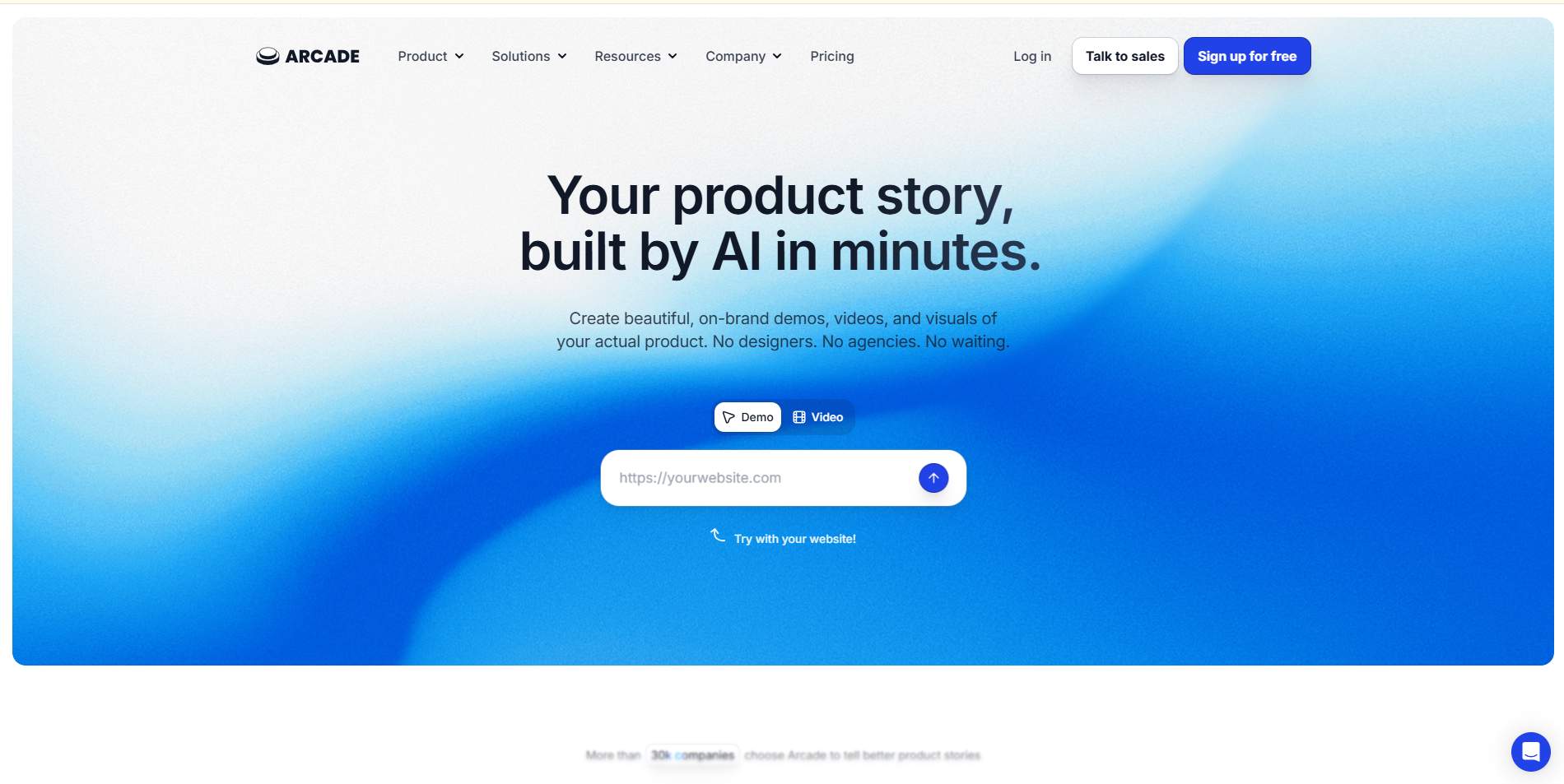
Arcade has built its reputation on speed. A basic demo goes from zero to published in roughly six minutes, which, if you've ever survived a demo production cycle complete with design reviews and three rounds of stakeholder feedback, sounds almost illegal. It supports desktop, browser, and even terminal recordings, which gives it genuine versatility beyond the typical browser-only tool.
Key Features:
- Hybrid capture: screenshots, video uploads, and HTML capture on higher tiers
- Avery AI: voiceovers, automatic chapter creation, and copy suggestions built in
- Persona-based branching so viewers can self-navigate to features most relevant to their role
Pricing: Free plan (3 published demos, no time limit). Pro at $32/user/month. Growth at $297.50/month for 5 seats.
Pros:
- Among the fastest demo creation cycles in the market, genuinely good for fast-moving PMM teams
- Mobile-optimized by default, which is more than most competitors can say
Cons:
- HTML capture and branching paths are locked to the Growth tier and above
- Less suited for deep outbound personalization compared to AI-first platforms
Best for: Product Marketing Managers who need polished, mobile-friendly demos embedded on websites, campaign pages, and social media assets.
3. Supademo: Best for Startups and Budget-Conscious Teams
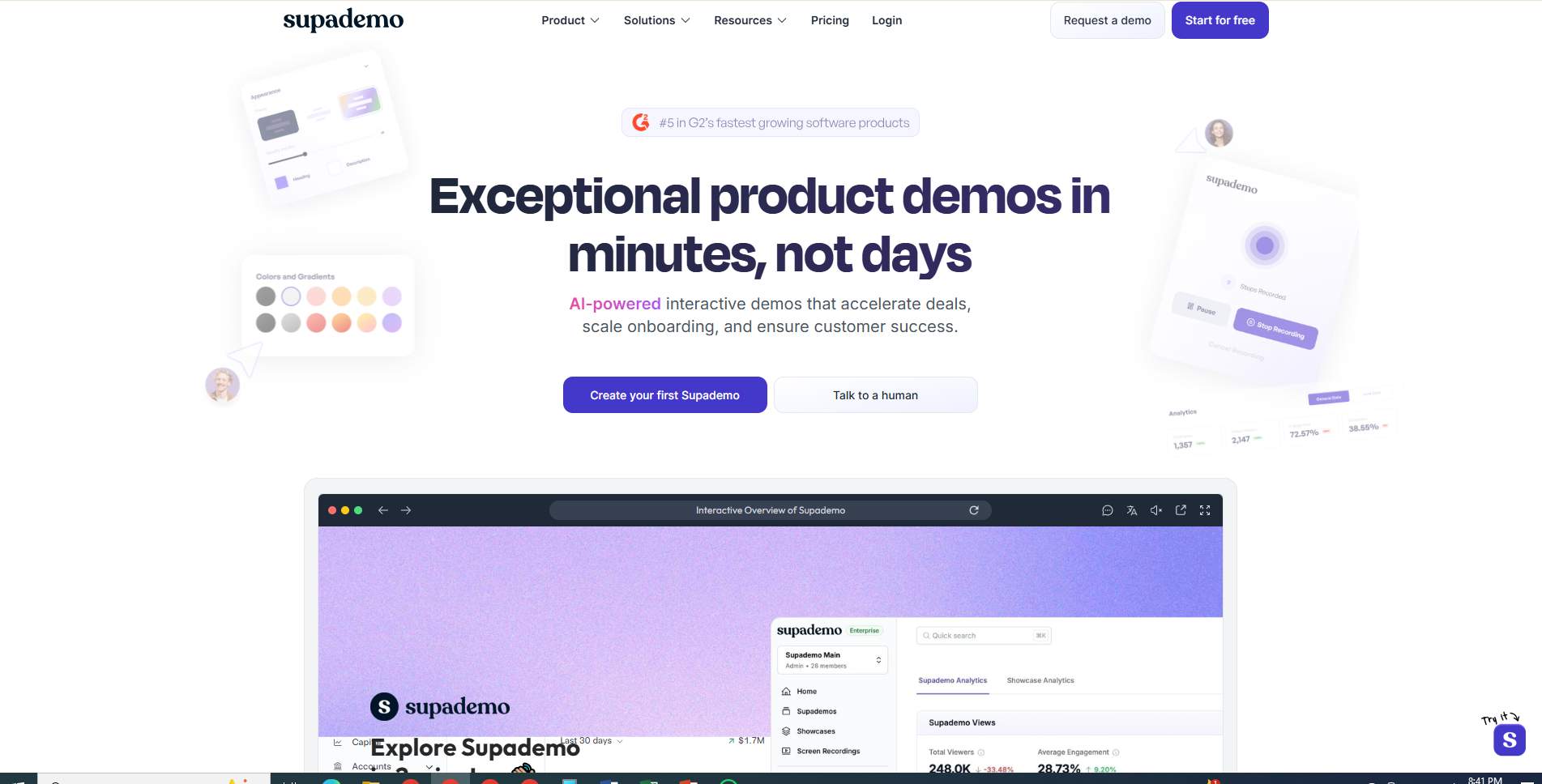
Supademo does one thing exceptionally well: it gets a non-technical person from signup to a published demo in under ten minutes. It's screenshot-based, which keeps things simple, and the pricing scales linearly, no jarring jumps, no hidden seat taxes. For small teams that just need to ship something useful, that's genuinely valuable.
Key Features:
- AI-assisted authoring that drafts step-by-step instructions automatically
- Multi-language voiceovers for global enablement without manual localization
- Export as video or PDF for offline sharing and async follow-ups
Pricing: Free forever plan for individual creators. Pro at $27/user/month (billed annually). Growth/Scale from $350/month for teams needing HTML capabilities.
Pros:
- One of the most affordable entry points in the category for teams getting started
- Minimal learning curve, genuinely beginner-friendly, even for non-technical employees
Cons:
- Screenshot-based, so it lacks the "real product feel" of cloned HTML environments
- Analytics are basic; no account-level intent scoring or CRM-level insights
Best for: Early-stage SaaS teams and solo marketers who find Storylane's $500/month Growth tier hard to justify for what they currently need.
4. Navattic: Best for Enterprise HTML Fidelity and Inbound Conversion
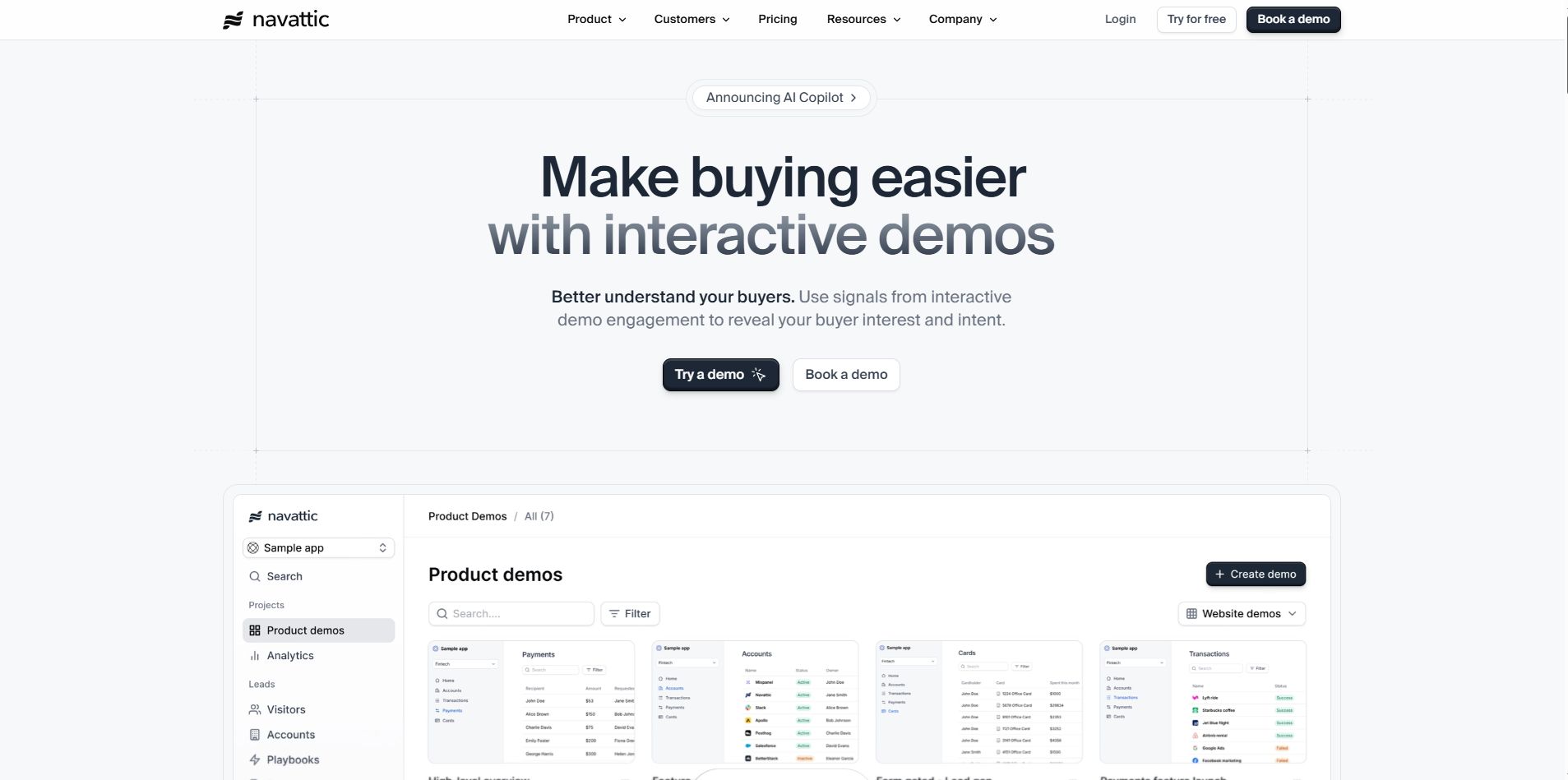
If you want prospects to experience your product the way it actually works, hover effects, searchable text, live tooltips, Navattic is the standard. It captures the underlying HTML and CSS of your application, not just a screenshot of it. That distinction matters more than it might sound at first.
Key Features:
- Unlimited HTML demos included even in base tiers
- Account Reveal: firmographic data on exactly who is viewing your demos and when
- Native integrations with Salesforce, HubSpot, and Marketo to push intent data into your sales workflow
Pricing: Starts around $500–$600/month. Advanced tiers with ABM and deeper analytics exceed $1,000/month. No self-serve free plan access requires a sales conversation.
Pros:
- Near-identical experience to the live product; buyers don't feel like they're watching a simulation
- Professional-grade A/B testing and conversion analytics for optimizing demo flows
Cons:
- Setup takes approximately two weeks and requires meaningful QA effort
- Mobile experience can feel clunky for complex product flows on smaller screens
Best for: Demand gen and product marketing teams running PLG or inbound motions who need high-fidelity demos on "Request a Demo" pages and free trial onboarding flows.
5. Reprise: Best for Enterprise Presales and Technical POCs
Reprise operates on a three-module system: Replay for guided tours, Replicate for full application cloning, and Reveal for live demo overlays. For enterprise sales engineering teams, this trifecta covers every demo scenario across the entire sales cycle, without stitching together multiple tools.
Key Features:
- Full 1:1 application cloning for secure, exploratory technical POCs
- Live overlay system to personalize the production app in real time during a call
- SOC 2 Type II and ISO 27001 certified for Fortune 500 procurement requirements
Pricing: Strictly custom and enterprise-focused. Median annual contract is around $31,600. Large deployments can reach $130,000/year.
Pros:
- The only platform that effectively combines overlays, guided capture, and full cloning in one interface
- Gartner Peer Insights rates their service and support at 4.8/5
Cons:
- Average deployment stretches over three months, not a tool you spin up in a week
- Advanced configurations often require front-end developer involvement
Best for: Enterprise sales engineering and presales teams managing high-ACV deals that require secure sandbox environments, live demo overlays, and enterprise-grade governance.
6. Walnut: Best for High-Volume Sales Personalization
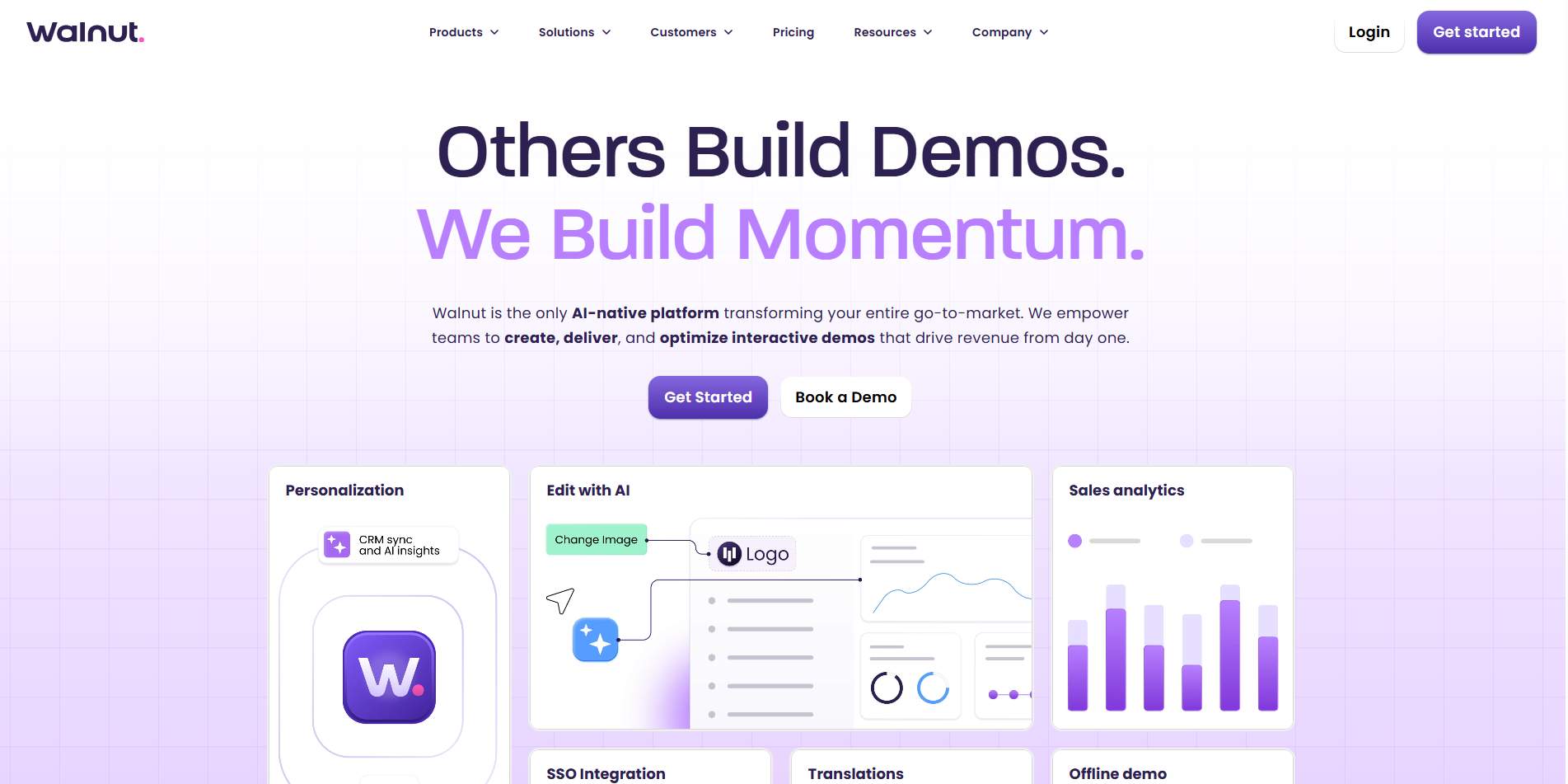
Walnut's EditsAI is what sets it apart from the field. Swap names, logos, and dates across hundreds of demo screens with a single natural language prompt. For sales teams running high-volume, account-specific outreach, that kind of bulk personalization used to require a small RevOps army. Now it doesn't.
Key Features:
- StoryCaptureAI: assembles a demo automatically as you click through and narrate your product
- EditsAI: bulk content changes across entire demo flows via natural language prompts
- Digital Sales Rooms: trackable links that bundle demos, videos, and PDFs for buying committees
Pricing: Lite at $9,200/year. Pro at $20,000/year. Enterprise custom.
Pros:
- Dramatically reduces manual effort for personalizing demos at the account level
- Strong collaboration features for large, distributed sales teams
Cons:
- The high starting price makes it effectively inaccessible for most early-stage or small teams
- Some users report instability when recording very complex, dynamic screens
Best for: Mid-market and enterprise B2B sales teams running high-touch, account-specific demo workflows that need to scale without proportionally scaling headcount.
7. HowdyGo: Best Affordable Alternative for HTML Demos Without a Seat Tax
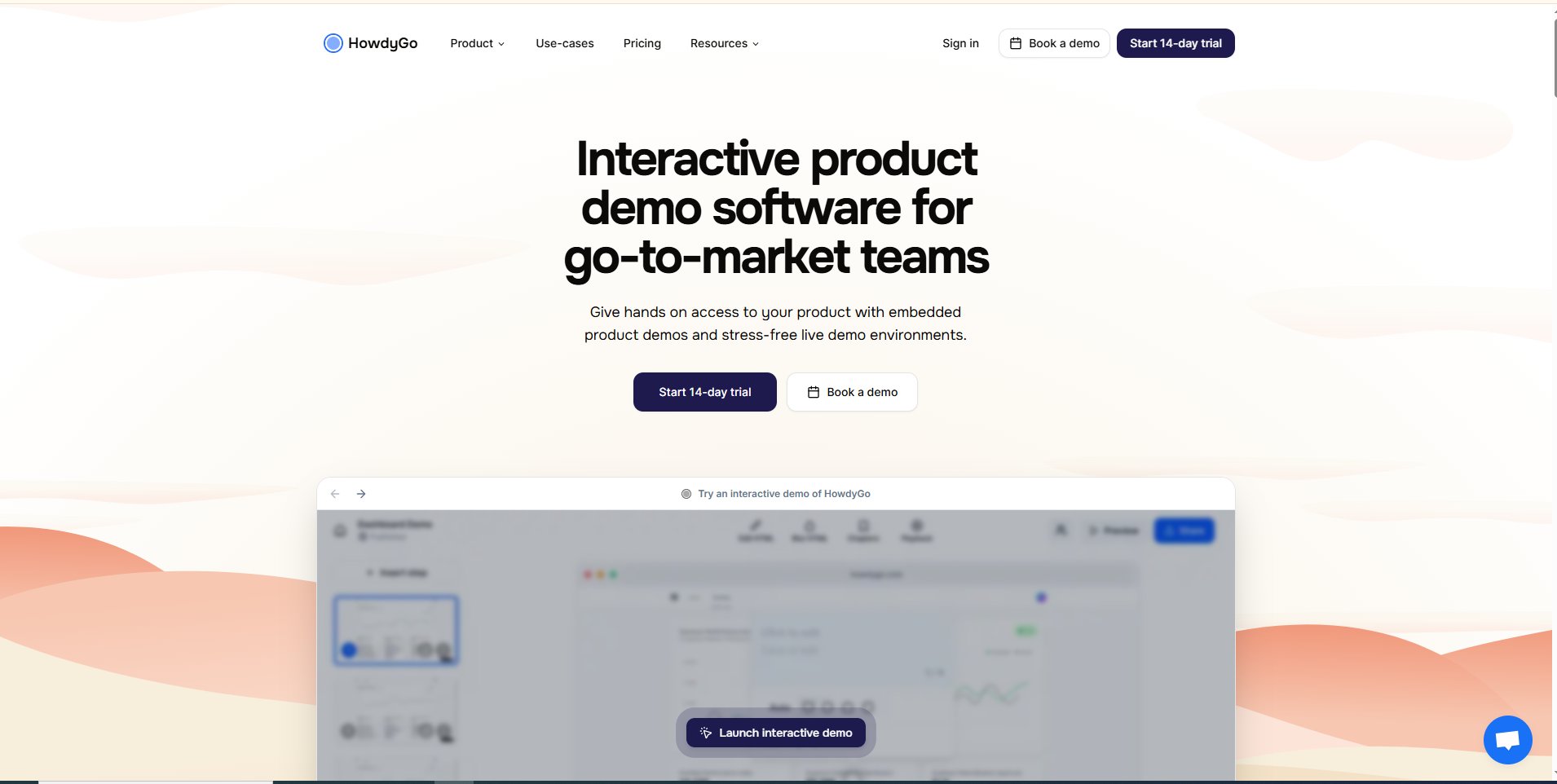
HowdyGo's entire pitch is built around one specific frustration: why should adding a fifth user to your demo tool double your monthly bill? On HowdyGo, it doesn't. Unlimited users, transparent pricing, high-fidelity HTML capture, this is essentially what Storylane would look like if it dropped the per-seat model.
Key Features:
- Unlimited users and viewers at every plan tier is a genuine core differentiator
- High-fidelity HTML capture with pixel-perfect editing for exact brand alignment
- Hands-on onboarding support directly from the platform's founders
Pricing: Core at $159/month. Advanced at $399/month with CRM integrations and advanced analytics.
Pros:
- Reported 68% lower cost than Navattic for comparable HTML quality, and 95% lower than Reprise
- Implementation measured in hours, not weeks, a refreshing contrast to enterprise onboarding timelines
Cons:
- No sandbox cloning, live overlay modules, or multi-module ecosystem
- Feature breadth doesn't match the "big three" enterprise platforms
Best for: Growing marketing and sales teams that want Storylane-quality HTML demos without the per-seat pricing model eating into their budget as the team scales.
8. Demostack: Best for High-Fidelity Sandbox Clones in Enterprise Sales
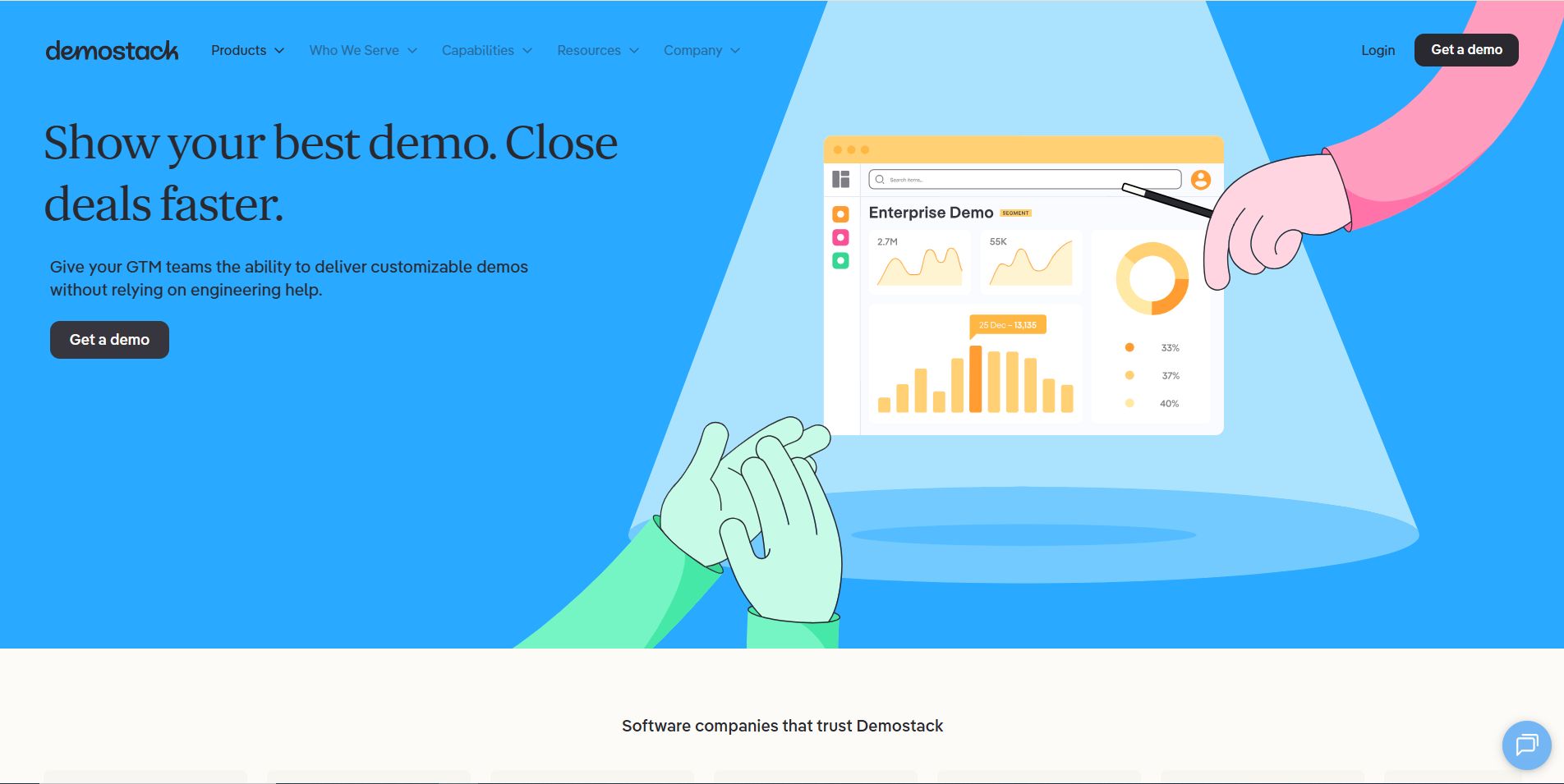
Demostack doesn't just capture what your product looks like. It clones what your product is. Front-end and back-end, fully replicated, populated with AI-generated synthetic data. When a technical buyer says, "Can I just try this myself?", Demostack is the right answer. Storylane isn't.
Key Features:
- Full front-end and back-end application cloning with realistic synthetic data populated automatically
- Mobile app support: one of the very few platforms that handles native mobile demo environments
- Shared Demo Library for enterprise-wide asset management across departments and regions
Pricing: Enterprise-only. Annual contracts typically start around $50,000–$55,000.
Pros:
- The most realistic demo experience currently available in the no-code category
- Allows exploratory, self-guided testing by technical buyers, critical for complex B2B evaluations
Cons:
- Entry cost is prohibitive for virtually all mid-market companies
- Often requires a dedicated "demo engineer" role to manage environments effectively
Best for: High-ACV enterprise companies where technical buyers need to self-explore the product during the evaluation process, not just watch someone else navigate it.
9. Consensus: Best for Stakeholder Alignment in Complex Multi-Stakeholder Deals
Consensus flips the demo script. Instead of showing prospects what you want them to see, it first asks them what they care about, then automatically delivers a tailored video and tour path based on their answers. For deals with large buying committees, this approach cuts through alignment friction faster than any linear walkthrough.
Key Features:
- Demolytics®: behavioral scoring revealing which stakeholders engaged with which features and for how long
- Branching video demos with "choose your own adventure" navigation paths
- AI Content Studio for automated script and voiceover generation across multiple demo paths
Pricing: Starter at ~$600/month for 5 seats. Enterprise contracts from ~$25,000/year. No self-serve access, requires a consultation.
Pros:
- Users report closing deals 30% faster through improved buyer enablement and multi-stakeholder alignment
- Provides the most strategic intent data in the category, including which features are deal-breakers for economic buyers
Cons:
- Heavy focus on video automation; less suited for teams that want a pure HTML interactive experience
- Not appropriate for small, single-stakeholder deals, it's designed for complexity
Best for: Enterprise sales teams managing multi-stakeholder buying committees where stakeholder alignment, not just product awareness, is the primary barrier to closing.
Comparison Table: Storylane vs Top Alternatives
Frequently Asked Questions
Q: What is the best free Storylane alternative?
Arcade and Supademo both offer strong free plans with no time limit. Arcade gives you 3 published demos with AI voiceover included, enough to test the full workflow. Supademo's free plan supports individual creators with no hard cap on demos. If your team specifically wants to test AI-generated video demos, PuppyDog.io offers a free trial before any subscription commitment.
Q: Is there a Storylane alternative with video personalization?
Yes, PuppyDog.io is purpose-built for exactly this. It uses AI agents to generate a different video demo for different prospect types automatically, without anyone re-recording anything. Every video is built around that specific buyer's industry, role, and pain points. Consensus also offers strong video-first branching paths for teams managing multi-stakeholder enterprise deals.
Q: What do Storylane users most commonly complain about?
Based on 1,300+ G2 reviews, the most consistently cited frustrations are: limited visual customization (flagged in 80+ reviews), no mobile-responsive demo rendering, shallow analytics on lower-tier plans, and a pricing model that jumps sharply between tiers from $40/month to $500/month with very little in between.
Q: Can I use a Storylane alternative for outbound email?
Most interactive demo tools, Storylane, Navattic, and Arcade, are built for website embedding, not cold outreach. PuppyDog.io is the exception. It creates short, personalized video demos designed specifically for cold emails and LinkedIn outreach, each one built around the individual prospect receiving it. For teams building B2B video marketing into their outbound motion, this distinction matters considerably.
Q: How does Storylane pricing compare to alternatives?
Storylane starts at $40/user/month. For context: Arcade Pro is $32/user/month, Supademo starts at $27/user/month, and HowdyGo's Core plan runs $159/month for unlimited users, no seat counting. Enterprise tools like Navattic, Walnut, and Demostack use custom or annual pricing that starts in the thousands. Storylane sits in the middle bracket: not the cheapest, but not the most capable at scale either. Teams of five to ten people often find unlimited-user models like HowdyGo offer better long-term value.
The Right Demo Tool Depends on What You're Actually Trying to Do
Let's be honest, there's no single "best" Storylane alternative. The answer depends entirely on whether you're trying to convert inbound traffic, close enterprise deals, or reach cold prospects who've never heard of you before.
If your team is sending the same generic demo to every prospect, you're leaving pipeline on the table. The shift toward AI screen recording and automated video generation isn't just a trend. It's quickly becoming table stakes for outbound teams trying to stand out in a crowded inbox. If you want to go deeper on execution, this guide on how to create a software demo video is a solid next read before you commit to any platform.
But if outbound personalization at scale is your priority, if you want every prospect to feel like your demo was made specifically for them, PuppyDog.io is built for exactly that.
Try PuppyDog.io free: create your first AI-personalized video demo in minutes.

Sarah Thompson is a storyteller at heart and Business Developer at PuppyDog.io. She’s passionate about creating meaningful content that connects people with ideas, especially where technology and creativity meet.