12 Best GTM Software & Tools for 2026

Published : 22 July 2026
Nobody wakes up excited to evaluate sales software. And in 2026, the category has gotten weirder, not simpler. AI has been bolted onto almost every tool on this list, which means every vendor now claims to be an "AI-native platform," and half of those claims are marketing copy stretched over the same product you'd have bought in 2022.
Here's the thing, though: the underlying jobs your stack needs to do haven't actually changed that much. You still need to find the right people, reach them, track the relationship, and measure what's working, and this is the part everyone underrates. Show them your product in a way that actually lands. What's changed is how AI handles each of those jobs, and which categories have quietly become non-negotiable.
This list breaks GTM software down by job-to-be-done rather than by buzzword, so you can figure out what your stack is actually missing instead of just adding another logo to the pile.
How to Evaluate GTM Software (Without Losing Your Mind)
Before you look at a single tool, it helps to ask a blunter question than "does it have AI?" Try these instead:
- What job is this actually replacing? Manual prospecting, spreadsheet tracking, a rep's gut instinct on forecasting- name it specifically.
- Does it play well with what we already own? The average revenue team is running north of 8 tools per rep already, and tool sprawl is a real productivity tax, not just an IT headache.
- Is the pricing model going to bite us later? Watch for annual-only contracts, seat minimums, and credit systems that quietly expire unused balances.
- Does it close the loop, or dead-end? A tool that captures data but doesn't push it anywhere useful (CRM, alerts, attribution) is half a tool.
With that filter in place, here's how the market breaks down.
The 5 Categories Every GTM Stack Needs
- Data & Enrichment: finding and verifying who to talk to
- Outreach & Sequencing: actually reaching them, across channels
- CRM: the system of record everything else feeds into
- Analytics & Revenue Intelligence: measuring what's working and forecasting what's coming
- Demo Automation & Personalization: showing product value, asynchronously, without burning a rep's calendar
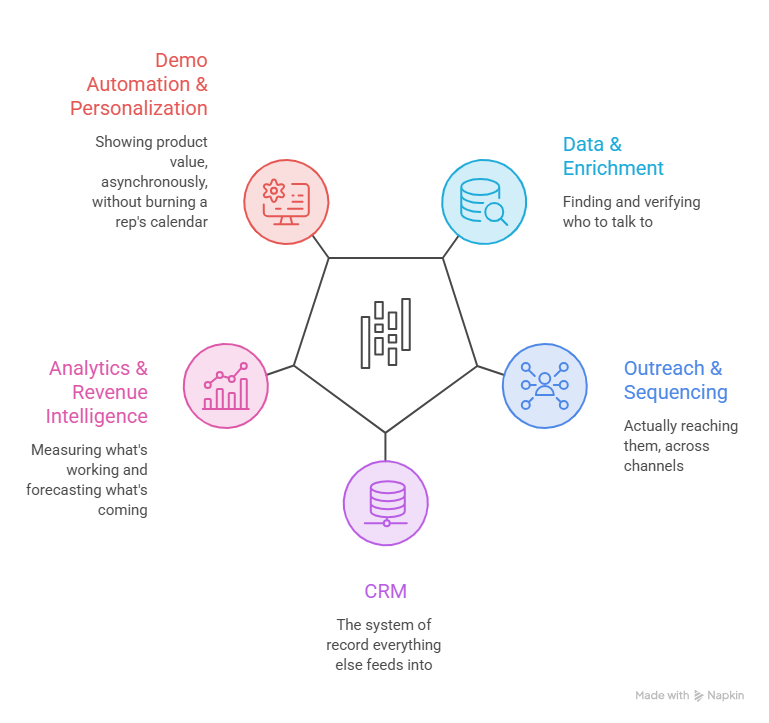
That fifth one is newer to most people's mental model of a "GTM stack," but it's arguably become the most decisive. More on that below. First, the tools.
12 Best GTM Software & Tools for 2026
Data & Enrichment
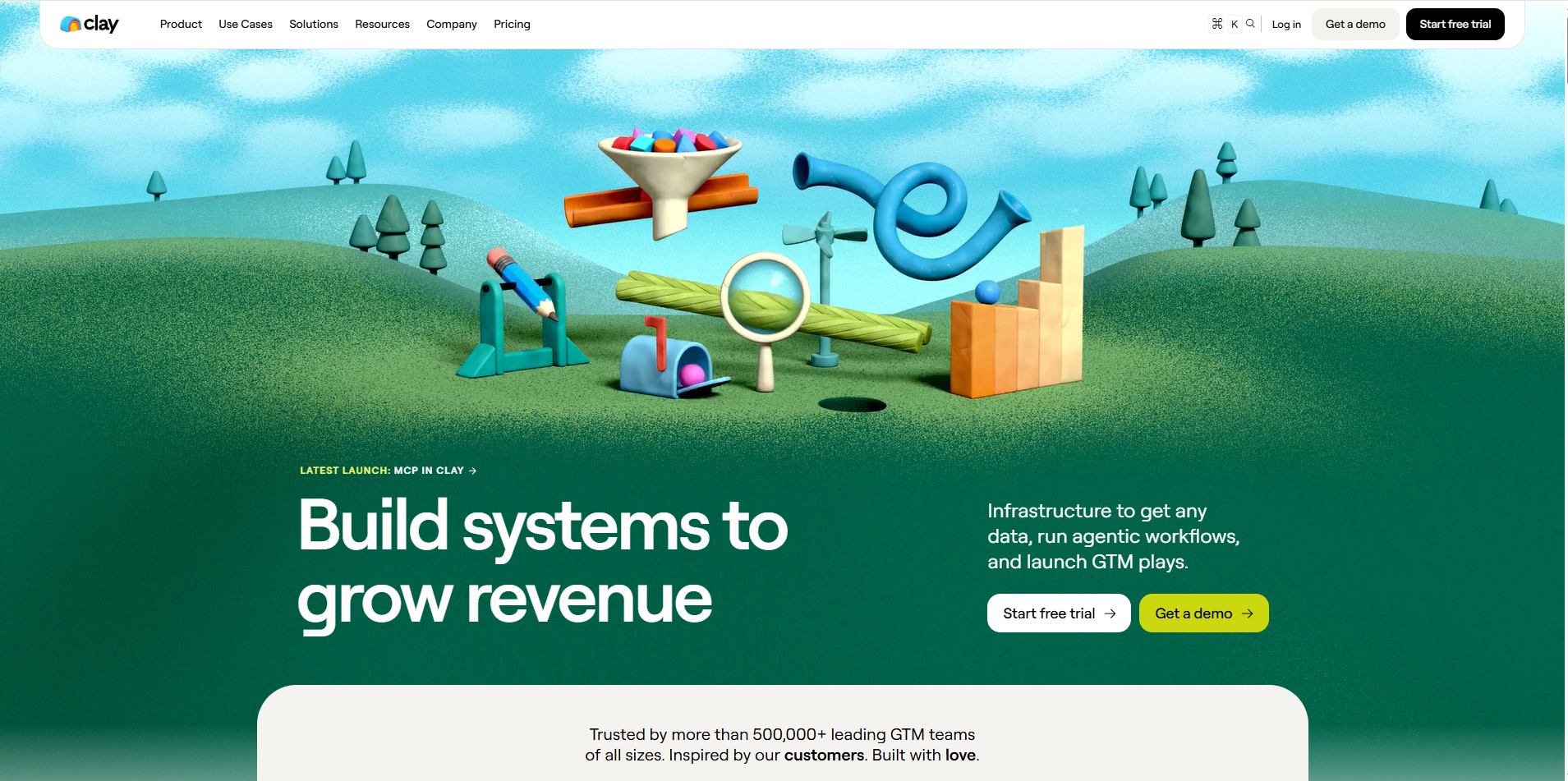
1. Clay: best for technical teams that want multi-source data waterfalls. Clay chains together 130+ data providers so you're not stuck with one vendor's gaps. Its AI research agent, Claygent, can scrape a target's site for specifics like tech stack or compliance details that a static database would never catch. Pricing: Free tier available; paid plans run roughly $185–$495/mo, with enterprise deployments landing around $30,000+/yr.
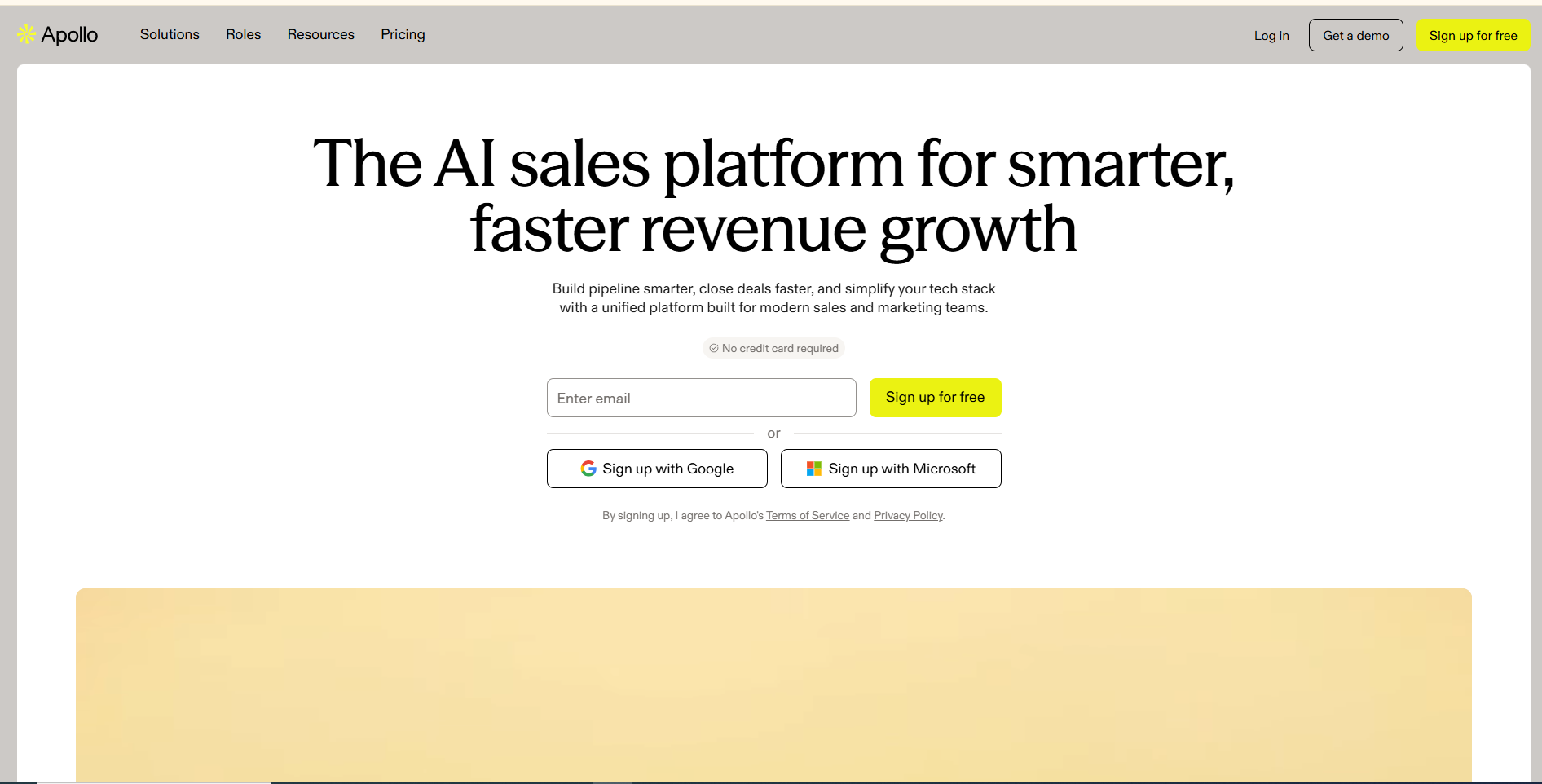
2. Apollo.io: best for budget-conscious teams that want data + outreach in one place. Apollo bundles a 275-million-contact database with built-in sequencing and dialing, so smaller teams can skip stitching together three separate tools. Its AI writing assistant is genuinely useful for a first-pass draft, not just a gimmick. Pricing: Free tier; paid plans from roughly $49–$119/user/mo.
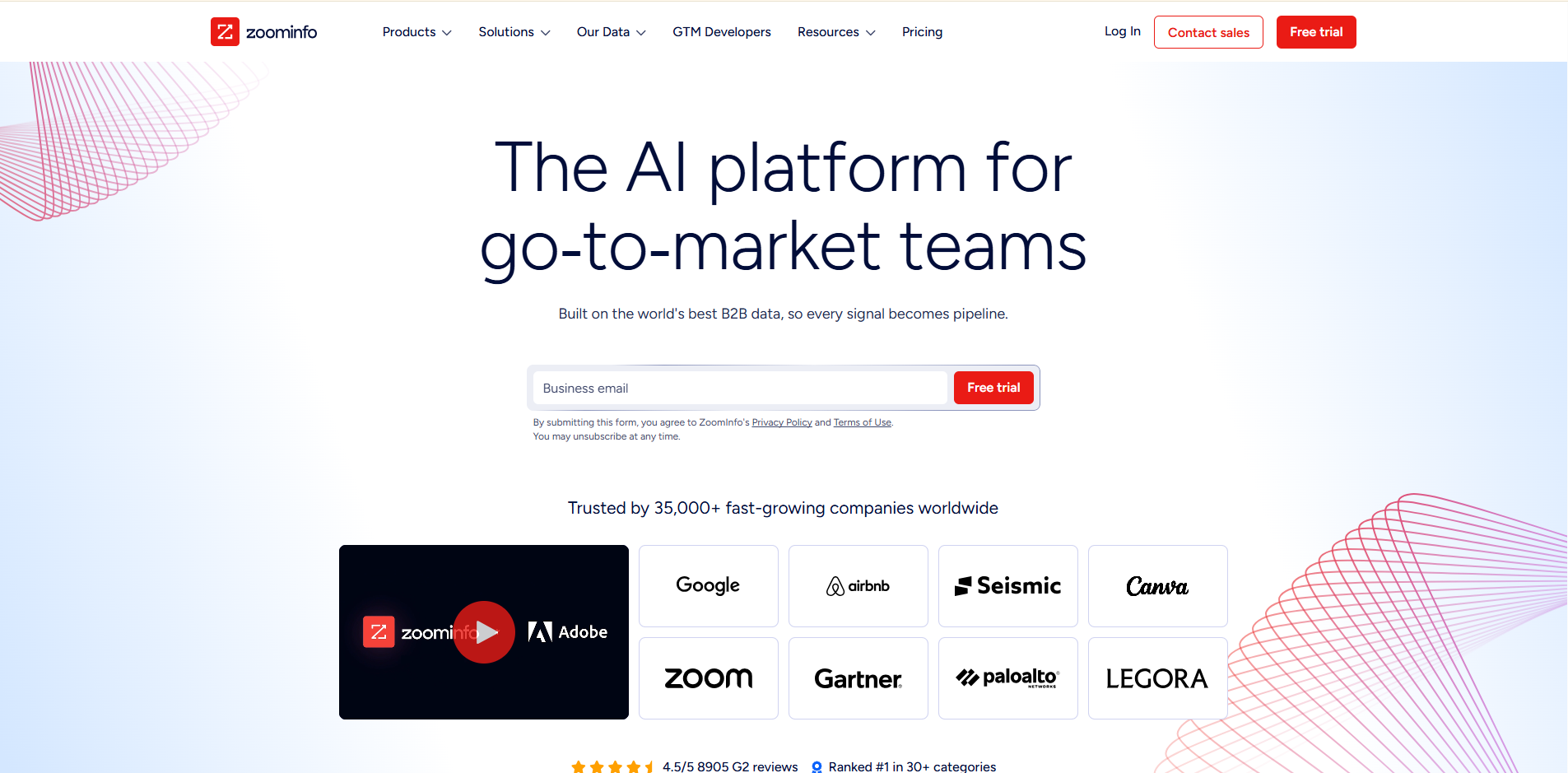
3. ZoomInfo: best for enterprise sales orgs with a real data budget. ZoomInfo's proprietary database and Copilot feature (which recommends specific accounts to prospect based on intent signals) are hard to beat at scale, but you'll pay enterprise prices for enterprise depth. Pricing: Quote-based; realistic annual contracts often land between $30,000–$60,000+.
Outreach & Sequencing
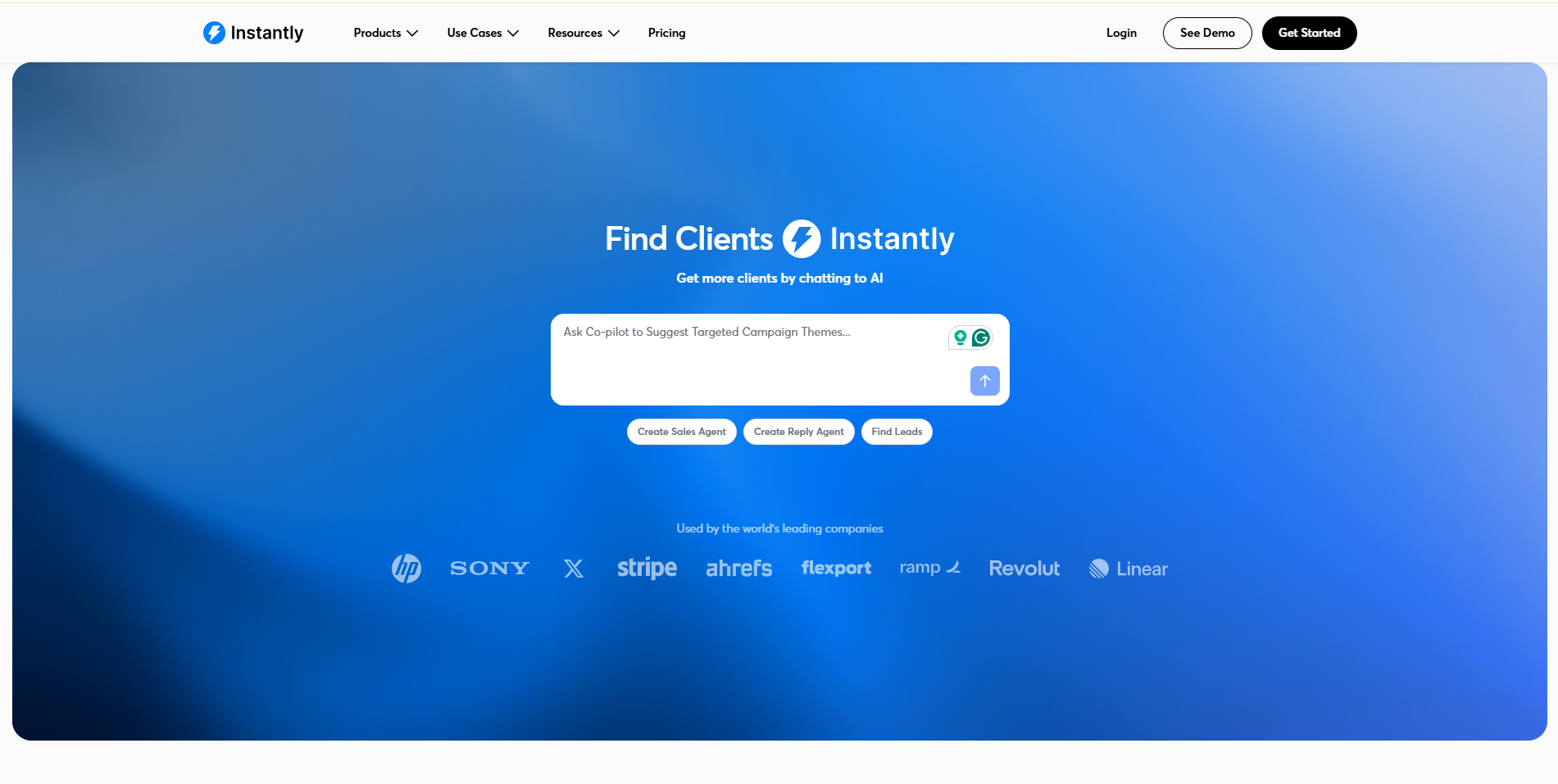
4. Instantly: best for high-volume cold email on a flat-rate budget. Instantly's warmup network and built-in prospecting database make it a popular pick for teams sending serious email volume without wanting to manage deliverability infrastructure themselves. Pricing: Plans run roughly $37–$286/mo depending on volume and contact limits.
5. Outreach: best for enterprise teams that need governance, not just volume. Outreach leans into structured, multi-channel sequences with AI-assisted drafting and predictive deal scoring layered on top. It's built for RevOps teams who want visibility into every touchpoint, not just send-and-hope. Pricing: Quote-based, generally $100–$160+/user/mo, often with implementation fees on top.

CRM
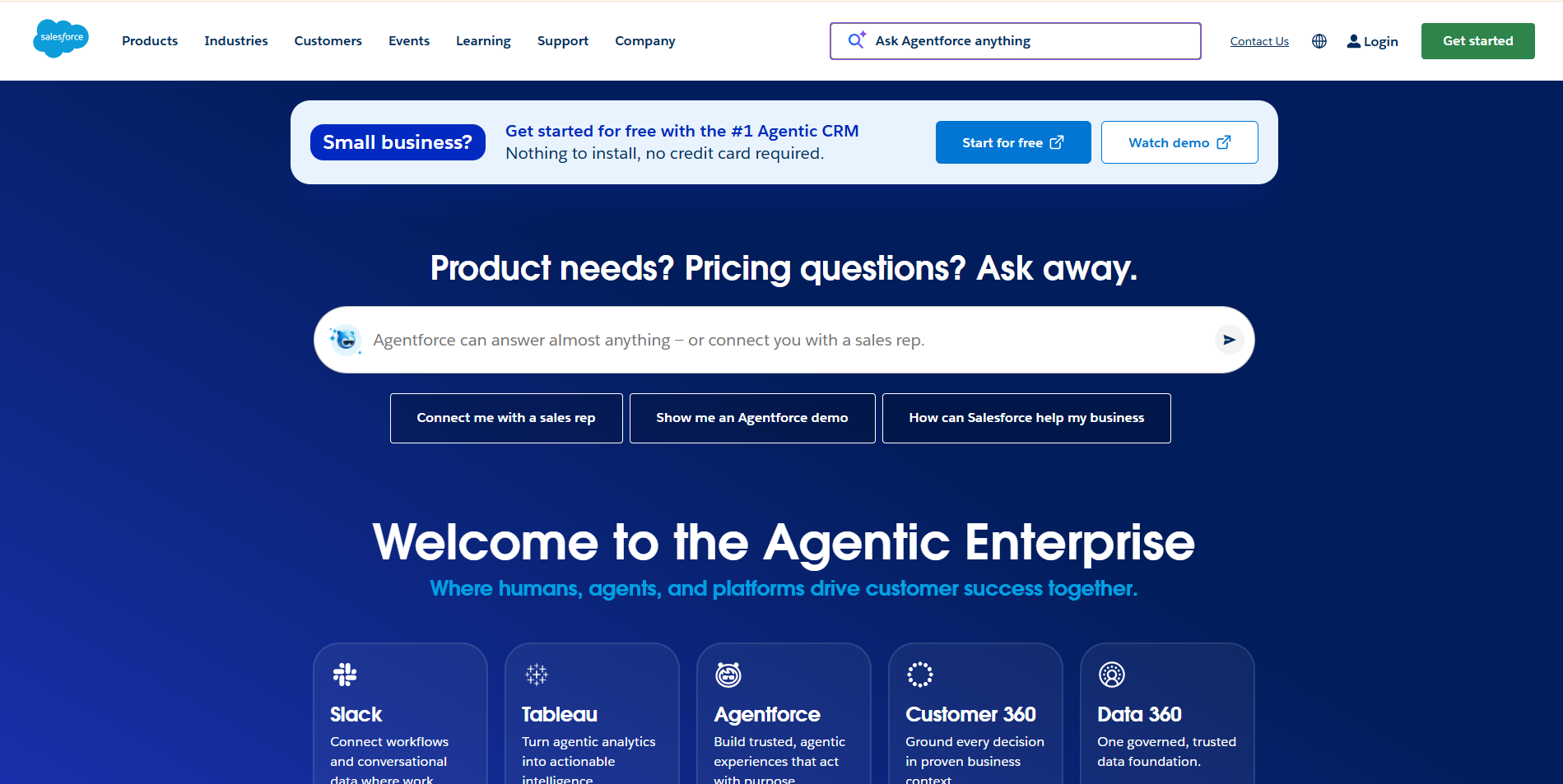
6. Salesforce Sales Cloud: best for large, complex enterprise orgs. Still the default answer for "what CRM should we use" once you're past a certain size. Its Agentforce AI agents can now handle lead scoring and research autonomously, which is a meaningful shift from the manual-entry CRM of a few years back. Pricing: $25–$165/user/mo, though real implementations often need a dedicated admin and consulting budget on top.
7. Pipedrive: best for smaller teams that want simplicity over customization If Salesforce
feels like massive overkill (it often is, for smaller teams), Pipedrive's visual pipeline and straightforward setup are a relief. It won't do everything, but it does the core job without a six-week onboarding. Pricing: Roughly $14–$99/seat/mo.

8. Attio: best for fast-moving startups that want a flexible, modern database. Attio treats the CRM less like a rigid form and more like a customizable database. Useful if your business doesn't map cleanly onto "leads, contacts, deals." Its AI research agents can score inbound contacts against your ICP automatically. Pricing: Free tier; paid plans from roughly $29–$69/user/mo.

Analytics & Revenue Intelligence
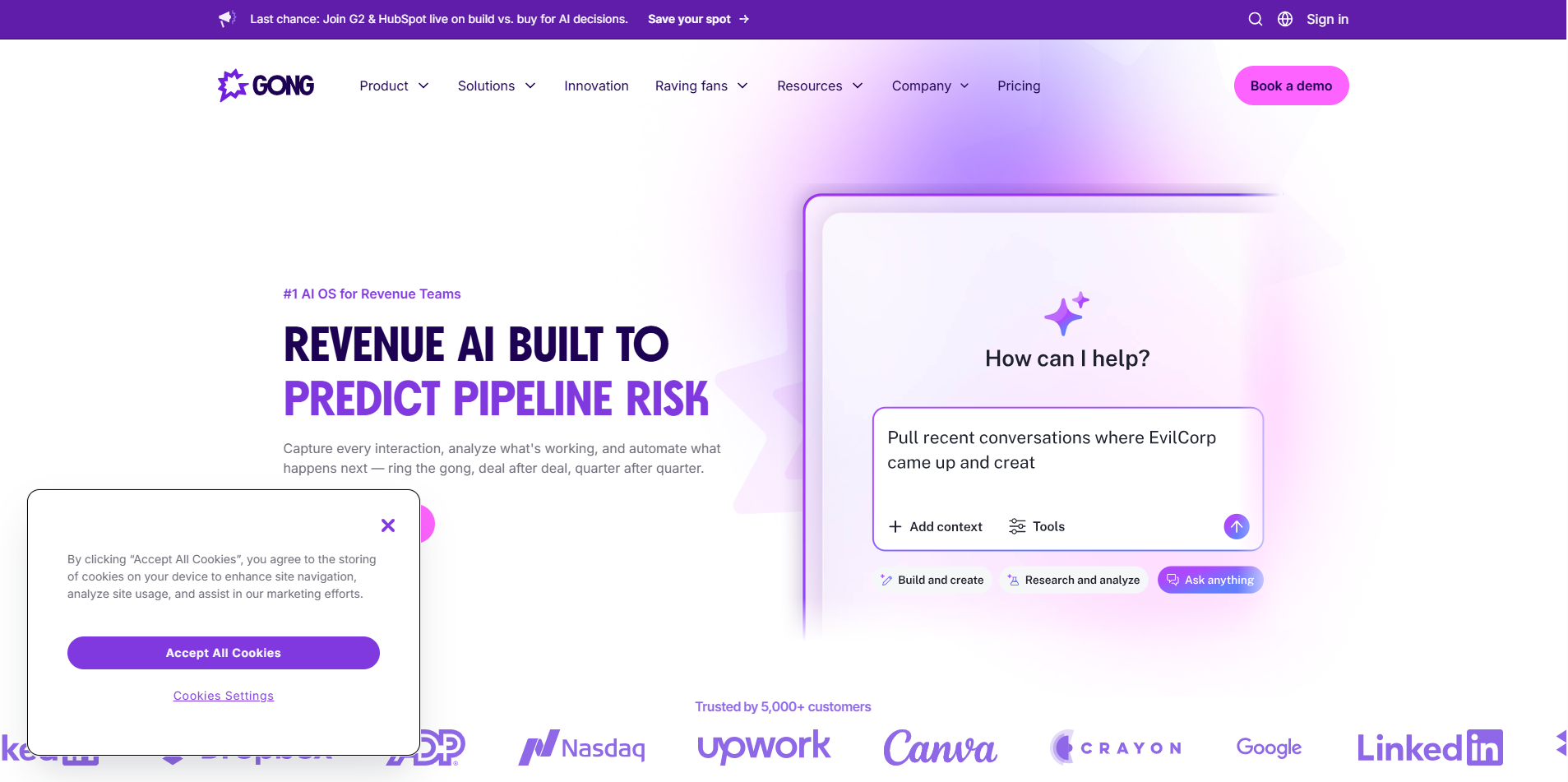
9. Gong: best for teams that want deep conversation intelligence. Gong records and analyzes calls to surface deal risk, coaching opportunities, and competitor mentions you'd otherwise miss. It's powerful, but budget for it accordingly. Platform fees alone can run into five figures. Pricing: Custom quotes; per-seat costs typically $1,300–$1,600/yr plus a mandatory platform fee.
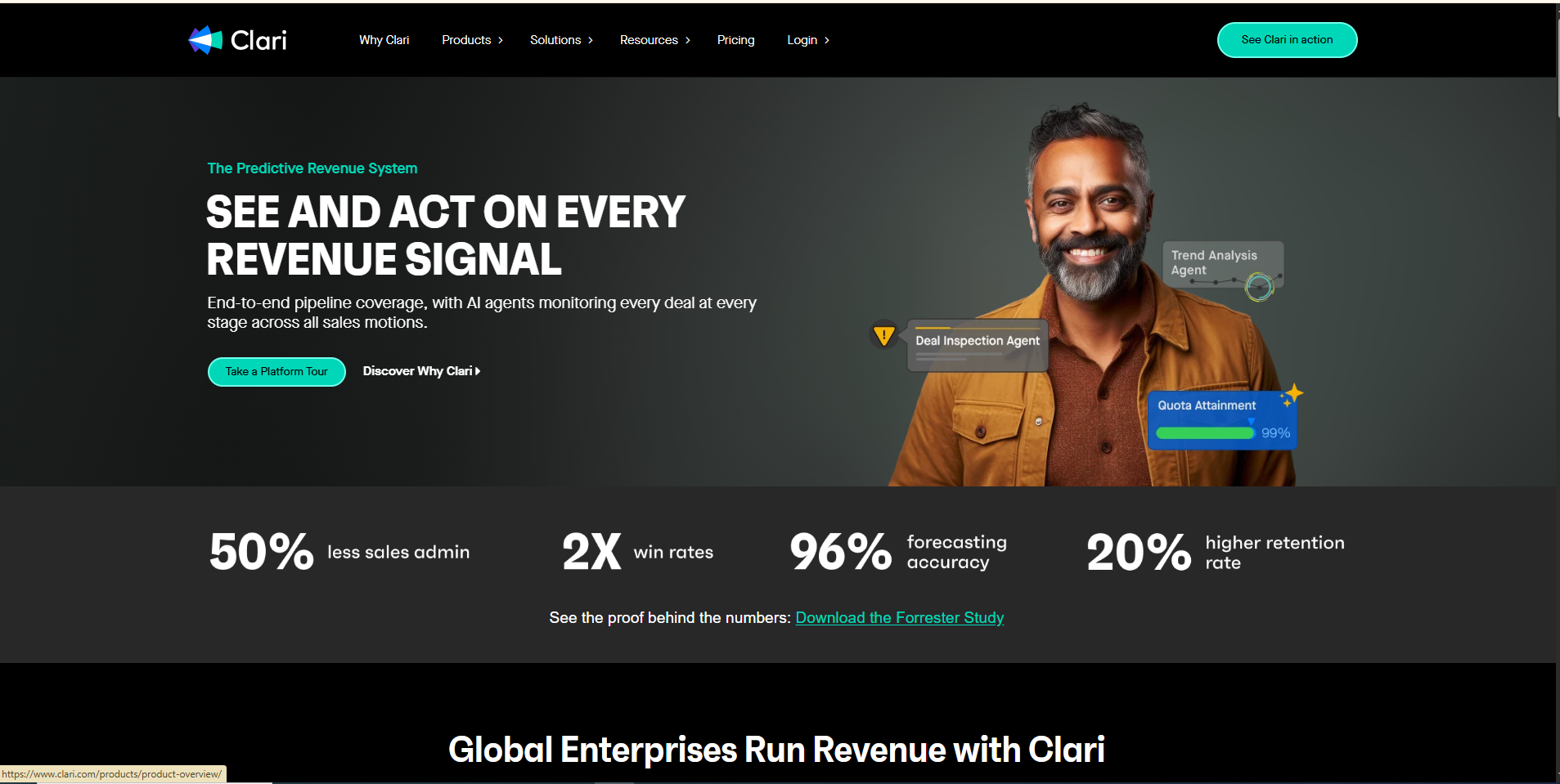
10. Clari: best for revenue ops leaders who live and die by forecast accuracy. Clari's whole pitch is forecasting precision, pulling in email, calendar, and CRM activity to flag deal health before a rep even notices something's off. It's an enterprise tool through and through. Pricing: Custom quotes; typical mid-market contracts land around $90,000–$140,000/yr.
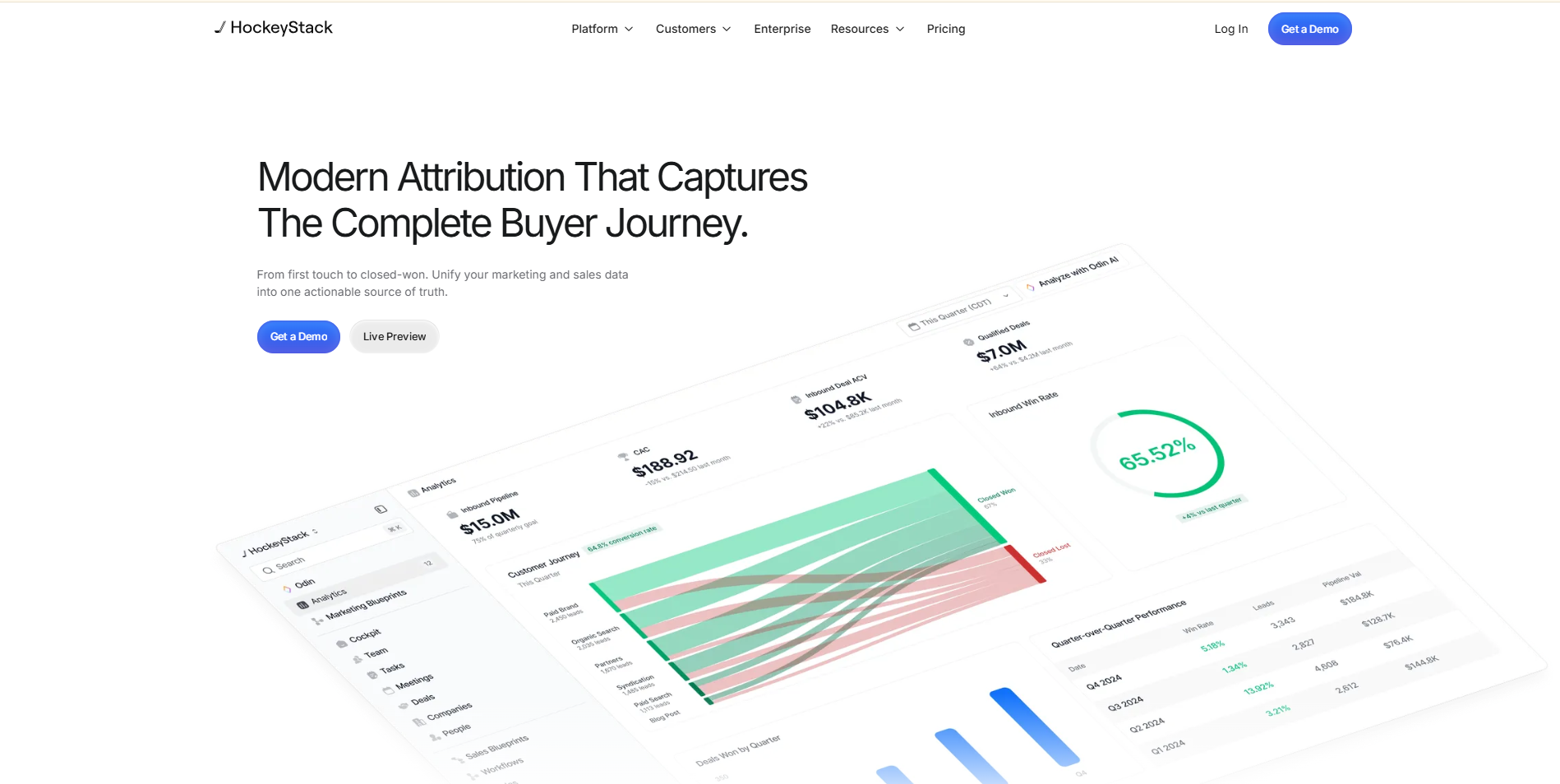
11. HockeyStack: best for marketing-and-sales teams that need multi-touch attribution. HockeyStack's Odin AI analyst turns plain-English questions into actual funnel charts, which is a nice break from wrestling with a BI dashboard. It's particularly strong for B2B companies with long, multi-stakeholder buying journeys. Pricing: Roughly $1,399–$2,200/mo depending on features and contact volume.
Demo Automation & Personalization: the Category Most Stacks Are Missing
12. PuppyDog: best for teams that need to show product value without a live rep on every call
Here's the uncomfortable truth about most 2026 GTM stacks: they're extremely good at finding people and reaching them, and then they hand the buyer a generic sales deck or a scheduling link and hope for the best. That gap is exactly why demo automation has become the fifth pillar of a modern stack rather than a nice-to-have.
Buyers have changed their behavior faster than most sales orgs have adjusted. A large majority now say they'd rather research a product on their own than sit through a discovery call, and they're doing most of that research before a rep ever hears from them. Meanwhile, AI SDR tools have made outbound volume so cheap that inboxes are drowning, which means a generic "saw you're the VP of {company}" email increasingly gets ignored no matter how well-targeted it is.
PuppyDog closes that gap by turning a screen recording or a set of screenshots into an interactive, personalized product demo automatically swapping in a prospect's logo, name, and relevant data points instead of showing everyone the same generic walkthrough. That matters more than it sounds: teams that personalize the majority of their customer-facing demos see meaningfully higher conversion than teams sending the same static demo to everyone. And because it's built for asynchronous viewing, prospects get their "aha moment" on their own schedule, not whenever a sales engineer's calendar opens up.
If you're already running a Product Video Personalization motion on the marketing side, extending that same logic into sales demos is a natural next step rather than a whole new initiative. Pricing: Contact PuppyDog directly for a plan that fits your team size and demo volume.
Building a Connected Stack (Not Just a Pile of Logins)
Buying 12 great tools individually is not the same thing as having a good stack. The teams getting real ROI in 2026 aren't the ones with the most software. They're the ones where the tools actually talk to each other.
A reasonably tight version of that pipeline looks something like this:
- Enrichment tools (Clay, Apollo) feed verified contact and intent data into your CRM automatically, instead of a rep manually copy-pasting from a spreadsheet.
- The CRM (Salesforce, Pipedrive, Attio) routes that record to the right rep and triggers the next step, no lead sitting untouched in a queue.
- Outreach tools (Instantly, Outreach) enroll the contact in a sequence, with a CTA that points to something more interesting than "book a call," like a personalized demo link.
- Demo automation (PuppyDog) captures engagement, how far someone got, what they clicked, whether they shared it internally, and writes that straight back into the CRM timeline.
- Analytics tools (Gong, Clari, HockeyStack) ingest that engagement data alongside call and deal history to attribute pipeline and sharpen the forecast.
Getting this pipeline actually wired together rather than just "installed" is increasingly its own discipline. If that sounds like a job description rather than a weekend project, it kind of is; it's worth reading up on what a GTM engineer actually does if you don't have one on the team yet.
Frequently Asked Questions
What is GTM software?
GTM software is any tool that helps teams launch and grow a product, spanning data and enrichment, outreach, CRM, analytics, and demo automation. Most teams need at least one tool in each category rather than trying to force a single platform to do everything.
What is the best AI GTM tool?
The best AI GTM tool depends on the specific job you need done. There isn't one tool that wins across every category. For showing product value to self-directed buyers, AI-driven demo automation platforms like PuppyDog personalize the experience at scale, which is a job generic data or outreach tools simply weren't built to do.
How many tools are in a typical GTM stack? Most teams run somewhere between 5 and 10 core tools, though broader revenue stacks (including every point solution across sales and marketing) can quietly creep past 15. The clear trend in 2026 is toward fewer, better-integrated platforms rather than adding another disconnected login to the pile.
The Bottom Line
A good GTM stack in 2026 isn't about chasing the newest AI feature; it's about making sure every category is actually covered, and every tool is talking to the next one in the chain. Data and outreach get you in front of the right people. CRM and analytics keep you honest about what's actually working. And demo automation is the piece most teams still bolt on as an afterthought, even though it's often the single moment that decides whether a self-educating buyer keeps going or bounces.
If that last piece is the gap in your stack, try PuppyDog's Product Demo Video Maker and see what a personalized demo does for your pipeline.

Sarah Thompson is a storyteller at heart and Business Developer at PuppyDog.io. She’s passionate about creating meaningful content that connects people with ideas, especially where technology and creativity meet.