What Is a Video Demo? Types, B2B Use Cases & The Future of AI Demos


Let’s be honest: B2B buyers don’t want long sales calls anymore. They want to see the product, understand how it works, and make their own decision in their own time. In a world where most research happens quietly inside inboxes, Slack groups, and late-night Google searches, video demos have become the fastest way to build trust before a salesperson ever enters the picture.
A video demo is more than a screen recording. It provides a clear, visual explanation of how a product addresses a real-world problem. For SaaS and B2B companies, where products are often complex and intangible, video demos turn features into something concrete. They show, rather than tell. And that difference matters.
Today’s buyers are busy. They don’t want long documents, confusing landing pages, or generic promises. They want proof. That is why video demos for SaaS, B2B video demos, and product video demos now sit at the center of modern marketing and sales strategies. From self-serve website demos to personalized sales videos and AI-powered walkthroughs, the way companies demonstrate their products is changing fast.
In this guide, we break down everything you need to know without jargon and without fluff.
What you’ll learn in this blog:
- What a video demo really is (in simple, practical terms)
- The main types of video demos and when to use each
- How B2B teams use demos across marketing, sales, and customer success
- Why interactive and AI video demos are shaping the future of SaaS selling
- How platforms like Puppydog.io make it easier to create personalized, automated demos at scale
Whether you’re a marketer trying to increase conversions, a sales leader looking to shorten deal cycles, or a founder building a modern SaaS funnel, this article will give you clear answers and actionable ideas you can apply immediately.
What Is a Video Demo?
At its core, a video demo is a short, focused video that shows how a product actually works and why it matters to the user. It is not an advertisement filled with slogans, and it is not a long technical tutorial either. A video demo sits in the middle: practical, visual, and built to answer one simple question,
“How does this product solve my problem?”
In the B2B and SaaS world, products are often complex. Dashboards, workflows, integrations, automations, on paper, they can feel abstract. A well-made product demo video removes that confusion. Instead of describing features, it shows them in action. Instead of promising value, it demonstrates value.
Think of it like a test drive. You would not buy a car based only on a brochure. You want to see how it handles, how the controls feel, and whether it fits your needs. A video demo gives buyers that same experience, only faster, cheaper, and available 24/7.
Here is what separates a true video demo from other video content:
- It is problem-focused. The story starts with a real pain point that the buyer recognizes.
- It is feature-driven, not feature-heavy. Only the features that solve that problem are shown.
- It is outcome-oriented. Viewers leave understanding what will be better, faster, or easier after using the product.
In practical terms, video demos come in many forms. Some are simple screen recordings that walk through a workflow. Others are interactive product demos that let users click through a simulated version of the software. More advanced formats use AI-powered demos and personalized video demos, where the content changes based on the viewer’s role, company, or industry.
For example, a generic accounting tool might sound the same to every buyer on a website. But a personalized demo can show one flow for a finance manager, another for a startup founder, and a third for an enterprise controller, each one speaking directly to what that person cares about. This is where modern platforms like Puppydog.io are changing the game, turning simple screen recordings or screenshots into tailored, automated demos at scale.
In short, a video demo is not just a piece of content. It is a decision tool. It helps buyers understand faster, compare smarter, and move forward with confidence without waiting for a sales call.
Types of Video Demos (Taxonomy)
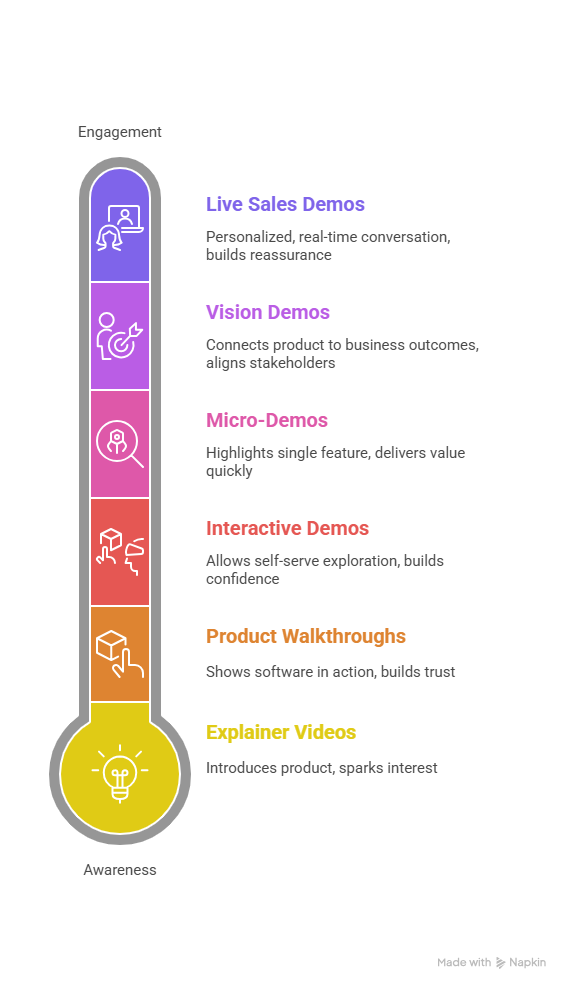
Not all video demos serve the same purpose. Some are designed to spark interest, others to explain details, and some to help close a deal. Understanding these formats and when to use each lets you match the right demo to the right moment in the buyer journey.
Below is a practical taxonomy of the most effective video demos for SaaS and B2B teams, explained in simple terms.
1 Explainer Videos: The First Introduction
What they are:
Explainer videos are short, high-level videos that introduce what your product does and why it exists. They often use simple visuals, animations, or light storytelling rather than real software screens.
Best for:
- Top-of-funnel awareness
- Website homepages
- Social media and ads
Why they work:
Explainers answer the “Why should I care?” question. They help a busy buyer quickly understand the problem you solve without technical details.
When to use them:
Use explainer videos when your audience is just discovering your product or when the problem itself needs to be clarified before features make sense.
Keywords to use naturally: product video demos, video demo examples, SaaS video demos
2 Product Walkthroughs Showing How It Actually Works
What they are:
A product walkthrough is a recorded screen demonstration of your software in action. It walks viewers through key workflows step by step, often with voice narration or on-screen guidance.
Best for:
- Mid-funnel education
- Website demo pages
- Email follow-ups after initial interest
Why they work:
These videos replace vague claims with proof. Buyers see real menus, real clicks, and real results. It answers the practical question: “Can this actually do what I need?”
When to use them:
Once a prospect understands what your product is, but wants to see how it fits into their daily work.
Keywords: product demo video, B2B SaaS demos
3 Interactive Product Demos Self-Serve Exploration
What they are:
Interactive demos allow viewers to “use” a simulated version of your product. Instead of watching passively, users click through workflows, explore features, and follow guided paths based on their role.
Best for:
- Product-led growth (PLG)
- Website “Try the Product” experiences
- High-intent buyers who want a hands-on evaluation
Why they work:
Modern buyers prefer to explore on their own. Interactive video demos and self-serve demos let them experience the product before talking to sales. This builds trust and speeds up decisions.
When to use them:
When prospects want proof without booking a meeting—or when your team wants to qualify leads based on real product engagement.
Keywords: interactive video demos, self-serve demos, interactive product demos
4 Micro-Demos: One Feature, One Moment
What they are:
Micro-demos are short clips (usually under 60 seconds) that focus on a single feature or use case. No long explanations. Just one clear “aha” moment.
Best for:
- Social media
- Prospecting emails
- In-app announcements
Why they work:
Attention is limited. Micro-demos respect that. They deliver value quickly and make complex features feel simple.
When to use them:
When you want to highlight a specific benefit, such as automating a task or generating a report in one click, without overwhelming the viewer.
Keywords: SaaS video demos, product video demos
5 Vision Demos: Big Picture for Executives
What they are:
Vision demos focus less on interface and more on business outcomes. Instead of showing menus and buttons, they connect the product to strategic goals like growth, efficiency, or risk reduction.
Best for:
- Executive audiences
- Early-stage enterprise discussions
- Stakeholder alignment
Why they work:
Executives don’t want to see every setting. They want to know how your product supports long-term success. Vision demos speak their language.
When to use them:
When selling to leadership teams who care about impact, not implementation details.
Keywords: B2B video demos, product demo video
6 Live Sales Demos: Personalized, Real-Time Conversations
What they are:
Live demos are real-time product demonstrations led by a sales or solutions expert, usually over video calls. They are customized based on the buyer’s needs and allow for questions and objections.
Best for:
- Decision-stage conversations
- Complex or high-value deals
- Technical validation
Why they work:
They combine human interaction with tailored product storytelling. Buyers can ask, “What if we do this?” and see the answer immediately.
When to use them:
When a prospect is seriously evaluating your solution and needs reassurance before committing.
Keywords: sales video demos, B2B video demos
Bringing It All Together
Each demo type serves a different purpose:
- Explainers attract attention
- Walkthroughs build understanding
- Interactive demos empower self-serve buyers
- Micro-demos drive quick engagement
- Vision demos align executives
- Live demos close deals
The most successful SaaS teams don’t rely on just one format. They build a demo ecosystem that supports every stage of the buyer journey.
This is also where AI-powered and personalized video demos are changing the landscape. Platforms like Puppydog.io allow teams to turn simple screen recordings or screenshots into multiple demo formats personalized for different roles, industries, or accounts without starting from scratch each time. The result is faster production, better relevance, and stronger engagement across marketing, sales, and customer success.
Default Demo Video vs Custom Demo Video
Not all demo videos are created for the same purpose. The biggest distinction is between default (standardized) demos and custom (personalized) demos.
Default Demo Video
A default demo video is pre-recorded and designed for broad use. It presents the core value proposition, key workflows, and primary features in a structured, reusable format.
Best used for:
- Website visitors
- Early-stage prospects
- Top-of-funnel awareness
- Product overviews
Advantages:
- Scalable and reusable
- Consistent messaging
- Lower production effort over time
Limitations:
- Less personalized
- May not address specific stakeholder concerns
- Lower impact in late-stage deals
Default demos are efficient and powerful for generating interest, but they are not designed to close complex deals on their own.
Custom Demo Video
A custom demo video is tailored to a specific account, industry, or use case. It aligns the narrative, examples, and workflows with the buyer’s actual challenges.
Best used for:
- Mid- to late-stage opportunities
- High-value accounts
- Multi-stakeholder decision processes
Advantages:
- Higher perceived relevance
- Stronger engagement
- Better alignment with decision criteria
Limitations:
- Requires preparation time
- Harder to scale manually
- Risk of over-customization if not structured
Custom demos increase persuasion because they reduce uncertainty. When buyers see their exact problem reflected in the demo, confidence rises.
Strategic Insight
Default demos create awareness and scale.
Custom demos drive alignment and conversion.
High-performing teams use both standard demos to educate broadly and tailored demos to move qualified opportunities forward.
How to Run a Sales Demo That Converts (Step-by-Step Framework)
A high-performing sales demo is not a product tour.
It is a structured conversation designed to move a deal forward.
The difference between a demo that “shows features” and one that converts is preparation, narrative control, and outcome alignment. Below is a proven framework that B2B SaaS teams can use to run demos that accelerate the pipeline instead of stalling it.
Step 1: Pre-Demo Preparation (The 80% Rule)
The most successful demos are won before the call begins.
Before scheduling or recording a demo, clarify:
- What specific business problem is the buyer trying to solve?
- Who will attend the demo (economic buyer, technical evaluator, end user)?
- What metric matters most to them (revenue, efficiency, cost, risk reduction)?
- What does success look like 90 days after implementation?
If the demo is not anchored to a measurable outcome, it becomes a feature showcase.
Preparation checklist:
- Review discovery notes.
- Customize examples to match the buyer’s industry or use case.
- Remove irrelevant product paths.
- Define one primary goal for the session (e.g., secure technical validation, align on next step).
A demo should feel tailored, even if the structure is standardized.
Step 2: Open With Context, Not Screens
Many sales demos fail in the first five minutes because the presenter jumps straight into the product.
Instead, start with alignment:
- Reconfirm the buyer’s problem.
- Restate their desired outcome.
- Set a clear agenda.
- Explain what they will gain from the session.
Example opening structure:
- “Today, we’ll focus specifically on how you can reduce manual reporting time by 40%.”
- “We’ll walk through three areas that directly impact that goal.”
- “At the end, we’ll align on next steps.”
This positions the demo as a solution discussion, not a software tour.
Step 3: Structure the 30–45 Minute Demo Properly
A structured demo keeps attention and momentum.
Suggested time breakdown:
5 minutes — Context & alignment
- Confirm goals
- Align expectations
10 minutes — Problem framing
- Describe the current challenge
- Quantify inefficiencies or risk
- Connect the product to impact
15–20 minutes — Guided walkthrough
- Show only relevant workflows
- Narrate outcomes, not clicks
- Tie every feature to business value
5–10 minutes — Objections & interaction
- Invite questions
- Address concerns directly
- Clarify integration, pricing, or security concerns
Final 5 minutes — Clear next step
- Define a mutual action plan
- Confirm timeline
- Assign responsibilities
Never end a demo with: “Let me know if you have questions.”
Always end with a defined next milestone.
Step 4: Demonstrate Outcomes, Not Features
Buyers do not purchase features.
They purchase results.
Instead of saying:
“Here’s our dashboard.”
Say:
“This dashboard eliminates manual reporting and gives leadership real-time visibility.”
Each feature should answer:
- What problem does this solve?
- How does this reduce cost, save time, or increase revenue?
- Why is this better than their current workflow?
If a feature does not directly support the buyer’s priority, skip it.
Focus increases persuasion.
Step 5: Personalize Without Overcomplicating
Personalization increases conversion, but over-customization increases risk.
Balance by:
- Using the buyer’s terminology.
- Showing industry-relevant examples.
- Highlighting workflows they specifically requested.
- Adjusting narrative emphasis.
Avoid:
- Live configuration experiments.
- Showing unfinished features.
- Overextending beyond your demo environment.
The demo should feel controlled, intentional, and outcome-driven.
Step 6: Invite Participation (Make It Conversational)
A converting demo is interactive.
Pause intentionally and ask:
- “How does this compare to your current workflow?”
- “Would this solve the reporting issue you mentioned?”
- “Who else would need visibility into this?”
Engagement increases retention and surfaces objections early.
Silence from the buyer is rarely a positive sign.
Step 7: Close With a Mutual Action Plan
The strongest demos transition naturally into the next steps.
Before ending:
- Recap key value points.
- Confirm alignment on goals.
- Define what happens next.
- Schedule the next meeting if appropriate.
Example:
“If reducing onboarding time by 30% is the priority, the next logical step would be a technical validation session with your implementation team next week.”
Momentum matters more than applause.
Final Thought
A sales demo does not close deals by itself.
It reduces uncertainty.
When structured correctly, it:
- Aligns stakeholders
- Clarifies value
- Builds confidence
- Moves the deal forward
The difference between a demo that converts and one that stalls is discipline in structure, clarity in narrative, and alignment with measurable outcomes.
How Video Demos Fit the B2B Buyer Journey
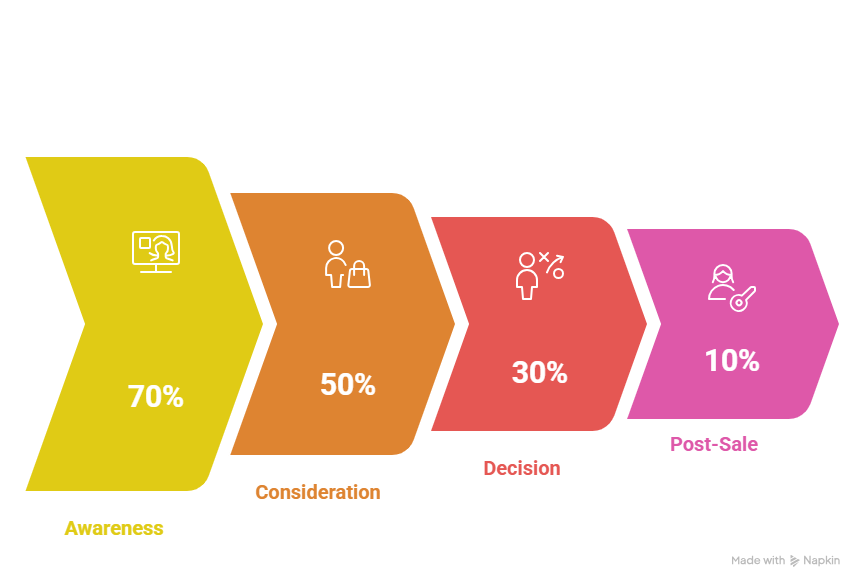
In today’s B2B world, buyers don’t follow a straight path from “awareness” to “purchase.” The journey is messy, non-linear, and increasingly self-directed. In fact, research shows that up to 70% of the decision-making process happens before a prospect ever talks to a salesperson. In this environment, video demos act as silent salespeople available 24/7, guiding prospects through every stage of evaluation.
Here’s how different types of video demos align with the B2B buyer journey:
Awareness Stage (Top-of-Funnel / ToFu)
Goal: Spark curiosity and define the “why.”
Demo types: Explainer videos, micro-demos, social snippets
What it achieves:
- Introduces your product in a simple, visual way
- Captures attention quickly on platforms like LinkedIn or YouTube
- Starts building trust without requiring a sales call
Example: A 45-second explainer video showing how a SaaS tool automates a repetitive task can immediately resonate with a busy manager scrolling LinkedIn.
Consideration Stage (Mid-Funnel / MoFu)
Goal: Educate on the product’s features and technical fit.
Demo types: Product walkthroughs, interactive product demos, self-serve demos
What it achieves:
- Demonstrates how the product solves real problems
- Allows buyers to explore features at their own pace
- Helps internal champions evaluate the product for their team
Example: An interactive demo lets a finance lead click through a workflow relevant to their role, while an operations manager can focus on integration features, both in the same demo environment.
Decision Stage (Bottom-of-Funnel / BoFu)
Goal: Reduce risk and justify investment.
Demo types: Live demos, vision demos, personalized AI-powered demos
What it achieves:
- Answers role-specific questions and objections in real time
- Shows ROI and measurable impact of the product
- Builds confidence in final decision-making
Example: A live demo presented to a C-suite team can focus on strategic outcomes like cost savings, scalability, or efficiency improvements, rather than just menus or clicks.
Post-Sale / Retention Stage
Goal: Facilitate adoption and minimize friction.
Demo types: Onboarding videos, how-to series, support clips
What it achieves:
- Speeds up time-to-value for new customers
- Reduces churn by showing underused features
- Helps customer success teams scale support without extra manpower
Example: A series of 2-minute onboarding videos covering common tasks ensures new users can independently start using the product effectively.
Why Video Demos Work Across the Journey
- They simplify complex information: Buyers don’t have to read long documents or sit through dense slides.
- They build trust: Seeing the product in action proves it can deliver results.
- They empower buyers to self-educate: Interactive and self-serve demos give control to the prospect, reducing friction.
- They provide measurable insights: Engagement metrics like video completion, clicks in interactive demos, and demo-qualified leads (DQLs) help teams prioritize follow-ups.
Platforms like Puppydog.io make it easy to deploy video demos at every stage, turning one screen recording into multiple formats tailored for different roles, funnel stages, or use cases. This ensures your demos aren’t just content, they’re strategic tools that guide prospects seamlessly from awareness to retention.
B2B Use Cases: Marketing, Sales & Customer Success
A video demo isn’t just a marketing asset or a sales tool. It’s a multi-purpose resource that adds value across marketing, sales, and customer success teams. When used strategically, it becomes a central pillar of the entire B2B buyer journey, improving engagement, conversion, and retention. Let’s break down how each department can benefit.
1 Marketing: Driving Awareness, Engagement & Conversions
Marketing teams use video demos for SaaS and product video demos to attract, educate, and nurture prospects. Here’s how they add value:
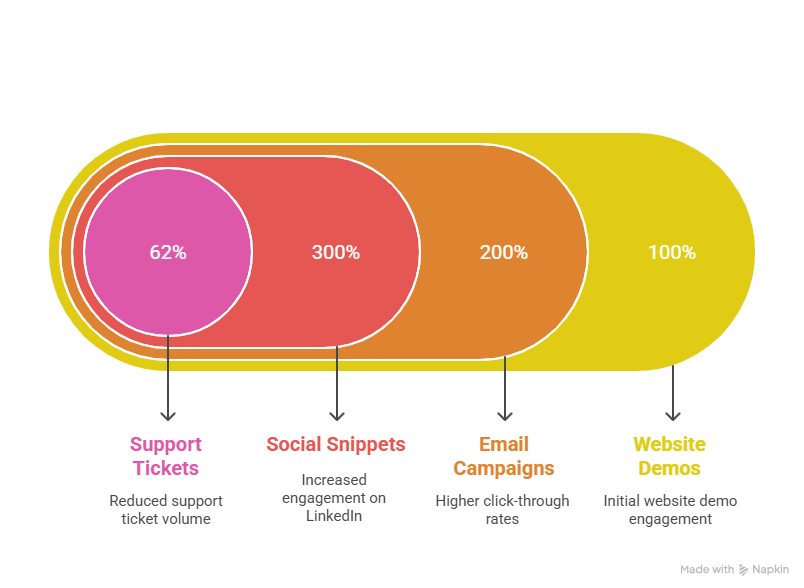
- Website Demos: Embedding demos on landing pages increases conversions by showing immediate product value rather than relying on static content or PDFs.
- Social Snippets: Short demo clips for LinkedIn, YouTube, or TikTok drive higher engagement than text or images alone. Video posts generate 3x more engagement on LinkedIn and are shared more frequently, amplifying reach.
- Email Campaigns: Video-enhanced emails achieve 2–3x higher click-through rates, especially when highlighting a key feature or solving a specific problem.
- SEO & Organic Reach: Optimized product demos improve search rankings, driving more qualified traffic to your site.
Why it works: Buyers today prefer visual content over long-form text. A well-timed demo can move a prospect from passive awareness to active consideration without any direct sales interaction.
2 Sales: Accelerating Deals & Empowering Champions
For sales teams, sales video demos are not just content. They are strategic assets that accelerate deal cycles and empower internal champions within target accounts.
- Asynchronous Demos: Recorded or interactive demos allow sales reps to share the product with multiple decision-makers without scheduling repeated meetings. This “viral effect” helps your internal champion advocate for your solution across the company.
- Discovery & Qualification: Demos integrated with discovery conversations help reps surface pain points, evaluate technical fit, and focus on high-intent prospects early in the funnel.
- Live Demos: Personalized, real-time demos address specific objections, show ROI, and create a human connection, which is critical for closing complex deals.
Impact: According to industry data, AI-enhanced demos can reduce the sales cycle by up to one week while improving deal conversion rates, making reps more efficient and deals more predictable.
3 Customer Success: Onboarding, Adoption & Retention
The role of video demos doesn’t end when a deal closes. Customer success teams use them to maximize adoption, reduce churn, and drive lifetime value:
- Onboarding Videos: Step-by-step tutorials help new users get started quickly, reducing time-to-value and frustration.
- Feature Highlights: How-to clips and micro-demos teach underused or advanced features, encouraging deeper product engagement.
- Support & Troubleshooting: Video demos reduce support ticket volume by up to 62%, as users often prefer visual instructions over text-based guides.
Why it matters: Engaged, well-trained customers are more likely to renew, expand usage, and recommend your product to peers. Video demos ensure that learning and adoption happen at scale, without overburdening your team.
Key Takeaways Across Departments
- Marketing: Build awareness, educate prospects, and drive conversions with shareable, snackable demos.
- Sales: Use demos as strategic, asynchronous assets that empower champions, qualify leads, and shorten cycles.
- Customer Success: Onboard effectively, increase adoption, and reduce support overhead with visual guides.
Platforms like Puppydog.io streamline these workflows, allowing teams to create personalized, automated demos from simple screen recordings or screenshots. Whether it’s a micro-demo for social, an interactive self-serve product tour, or a fully personalized AI demo for decision-makers, Puppydog ensures your content reaches the right audience at the right stage, maximizing engagement and ROI.
Common Sales Demo Mistakes That Kill Deals
Even well-designed products lose deals because of poorly executed demos.
A sales demo is a high-leverage moment in the buying journey. It shapes perception, builds (or erodes) confidence, and determines whether momentum continues.
Below are the most common mistakes that quietly reduce conversion rates.
1. Turning the Demo Into a Product Tour
One of the biggest mistakes is showing everything.
When a demo becomes a feature walkthrough, buyers lose focus. Instead of clarity, they experience cognitive overload.
A strong demo:
- Focuses only on workflows relevant to the buyer’s goal.
- Connects features directly to business impact.
- Removes unnecessary navigation paths.
If the demo feels like “Here’s everything our platform can do,” it is too broad.
Precision persuades. Volume overwhelms.
2. Leading With Features Instead of Problems
Buyers care about outcomes, not interface details.
Starting with:
“Let me show you our dashboard.”
Instead of:
“You mentioned reporting delays were affecting leadership decisions. Let’s look at how to eliminate that bottleneck.”
The difference is subtle but powerful.
Always frame the demo around the buyer’s pain before showing the solution.
3. Lack of Personalization
Generic demos signal low effort.
Even small adjustments increase perceived value:
- Using the prospect’s industry terminology
- Referencing their specific use case
- Aligning examples with their business model
Personalization does not require rebuilding the demo.
It requires aligning the narrative.
When the demo feels generic, buyers assume the solution is generic.
4. Overcomplicating the Walkthrough
Many presenters attempt to prove product depth by diving into advanced functionality.
This often backfires.
Complexity increases uncertainty.
Uncertainty delays decisions.
Instead:
- Show only what supports the buyer’s primary goal.
- Avoid unnecessary configuration steps.
- Keep the flow intentional and structured.
Depth can be saved for follow-up sessions.
5. Talking Too Much, Listening Too Little
A demo should be a conversation, not a lecture.
If the presenter speaks continuously for 30 minutes, engagement drops, and objections remain hidden.
Pause intentionally and ask:
- “Does this align with your current workflow?”
- “Would this solve the challenge you described?”
- “Who else would need visibility into this?”
Engagement surfaces concerns early and strengthens alignment.
6. Ignoring Stakeholder Differences
Not all attendees evaluate the product the same way.
- Executives care about ROI and risk.
- Managers care about process efficiency.
- End users care about usability.
- Technical stakeholders care about integration and security.
If the demo only addresses one perspective, others disengage.
A converting demo acknowledges multiple decision lenses.
7. Ending Without a Clear Next Step
This is the most expensive mistake.
Many demos end with:
“Let us know if you have questions.”
That creates friction and stalls momentum.
Instead, conclude with:
- A summary of the agreed value
- A defined next milestone
- A scheduled follow-up
Momentum reduces deal fatigue.
8. Overpromising or Improvising Risky Live Changes
Attempting to configure features live, switching environments mid-call, or showcasing unstable functionality increases risk.
A demo should feel controlled and intentional.
Confidence builds trust.
Improvisation introduces doubt.
Measuring Success: Demo Metrics & ROI
Creating video demos is just the first step. The real power comes from measuring how they perform and understanding the impact on revenue, engagement, and sales velocity. Without tracking the right metrics, even the most beautifully produced demo could be underperforming or worse, going unnoticed.
Here’s how B2B teams can measure the success of their demos and prove ROI.
Key Demo Metrics
1. Video Views & Completion Rates
- What it measures: How many prospects watched your demo and whether they watched it all the way through.
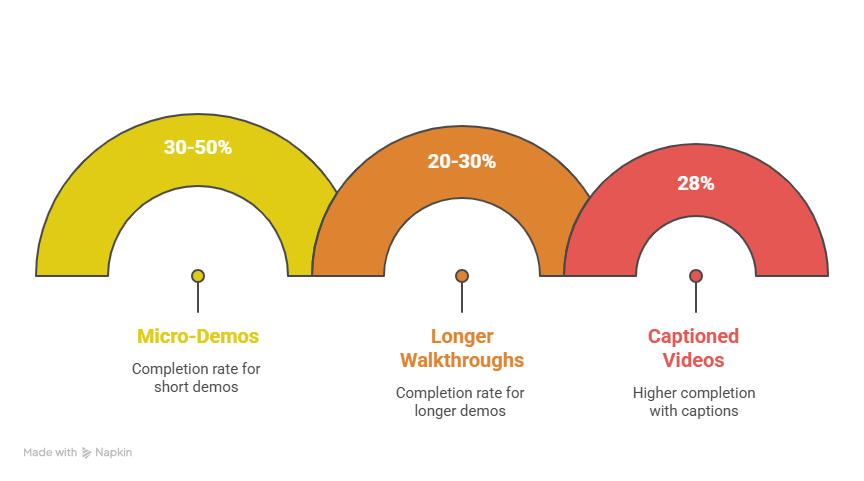
- Why it matters: High completion rates indicate strong engagement. For micro-demos (<60s), aim for 30–50% completion, while longer walkthroughs (3–5 minutes) can expect 20–30%.
- Tip: Add captions for silent autoplay videos with subtitles, see 28% higher completion among B2B audiences.
2. Click-Through Rates (CTR)
- What it measures: How often viewers take action after watching a demo (e.g., schedule a call, sign up for a trial).
- Why it matters: CTR ties demo engagement directly to lead generation. Video-enhanced emails and social campaigns often achieve 2–3x higher CTR than text-based campaigns.
3. Demo Qualified Leads (DQLs)
- What it measures: Prospects who completed a critical path in the demo, showing high intent to purchase.
- Why it matters: DQLs allow sales teams to focus on leads most likely to convert, improving efficiency and reducing wasted effort.
4. Engagement by Feature or Section
- What it measures: Which parts of your demo viewers interact with most (clicks, pauses, replays).
- Why it matters: Identifies what features matter most to your audience and highlights potential objections or confusion points.
5. Social Metrics
- What it measures: Shares, comments, likes, and views on platforms like LinkedIn, YouTube, or Twitter.
- Why it matters: Social engagement signals brand awareness, thought leadership, and indirect influence on the “dark funnel” where untrackable buying decisions happen.
ROI of Video Demos
Investing in video demos pays off in multiple ways, and ROI can be quantified both directly and indirectly:
Direct Impact on Sales & Marketing:
- Conversion Rates: Pages with interactive demos can see up to 7.9x higher conversions compared to static pages.
- Deal Conversion: Accounts that engage with demos convert at 10% vs. 3% for those without demos.
- Shortened Sales Cycles: AI-powered and automated demos reduce sales cycles by up to 23%, accelerating revenue recognition.
Indirect Impact:
- Content Longevity: Unlike written content, a demo can remain relevant for 2–3 years, compounding its ROI over time.
- Reduced Support Costs: Onboarding and how-to demos reduce tickets and manual training, freeing up customer success resources.
- Internal Efficiency: Sales teams can leverage demos to educate internal champions, reducing repetitive meetings and improving deal momentum.
Using AI to Enhance Demo Performance
AI is transforming demo analytics and ROI tracking in three main ways:
- Automated Personalization: AI can generate unique demos for each prospect, increasing engagement and CTR by up to 67%.
- Predictive Insights: AI tools can identify which prospects are most likely to convert based on demo interactions.
- Content Repurposing: Long webinars or walkthroughs can be automatically cut into micro-demos for social, emails, or onboarding, maximizing the value of every asset.
Platforms like Puppydog.io provide integrated analytics for all these metrics, enabling teams to track engagement, optimize content, and calculate ROI without juggling multiple tools.
Key Takeaways
- Track both engagement (views, clicks, DQLs) and business outcomes (conversion, sales velocity, retention).
- Focus on the metrics that align with your goals: awareness, consideration, or decision.
- Use AI-driven insights and automation to scale demos, personalize content, and measure performance in real time.
- Remember: a video demo’s value isn’t just in production, it’s in how it moves buyers closer to a decision while saving time and resources.
Distribution & the Dark Funnel
Even the most engaging video demo won’t drive results if it doesn’t reach the right audience. In today’s B2B environment, buyers increasingly research and share information in ways that are invisible to traditional tracking, what marketers call the dark funnel. Understanding how to distribute demos effectively and illuminate this hidden part of the buyer journey is critical for modern SaaS teams.
What Is the Dark Funnel?
The dark funnel refers to the large portion of the buyer journey that happens off traditional tracking systems. Think:
- Private Slack or Teams channels
- Peer-to-peer discussions on LinkedIn or WhatsApp
- Anonymous research on forums or Reddit
Some estimates suggest that up to 95% of B2B buying activity occurs in this “dark” space. Standard metrics like UTM codes, form fills, and website analytics can’t capture these interactions but video demos can still influence them.
Why? Because demos are highly shareable and easy to consume. A VP might watch a micro-demo on LinkedIn, screenshot a key feature, and drop it into a private chat. Even if your analytics don’t track that click, the demo has planted the idea and advanced the buying journey.
Best Practices for Distribution
To maximize impact, B2B teams must think beyond just producing demos. They need a distribution-first strategy:
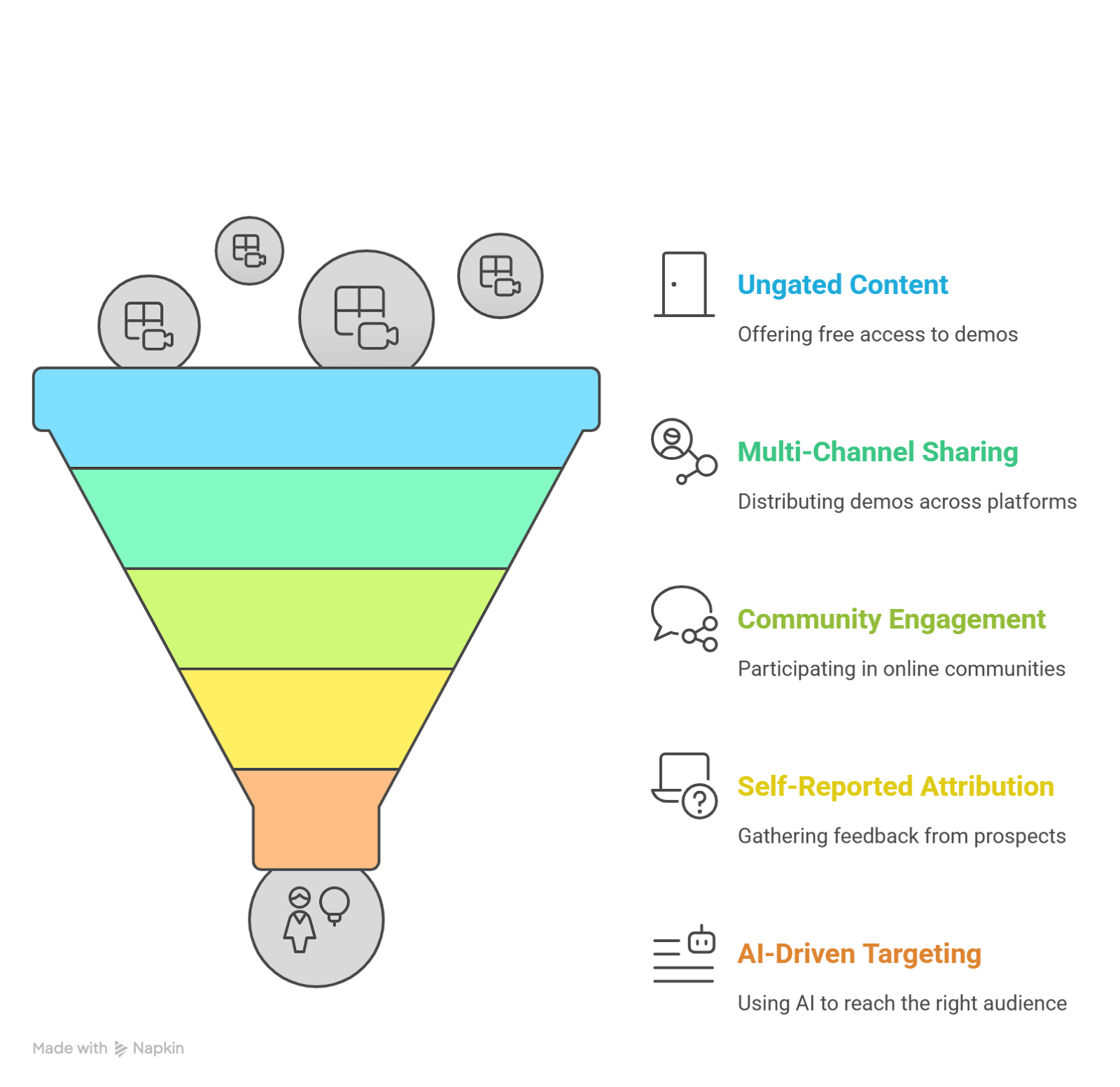
- Ungated High-Value Content
- Avoid requiring forms too early. Research shows 97% of interested traffic will leave if content is gated too soon.
- Offer interactive or personalized demos freely to capture interest and influence decisions in the dark funnel.
- Avoid requiring forms too early. Research shows 97% of interested traffic will leave if content is gated too soon.
- Multi-Channel Sharing
- Distribute demos across LinkedIn, YouTube, company blogs, email campaigns, and social communities.
- Short clips or micro-demos are particularly effective on social platforms for pattern interrupts and capturing attention quickly.
- Distribute demos across LinkedIn, YouTube, company blogs, email campaigns, and social communities.
- Leverage Community & Peer Influence
- Engage in niche Slack groups, Discord communities, or industry forums.
- Sharing insightful demos or “how-to” clips in these spaces can spark organic discussions and referrals.
- Engage in niche Slack groups, Discord communities, or industry forums.
- Self-Reported Attribution
- Ask prospects directly, “How did you hear about us?” in forms or during meetings.
- This qualitative data can reveal a dark funnel influence that analytics can’t track.
- Ask prospects directly, “How did you hear about us?” in forms or during meetings.
- AI-Driven Targeting
- Tools like 6sense or Bombora help identify accounts by researching your topics anonymously.
- Combine this with personalized AI video demos to reach the right audience at the right time, even in hidden corners of the web.
- Tools like 6sense or Bombora help identify accounts by researching your topics anonymously.
Why Distribution Matters
Many teams make the mistake of focusing solely on production quality. While clarity and storytelling are important, the distribution strategy often determines the ROI. Without reaching prospects where they are, a video demo, even a top-tier interactive one, becomes just another unused asset.
Key benefits of effective demo distribution:
- Extends reach into the dark funnel
- Empowers internal champions to share content within their organizations
- Supports asynchronous buying, reducing the need for repeated sales calls
- Generates measurable engagement across multiple platforms
Platforms like Puppydog.io simplify both production and distribution, allowing teams to:
- Repurpose long demos into short clips for social or email
- Deliver personalized AI demos at scale
- Track viewer engagement and behavior across channels
Distribution is not an afterthought. It’s part of the demo strategy. By making demos accessible, shareable, and targeted, teams can influence buyers in both visible and hidden channels. Combining strong content with smart distribution ensures that your demos reach prospects at every stage of the journey, even in the elusive dark funnel.
The Future: AI Video Demos
The landscape of B2B video demos is evolving faster than ever, thanks to artificial intelligence. AI isn’t just making production faster. It’s making demos smarter, more personalized, and more actionable. For SaaS companies, embracing AI-powered demos isn’t optional; it’s a competitive necessity.
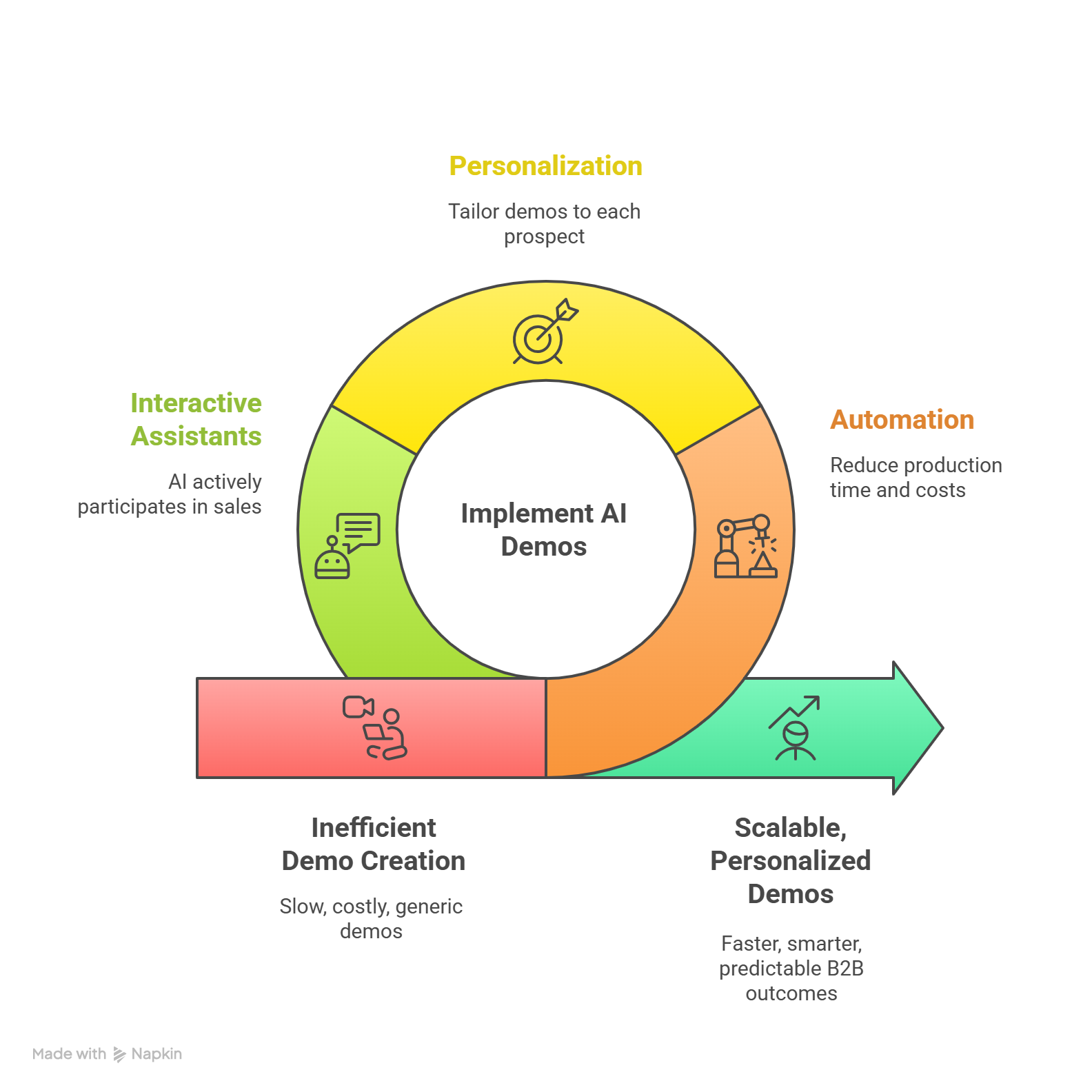
Automation & Production Efficiency
Traditional demo creation can take weeks: recording screens, editing, adding voiceovers, and formatting for multiple channels. AI dramatically reduces this time:
- Text-to-Video & Synthetic Presenters: Tools can convert scripts or bullet points into high-quality, presenter-led videos, no actors or studio required. Production that once took days can now happen in under an hour.
- Automated Repurposing: AI analyzes long-form content like webinars or live demos and generates multiple short clips for social media, email campaigns, or onboarding series.
- Real-Time Translation & Localization: AI voice cloning and lip-syncing allow demos to be translated into 175+ languages instantly, expanding reach globally while keeping your brand voice consistent.
Impact: Faster production, lower costs, and a library of reusable content that scales with your team.
Hyper-Personalization at Scale
B2B buyers increasingly expect experiences tailored to their role, company, or industry. AI makes this possible in ways humans can’t replicate at scale:
- Dynamic Personalization: Names, logos, and role-specific messaging can be integrated directly into the demo for each prospect.
- Industry-Specific Scenarios: AI can adapt the workflow or feature examples based on the prospect’s business, making the demo immediately relevant.
- Higher Engagement: Personalized AI demos have been shown to increase click-through rates by up to 67% compared to generic versions.
Platforms like Puppydog.io make this process seamless, transforming a single screen recording into multiple tailored demos that speak directly to each decision-maker.
Agentic AI & Interactive Assistants
The next frontier is AI that actively participates in the sales process, not just presents content:
- AI Sales Assistants (AI SDRs): Virtual agents can engage prospects during demos, answer questions in real time, and even schedule follow-ups.
- Predictive Video Funnels: AI can adjust the demo in real-time, changing scenes, highlighting different features, or swapping presenters based on engagement and sentiment.
- Coaching & Feedback: AI can monitor live demos, providing sellers with real-time guidance on objection handling, pacing, and messaging.
This transforms demos from passive viewing experiences into interactive, adaptive, and responsive tools that improve conversion and shorten the sales cycle.
Strategic Implications for B2B Teams
AI-powered video demos are not just a production upgrade. They are a strategic advantage:
- Scalability: Create more demos faster, without increasing headcount.
- Personalization: Deliver highly relevant demos to every prospect without manual effort.
- Data-Driven Insights: Track engagement, identify champions, and refine messaging based on AI analytics.
- Competitive Edge: Companies that adopt AI demos early can outpace competitors by reducing friction, improving engagement, and accelerating deals.
Puppydog.io and the AI Revolution
Platforms like Puppydog.io are leading this transformation by making AI-powered demos accessible to B2B teams of any size. With Puppydog:
- Screen recordings or screenshots can be converted into interactive, personalized demos.
- Teams can deploy AI-powered variations tailored for different roles or accounts.
- Analytics and insights help optimize content for higher conversion and engagement.
The future of video demos is automated, adaptive, and human-centered. By combining AI efficiency with clear storytelling and personalization, companies can create demos that not only educate but also persuade, driving faster, smarter, and more predictable B2B buying outcomes.
How to Choose the Right Video Demo Platform
With video demos becoming central to B2B marketing, sales, and customer success, choosing the right platform is critical. The platform you select will shape how quickly you can produce demos, how personalized they are, and how effectively you can measure ROI. Here’s a structured approach to making the right choice.
Key Criteria to Consider
When evaluating video demo platforms, focus on capabilities that align with your business goals:
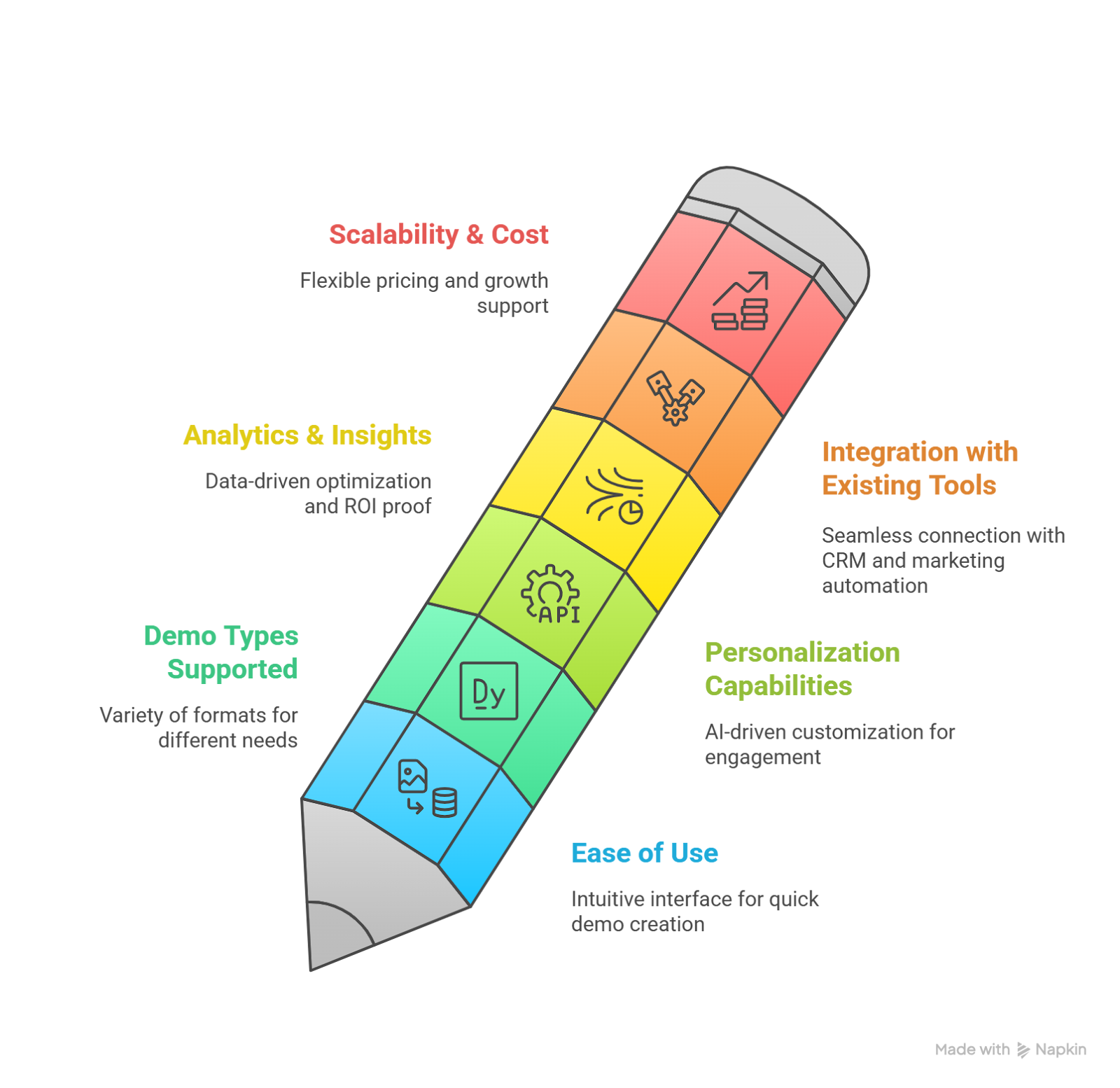
- Ease of Use
- Platforms should allow you to create demos without requiring a production team or extensive technical expertise.
- Drag-and-drop editors, templates, and intuitive workflows reduce the learning curve.
- Why it matters: Teams can produce content faster, experiment with formats, and iterate without bottlenecks.
- Platforms should allow you to create demos without requiring a production team or extensive technical expertise.
- Demo Types Supported
- Ensure the platform supports a variety of demos: product walkthroughs, interactive demos, micro-demos, and AI-powered personalized demos.
- Why it matters: Flexibility allows marketing, sales, and customer success to create content tailored to different stages of the buyer journey.
- Ensure the platform supports a variety of demos: product walkthroughs, interactive demos, micro-demos, and AI-powered personalized demos.
- Personalization Capabilities
- Look for AI-driven personalization features such as dynamic text, logos, or industry-specific examples.
- Platforms like Puppydog.io allow you to automatically generate personalized versions for different accounts or roles, improving engagement and conversion.
- Look for AI-driven personalization features such as dynamic text, logos, or industry-specific examples.
- Analytics & Insights
- A strong platform provides detailed metrics: completion rates, clicks, engagement per feature, DQLs, and social sharing data.
- Why it matters: Analytics guide your strategy, helping you optimize demos, prioritize leads, and prove ROI to stakeholders.
- A strong platform provides detailed metrics: completion rates, clicks, engagement per feature, DQLs, and social sharing data.
- Integration with Existing Tools
- Ensure the platform works with your CRM, marketing automation, and analytics tools.
- Seamless integration enables automated follow-ups, lead scoring, and tracking engagement throughout the buyer journey.
- Ensure the platform works with your CRM, marketing automation, and analytics tools.
- Scalability & Cost
- Consider pricing models, seat limits, and feature availability.
- Platforms should scale with your team, supporting growing content demands without exploding costs.
- Consider pricing models, seat limits, and feature availability.
Platform Examples
Here’s a quick overview of the types of platforms commonly used by B2B teams:
Tip: Don’t just chase flashy features. Choose a platform that matches your workflow, audience, and budget while allowing experimentation with formats and personalization.
Why Puppydog.io Stands Out
For B2B SaaS teams, Puppydog.io offers a unique combination of:
- Ease of Use: Create professional-quality demos without a production team.
- Flexibility: Support for interactive, micro, live, and AI-powered personalized demos.
- Analytics-First: Insights on engagement, DQLs, and conversions help prioritize leads.
- Scalable Personalization: Tailor demos for specific roles, companies, or industries at scale.
This makes it ideal for teams looking to accelerate sales cycles, improve engagement, and maximize ROI with a single platform.
Key Takeaways
- Identify your core needs: production speed, personalization, analytics, or multi-format support.
- Prioritize platforms that integrate with your existing tools and workflow.
- Evaluate scalability, pricing, and long-term ROI.
- Test before committing: pilot a few demos to see how easily your team can produce, distribute, and measure results.
Choosing the right video demo platform is more than a technology decision. It’s a strategic move that can determine the efficiency, impact, and scalability of your entire demo strategy.
Best Practices for High-Converting Video Demos
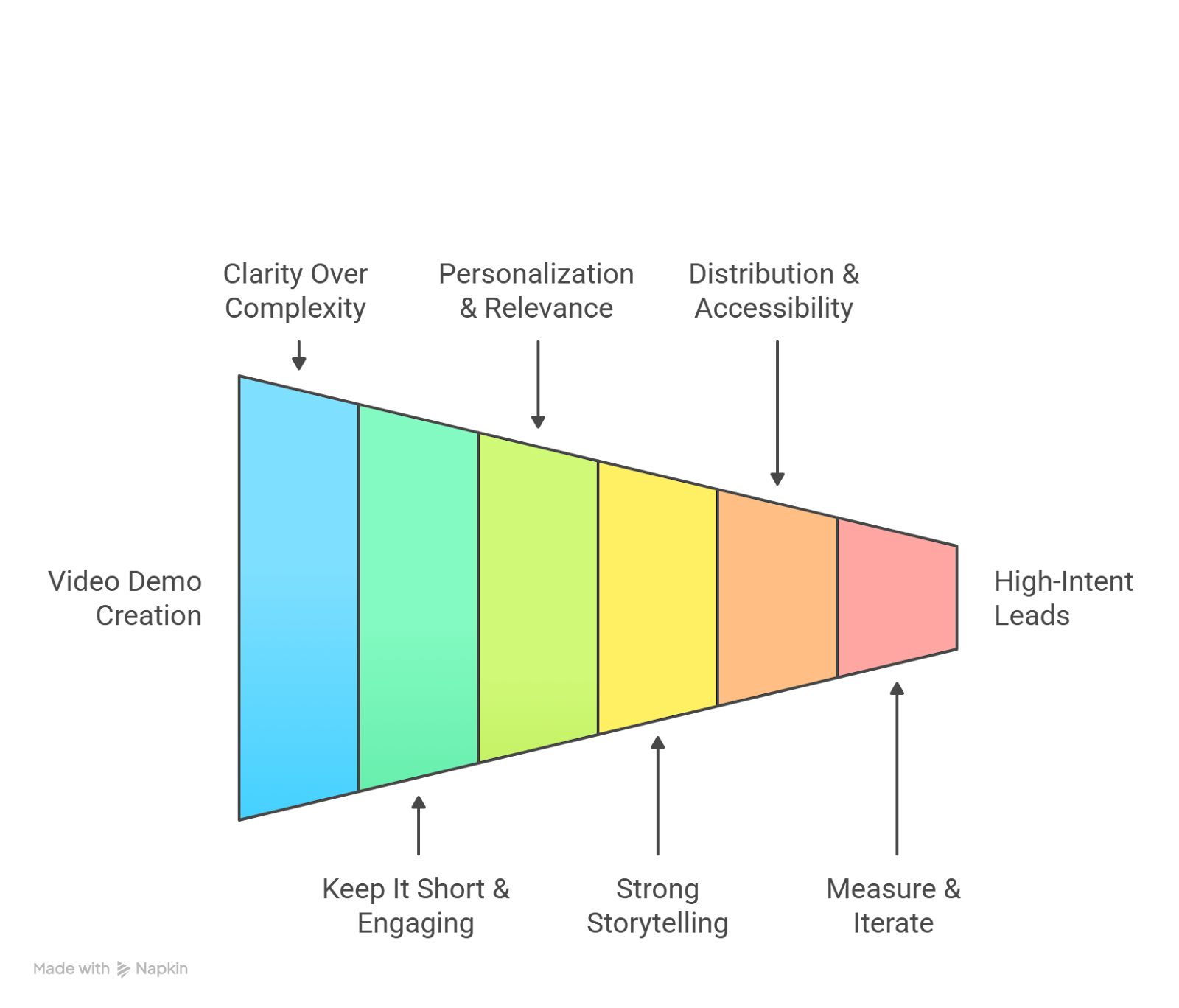
Creating a video demo isn’t just about recording your product. It’s about crafting an experience that informs, engages, and persuades your audience. Even the most advanced AI or interactive platform won’t perform if the demo doesn’t follow proven principles. Here are the best practices to ensure your demos drive conversions.
1 Clarity Over Complexity
- Focus on Outcomes: Highlight the problem your product solves rather than showing every feature.
- Avoid Jargon: Use simple language; even technical buyers appreciate a clear explanation.
- Single Goal: Each demo should have one primary objective, whether that’s explaining a workflow, showcasing ROI, or answering a key question.
Example: Instead of a 10-minute walkthrough of every feature, create a 2-minute demo showing how your SaaS tool automates a critical task, saving the user time.
2 Keep It Short & Engaging
- Optimal Length: B2B videos perform best at 4–5 minutes, while social snippets or micro-demos can be under 60 seconds.
- Hook Early: Capture attention in the first 5–10 seconds with a problem statement, statistic, or bold visual.
- Break Up Content: Use chapters, tooltips, or interactive hotspots to make longer demos digestible.
3 Personalization & Relevance
- Tailor Content: Include prospect-specific information such as company name, role, or industry use case.
- Interactive Paths: Let viewers explore features relevant to their workflow with branching paths or clickable hotspots.
- AI-Powered Personalization: Automated demos can dynamically adjust content to match viewer engagement and behavior.
Personalized demos have been shown to increase engagement by up to 67%, turning passive viewers into high-intent leads.
4 Strong Storytelling
- Problem → Solution → Outcome: Structure the demo like a story, showing how your product solves a real-world problem.
- Visual Flow: Use clear visuals, on-screen highlights, and voiceover to guide attention.
- Real-World Context: Show the product in a scenario that reflects the user’s environment or workflow.
Pro Tip: Vision demos for executives focus more on outcomes and ROI than on navigating menus, telling a story that resonates with decision-makers.
5 Distribution & Accessibility
- Multi-Channel Sharing: Share demos via email, LinkedIn, website, and internal champion networks.
- Captions & Silent Playback: Nearly half of B2B video views are on mobile devices or muted—captions improve completion rates by 28%.
- Gating Strategy: Provide ungated demos early in the funnel to maximize reach, and reserve gated content for mid-funnel or high-value prospects.
6 Measure & Iterate
- Track Engagement: Monitor views, DQLs, CTR, and feature interaction.
- Refine Content: Use analytics to improve messaging, remove confusing sections, and emphasize high-value features.
- A/B Testing: Experiment with hooks, personalization, length, and format to identify what converts best.
Key Takeaways
- Focus on clarity, brevity, and relevance.
- Use personalization and interactive elements to keep viewers engaged.
- Tell a story that resonates with your audience’s challenges and goals.
- Distribute widely and measure performance to continuously optimize.
With Puppydog.io, B2B teams can implement all these best practices efficiently. From creating interactive, AI-powered demos to analyzing engagement metrics, Puppydog empowers teams to craft high-converting demos at scale.
Conclusion:
Video demos are no longer just a marketing accessory. They’re a strategic tool that educates prospects, builds trust, and drives conversions throughout the B2B buyer journey. From explainer videos to interactive and AI-powered personalized demos, the key is to make them clear, relevant, and engaging. When done right, demos act as silent salespeople, influencing decisions even in the hidden corners of the dark funnel.
Take your demos to the next level with Puppydog.io. Create personalized, interactive, and high-converting video demos that scale with your business.
FAQs: Frequently asked questions
1. What is a video demo?
A video demo is a visual presentation that showcases how a product or service works, highlighting its features, benefits, and real-world use cases. In B2B contexts, it helps prospects understand complex SaaS products quickly and effectively, acting as a “tangible proof” of value.
2. What are video demos used for in B2B?
Video demos are used to educate prospects, build trust, accelerate sales cycles, and support customers onboarding. They serve marketing, sales, and customer success teams by driving engagement, generating qualified leads, and reducing friction in the buying journey.
3. What are the different types of video demos?
Common types include:
- Explainer videos – short, high-level introductions
- Product walkthroughs – detailed demonstrations of functionality
- Interactive demos – allow viewers to explore features themselves
- Micro-demos – single-feature, short clips
- Vision demos – executive-focused storytelling
- Live sales demos – real-time, personalized presentations
4. Are video demos effective for B2B SaaS?
Absolutely. B2B SaaS buyers prefer video to manuals or lengthy documents. Video demos improve understanding, boost engagement, and increase conversion rates by providing clear, visual proof of a product’s value.
5. What is the difference between a video demo and an interactive demo?
A standard video demo is a passive experience. You watch it from start to finish. An interactive demo lets the prospect explore features, click through workflows, and tailor the experience to their role or needs, increasing engagement and understanding.
6. How are AI video demos different from traditional video demos?
AI video demos offer personalization at scale, dynamic adjustments based on viewer behavior, and faster production. They can integrate names, logos, or industry-specific scenarios automatically, whereas traditional demos are static and less adaptable.
7. Can video demos replace live sales demos?
Not entirely. Video demos are excellent for early-stage engagement, onboarding, and self-serve exploration, but live demos remain valuable for high-value deals requiring real-time Q&A, customization, and relationship-building.
8. What is the best alternative to traditional video demos for B2B SaaS?
Interactive, AI-powered demos like those created on Puppydog.io are the most effective alternative. They combine the visual clarity of traditional demos with engagement, personalization, and analytics, enabling teams to scale demo experiences and improve conversion rates.

Sarah Thompson is a storyteller at heart and Business Developer at PuppyDog.io. She’s passionate about creating meaningful content that connects people with ideas, especially where technology and creativity meet.