Top 20 Loom Alternatives in 2026 | Tried and Tested | Puppydog


Updated: 28th July 2026
What changed with Creator Lite seats
Before the migration, Loom offered a free "Creator Lite" viewer role. Teams used it freely designers, clients, stakeholders, project managers. Anyone who needed to watch but didn't record regularly got a Creator Lite seat. It cost nothing. Teams of 10 real video users and 90 passive viewers paid for 10 seats.
That model ended in February 2026. Atlassian discontinued the Creator Lite role for all net-new users and began phasing it out for existing workspaces on a rolling basis tied to each account's Atlassian billing integration date. Every Creator Lite seat converted to a full paid Creator account automatically. Admins had until their next scheduled billing date to manually remove unneeded users in Atlassian Administration, or pay for every single one of them.
Most admins didn't catch it in time. The math was brutal. A team with 90 passive viewers and 10 active recorders went from paying for 10 seats to 100. One widely shared example put the annual bill jump at $240 to $24,000. Individual users reported monthly invoices moving from $18 to $220 overnight. These weren't edge cases. They were the predictable outcome of the policy.
What broke after the migration
The billing shock was only part of the story. The technical migration introduced its own set of problems.
Users with dormant Trello or Jira SSO credentials found themselves locked out of their Loom accounts entirely. Loom's support portal requires login before you can file a ticket, a wall that's hard to find funny when the problem is that you cannot log in.
Recording reliability dropped noticeably. On November 19, 2025, a documented incident on loom.status.atlassian.com showed recorded videos rendering transcripts and waveforms but failing to play audio across web browsers. Additional outages hit on October 27 and December 16, 2025. For a tool specifically designed to replace synchronous meetings, outages hurt more than they would in almost any other product category.
Loom's Trustpilot rating sits at 1.4 out of 5. Its long-term G2 average is 4.7 out of 5 from users who adopted it before the acquisition. That gap between legacy satisfaction and present frustration tells you everything about the trajectory.
To be fair: Loom still does one thing well. For quick internal async updates, a bug report, a product walkthrough, a brief for a remote teammate, it remains fast, familiar, and functional. If that's all you need, the Starter plan technically works. Just know it caps you at 25 total videos, a 5-minute recording limit per clip, and 720p maximum resolution. For any team doing regular async communication, that ceiling appears within a week.
How much does Loom cost in 2026?
Pricing checked July 27, 2026. (Source: loom.com/pricing.)
How we tested these Loom alternatives
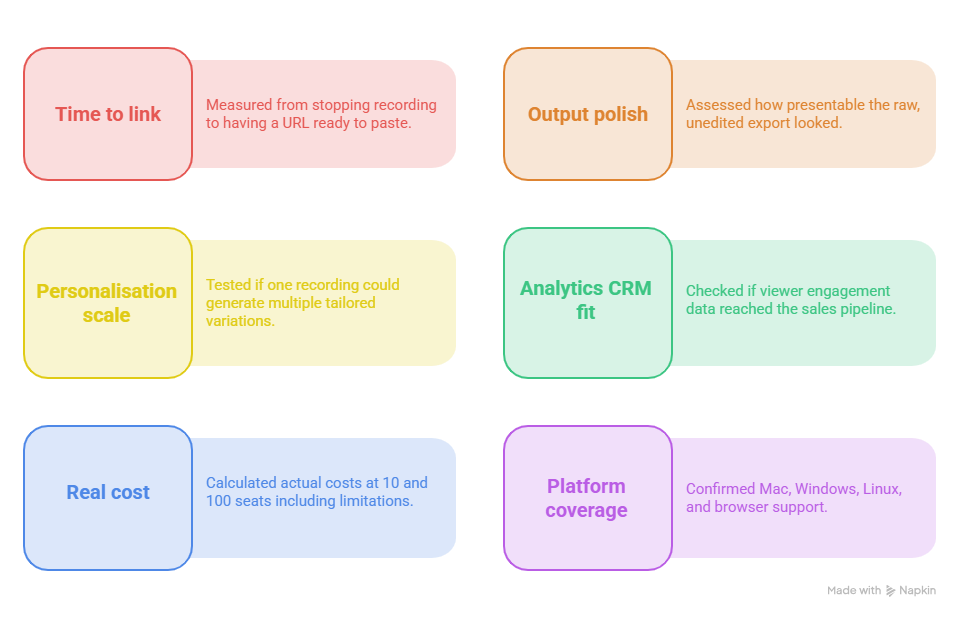
We evaluated every tool on this list against six criteria that reflect how real teams actually use async video:
- Time to shareable link: We measured from the moment we stopped recording to having a URL ready to paste. This is the core Loom loop most teams depend on daily.
- Output polish without editing: We assessed how presentable the raw, unedited export looked. Not everyone has time to trim and colour-correct before hitting send.
- Personalisation and scale: We tested whether one base recording could generate multiple variations, each tailored to a different prospect, role, or audience segment.
- Analytics and CRM fit: We checked whether viewer engagement data. who watched, how long, and which segments they replayed. actually reached the sales pipeline or stayed locked inside the video tool.
- Real cost at 10 seats and 100 seats: Headline pricing rarely survives contact with a real team. We calculated what each tool actually costs at both scales, including free-tier limitations, viewer seat pricing, and AI feature gates.
- Platform coverage: We confirmed Mac, Windows, Linux, and browser support from each vendor's own download and features pages.
We recorded the same 3-minute SaaS product demo in every tool on the same MacBook Pro (M3) and Windows 11 laptop. Every price in this guide was checked against live vendor pricing pages in July 2026. Items marked "UNVERIFIED" in our research notes are flagged in the relevant sections below.
Loom competitors at a glance
The 20 best Loom alternatives in 2026
1. Puppydog.io: Best for turning one recording into hundreds of personalised demos
Disclosure: Puppydog.io is our product. We've put it first because it's the only tool on this list that turns one recording into many personalised videos at scale, and we've listed what it isn't good at below, exactly as we've done for every other tool here.
Puppydog.io is not a screen recorder in the traditional sense. You record once or upload screenshots, and the platform's AI agents take over from there. Each prospect in your CRM gets their own version of the demo: a tailored script, synthetic narration matched to their role and industry, a branded landing page, and a booking calendar. Engagement data feeds back into Salesforce, HubSpot, or Outreach automatically, so your pipeline reflects what prospects actually watched, not just whether they opened a link. For SDR teams re-recording the same demo 40 times a week with minor variations, this changes the workflow entirely.
Sharing experience: Excellent. Hosted, tracked video URLs are generated automatically alongside CRM contact records, no manual upload required.
Pricing: Free plan at $0/mo (1,000 credits) · Pro at $42/mo per user (2,500 credits, deeper integrations, analytics, no watermark) · Enterprise custom · puppydog.io/pricing · checked September 2026
Watch-outs: Monthly contact credit allocations cap how many personalised videos you can generate per plan tier. Teams with high outbound volume will hit the ceiling faster than expected. Entry pricing is also significantly higher than utility screen recorders. It's not the right tool if all you need is a quick internal update.
Best for: SDRs, outbound sales teams, presales engineers, product marketing teams running personalised outbound campaigns.
G2 / Capterra: 4.6 / 4.5
2. Tella: Best for polished async video without editing
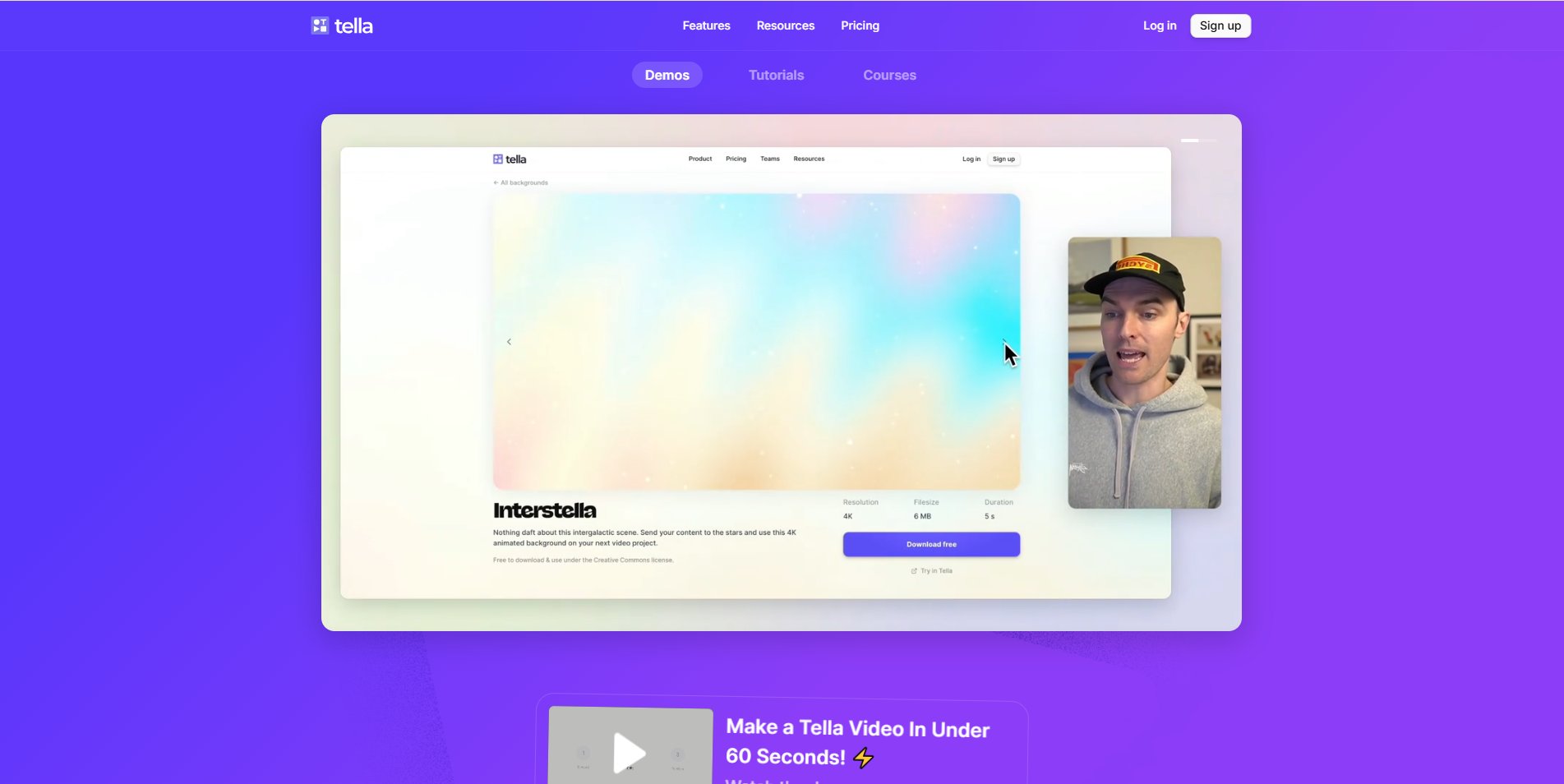
Tella is the most direct answer to the question "what does Loom look like if it actually prioritised output quality?" It handles dynamic layout switching mid-recording, bubble cam, side-by-side, full-screen, and the result looks intentional rather than improvised. AI Auto Cut removes filler words and silences without touching a timeline. Shareable links are instant, and viewers don't need an account to watch. We recorded the same 3-minute demo in Tella and had a watchable, branded link within 90 seconds of stopping. For founders, product managers, and small sales teams, it's one of the cleanest alternatives to Loom on the market in July 2026.
Sharing experience: Excellent. Browser extension and desktop app generate shareable links with auto-stitched scenes immediately after recording.
Pricing: $12/user/mo (Pro, billed annually) · $19/user/mo (billed monthly) · No permanent free tier; 7-day trial· checked July 2026
Watch-outs: No option to blur or redact sensitive information after recording. If a demo includes a UI element you didn't mean to show a client, you're re-recording.
Best for: Founders, product managers, solo educators, small sales teams creating polished async updates.
Capterra: 4.5
3. ScreenPal: Best free all-rounder and direct Loom replacement
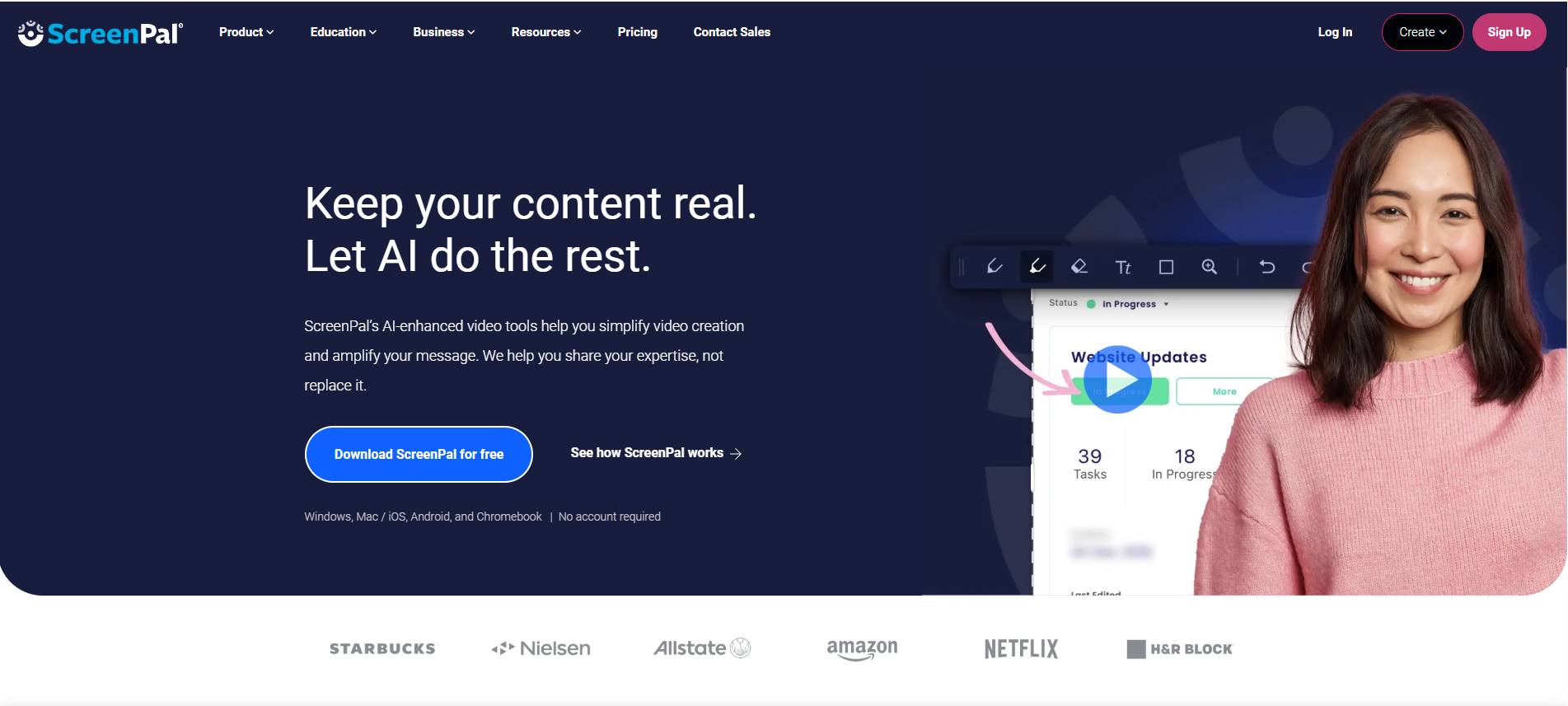
ScreenPal is genuinely underrated. At $4/month for the Deluxe plan, it handles more than Loom's Business tier covers for most standard use cases. The free tier is functional, unlimited clips, 15-minute cap per video, cloud-hosted shareable links, and no watermark on screen captures. If your team's primary need is everyday async communication and you don't require AI personalisation or cinematic output, this is the most practical budget replacement for Loom available right now. It also runs on Mac, Windows, mobile, and browser, which eliminates a lot of platform headaches. AI features (summaries, titles, transcription) require the $10/month Solo Max plan.
Sharing experience: Mixed. Desktop recordings upload to cloud hosting smoothly, but encoding introduces minor latency before the link is live.
Pricing: Free (unlimited clips, 15-min cap, no watermark) · Deluxe $4/mo (annual) · Solo Max $10/mo (annual) · Team Business $10/user/mo · checked July 2026
Watch-outs: The free tier caps individual hosted videos, not recording length, teams storing large libraries will hit storage limits faster than expected on the free plan.
Best for: Educators, training teams, budget-first organisations replacing Loom's everyday async use case.
G2 / Capterra: 4.3 / 4.5
4. Descript: Best for text-based video editing
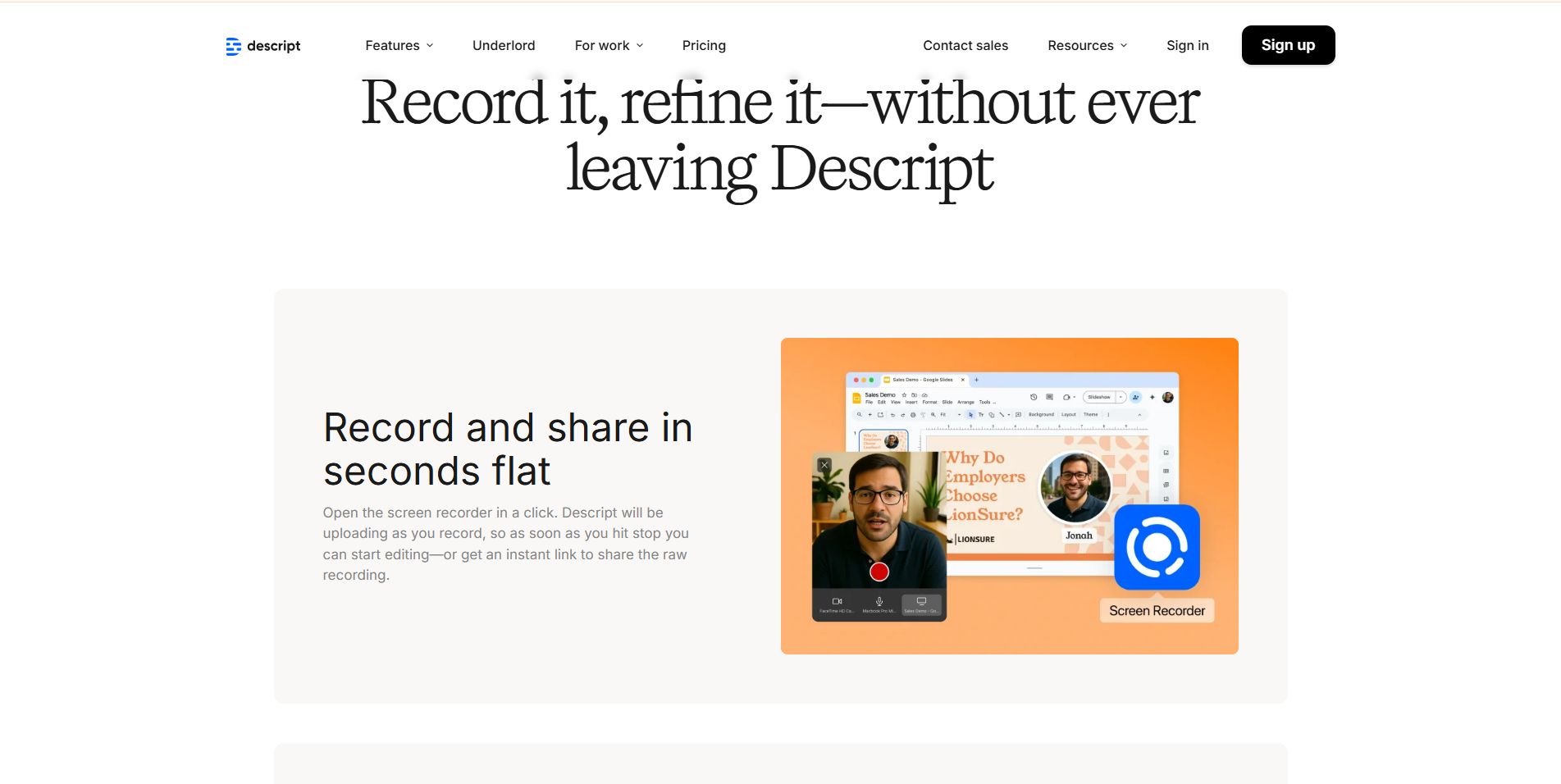
Descript is its own category. Record a video, receive an auto-generated transcript, edit the video by editing the text. Delete a sentence and that moment disappears from the recording. It's the fastest way to remove mistakes, filler words, and off-topic tangents without touching a timeline. Studio Sound noise cancellation is among the best available in any tool on this list. AI filler-word removal and eye contact correction add polish that most screen recorders don't attempt. The trade-off: rendering takes longer than cloud-native tools, and it's not a quick record-and-send solution. For content marketers, course creators, and anyone producing polished external-facing video, the workflow efficiency is hard to argue against.
Sharing experience: Mixed. Transcript alignment and cloud syncing create short rendering delays before a shareable link is live.
Pricing: Free (60 min/mo transcription, 1080p export) · Hobbyist $12/user/mo (annual) · Creator $24/user/mo (annual) · checked July 2026
Watch-outs: Rendering time on longer videos can be frustrating when you just need to get something out fast. It's a production tool, not a "record and share in 60 seconds" tool.
Best for: Content marketers, trainers, course creators, and podcast editors who need text-driven editing workflows.
G2 / Capterra: 4.6 / 4.8
5. Screen Studio: Best for Mac users creating polished product demos
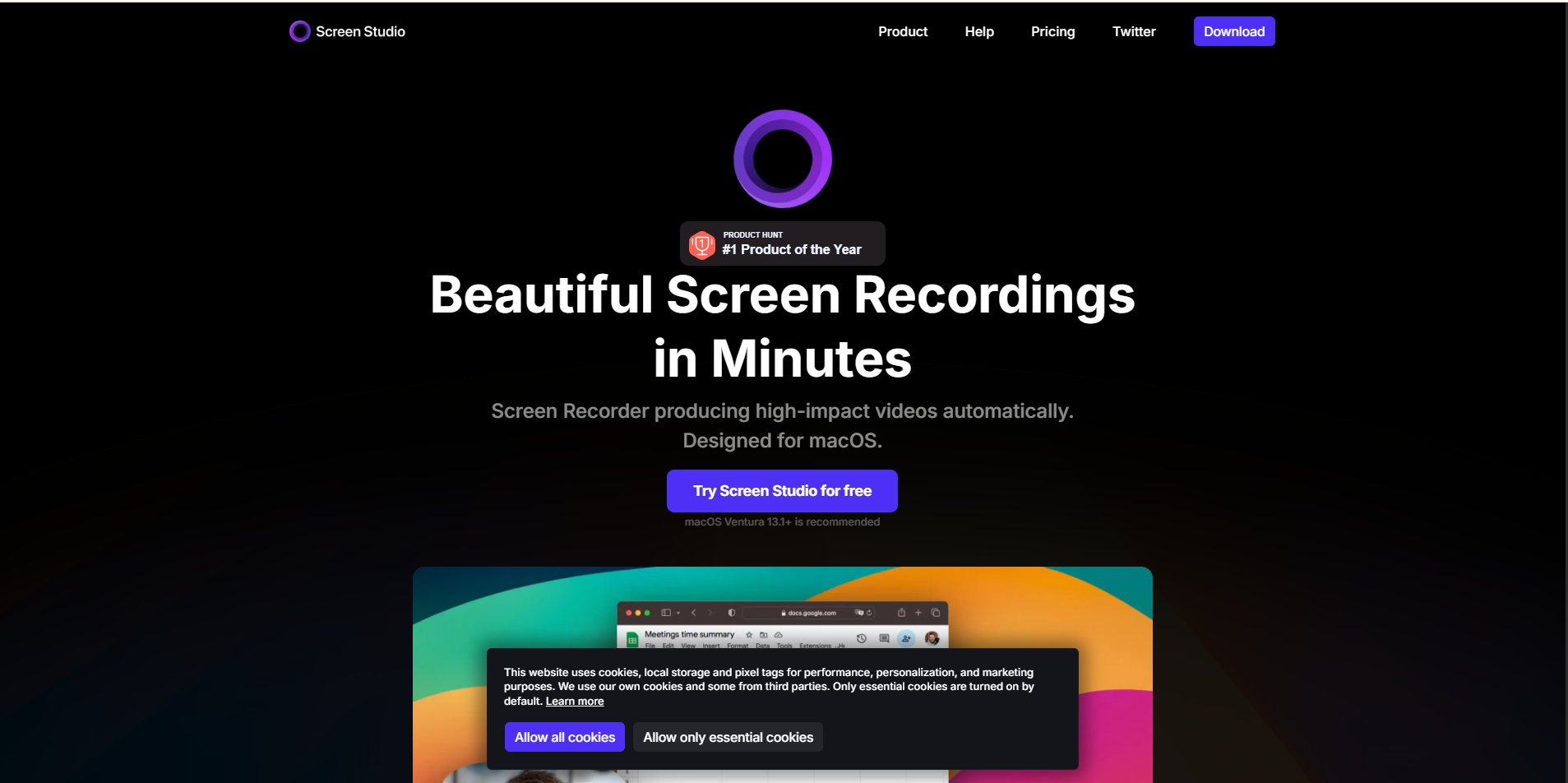
Screen Studio does something that should require hours in After Effects, automatically. Cursor movements are smoothed, click points trigger cinematic auto-zoom, and motion blur is applied all without touching an edit timeline. The output looks like a properly produced product video, not a raw screen recording. For product marketers and developer advocates on Mac who create demo content for websites, launch posts, or social media, it's genuinely impressive. The important caveats are worth knowing upfront: Mac-only, no cloud hosting, no sharing infrastructure, no analytics. You get a beautiful MP4. What you do with it is entirely up to you.
Sharing experience: Mixed: exports locally; sharing requires uploading the output to a separate hosting platform.
Pricing: $29/month and $108/year. Free trial available with watermarked exports ·Checked July 2026
Watch-outs: No collaboration, no viewer analytics, no shareable link infrastructure. It's a recording and export tool, everything after the MP4 file is a separate workflow.
Best for: Product marketers, designer advocates, and Mac-based creators producing polished video assets.
6. Cap: Best open-source Loom alternative

Cap positions itself as the open-source, self-hostable answer to Loom's centralised cloud model, and it's matured fast. What was a beta product earlier this year is now used by 50,000-plus teams, builders, and creators, with 20,300 GitHub stars on the CapSoftware/Cap repository. Security-conscious teams can store recordings on their own S3-compatible buckets or Google Drive, with no data touching a third-party server unless they choose to. Studio Mode handles local editing with a full timeline; the cloud side now includes auto-generated titles, summaries, chapters, and transcriptions on every recording, not just an afterthought bolted onto a recorder. A built-in Loom video importer also makes migration genuinely simple you can pull existing Loom recordings straight into Cap rather than manually re-exporting your library.
Sharing experience: Excellent. Cap Pro generates unlimited, instantly hosted shareable links; even the free and Desktop tiers produce links, capped at 5 minutes per recording.
Pricing: Free (personal use, 5-min recording cap, Studio Mode included) · Desktop License $29/yr (unlimited local recording and editing, commercial rights) · Cap Pro $8.16/user/mo (billed annually, 32% savings) or $12/user/mo (billed monthly) · Enterprise: custom, with SSO/SCIM and managed self-hosting · checked July 2026
Watch-outs: The free plan is personal-use only. Any commercial or client-facing work requires at least the $29/yr Desktop License. Cloud features (unlimited storage, analytics, custom domains, AI summaries) are locked to Cap Pro, so budget-conscious teams comparing headline "free and open source" against Loom should know the fully-loaded experience is still a paid tier.
Best for: Security-first organisations, engineering teams, and open-source advocates who want data sovereignty without sacrificing polish.
7. Fathom: Best free meeting recorder
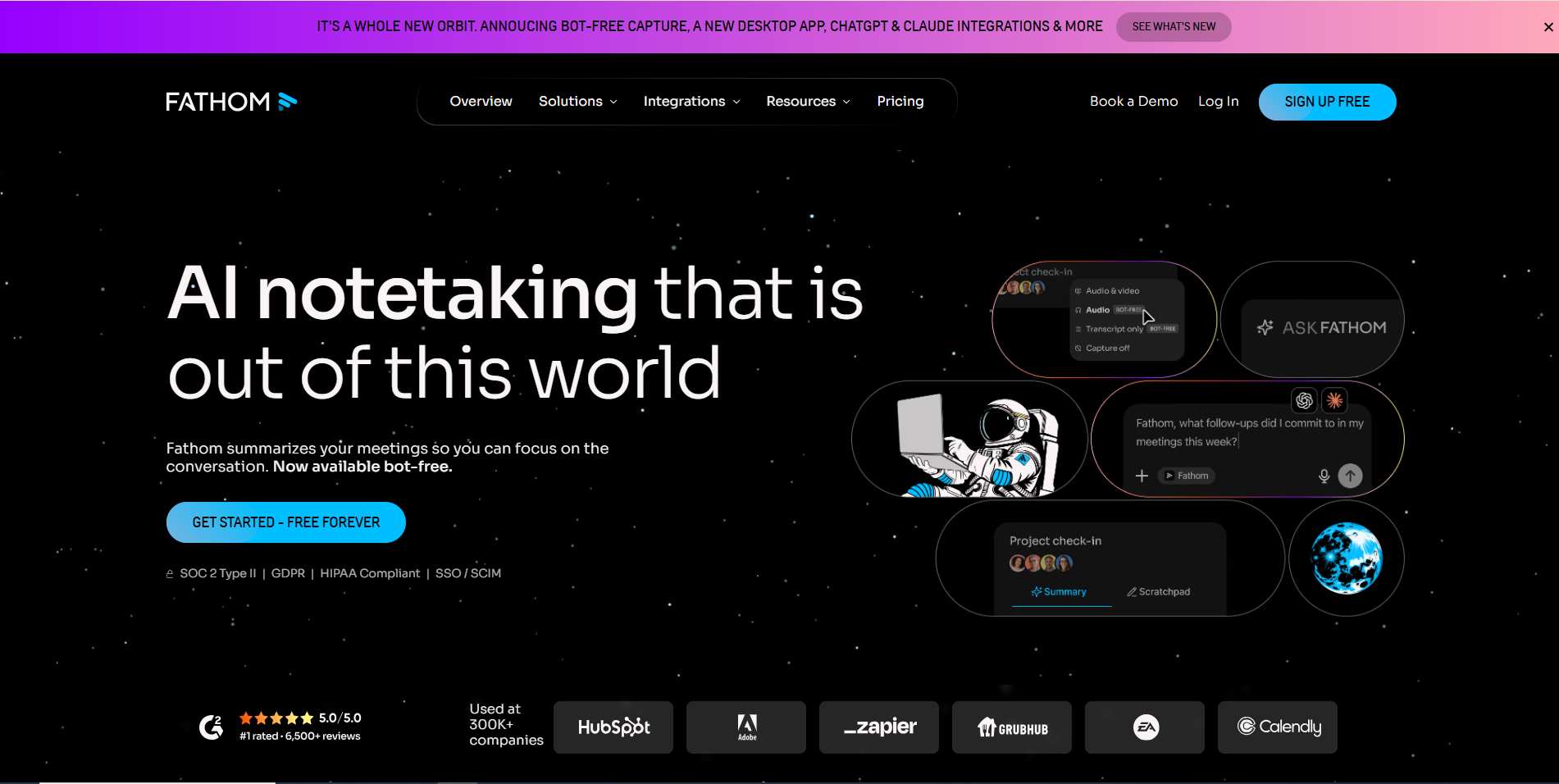
Fathom is the tool freelancers and consultants recommend unprompted on Reddit, and the reason is refreshingly simple: unlimited meeting recordings, unlimited transcripts, and unlimited AI summaries, all on a genuinely free plan with no catch. On Zoom for Mac and Windows, it records natively without a visible bot participant, which removes the awkwardness that plagues other meeting recorders. Summaries and action items arrive in your inbox within seconds of the call ending. If your primary reason for leaving Loom is meeting notes rather than on-demand screen recording, this is the most generous free tool available in July 2026.
Sharing experience: Excellent. Meeting recap links with hyperlinked timestamped transcripts generate within seconds of ending calls.
Pricing: Free (unlimited meetings, recordings, transcripts, 5 AI action item summaries/mo) · Premium $15/user/mo (annual) · Team $19/user/mo (annual) · checked July 2026
Watch-outs: Fathom is a meeting recorder, not a screen recorder. You can't use it to record a product demo walkthrough or an async update outside of a call.
Best for: Freelancers, consultants, and small customer success teams who primarily need meeting notes and summaries.
G2 / Capterra: 5.0 / 5.0
8. Tl;dv: Best for sales meeting intelligence
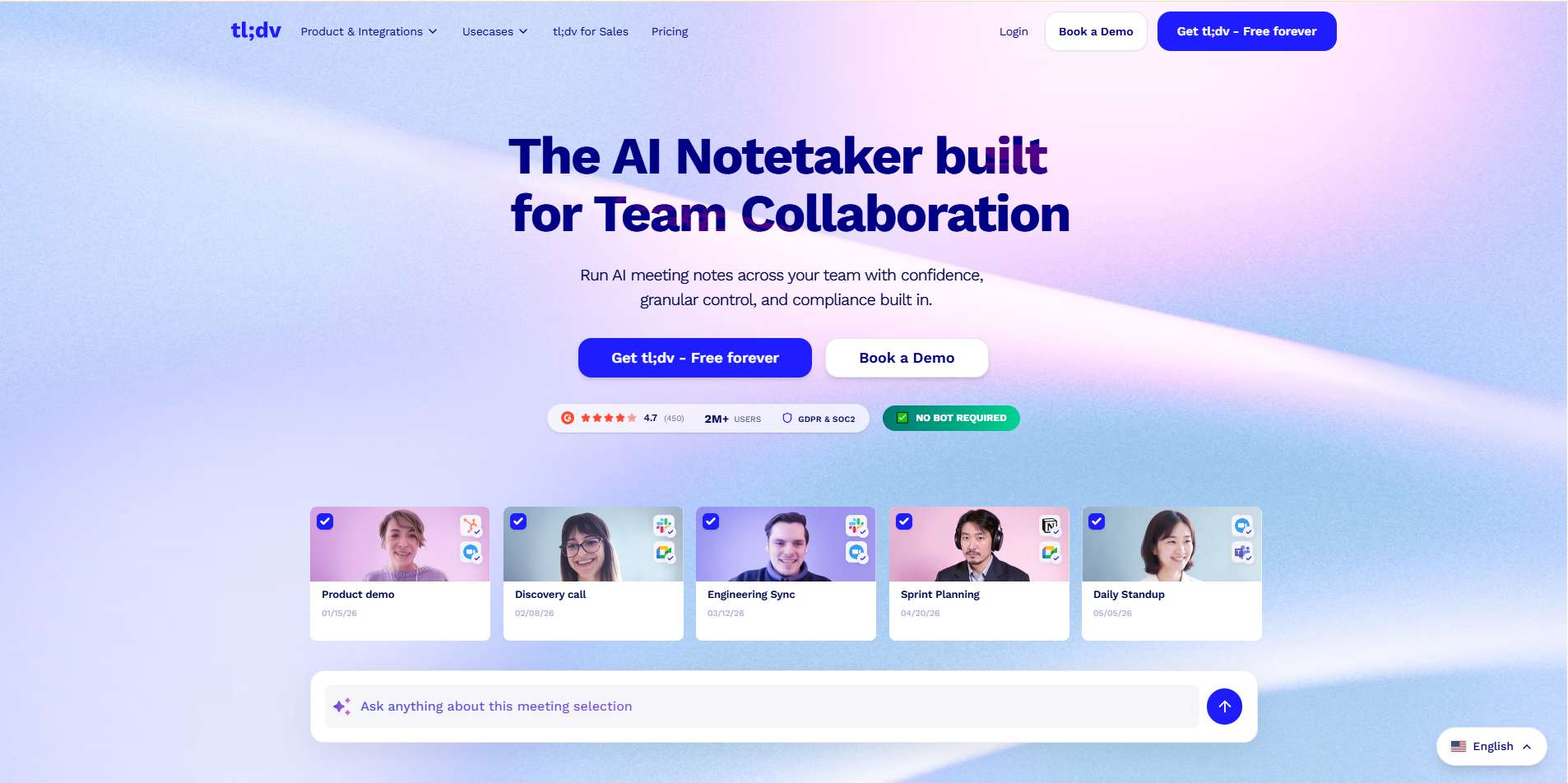
tl;dv treats meeting recordings as structured data, not saved video. Its cross-call intelligence surfaces patterns and recurring objections across dozens of recorded calls, genuinely useful for managers running sales coaching programs. MEDDPICC and BANT framework notes auto-populate CRM fields. Highlight reels let you clip the one moment from a 45-minute call that matters and share it with context. The free tier is surprisingly generous, with unlimited recordings and transcripts across 30-plus languages. For revenue teams trying to understand why deals stall, it's more useful than a raw recording library.
Sharing experience: Instant. Shareable clip links and meeting recaps are generated immediately after calls.
Pricing: Free (unlimited recordings and transcripts, 10 deep AI notes/mo) · Pro $18/user/mo (annual) · $25/user/mo (monthly) · Checked July 2026
Watch-outs: tl;dv is built for recorded meetings, not for on-demand screen recording or outbound video creation. It doesn't replace Loom's async demo use case.
Best for: Sales managers, account executives, and revenue operations teams running coaching and deal review programs.
G2 / Capterra: 4.7 / 4.6
9. Vidyard: Best for sales analytics and CRM integration
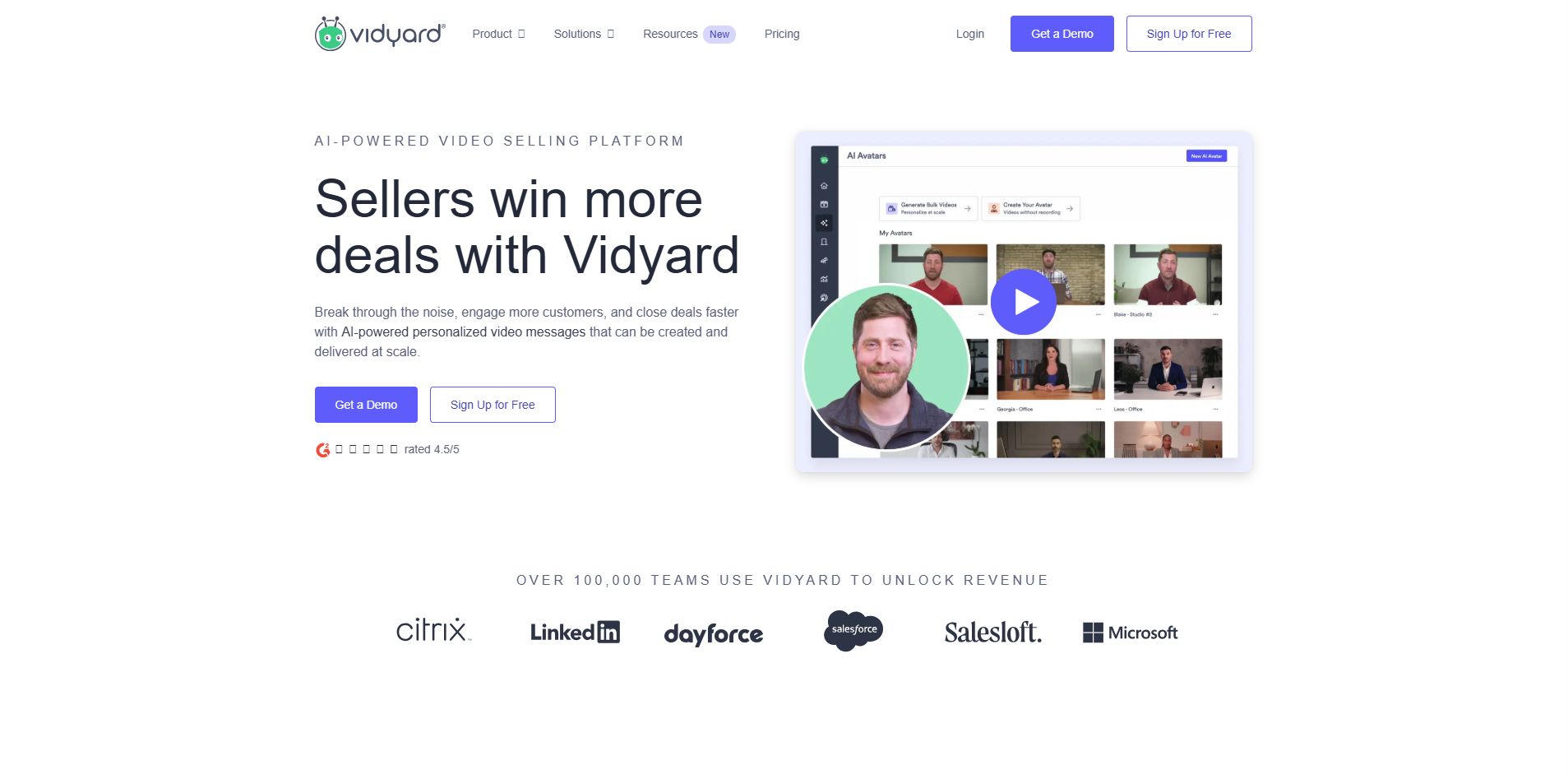
Vidyard is the choice when video is a measurable sales asset rather than just communication. Viewer-level analytics show exactly who watched, which segments they replayed, and how engagement maps to pipeline stage. Salesforce and HubSpot integrations are deep and functional, not the thin "we have a connector" variety. For sales teams, the ability to see that a prospect replayed your pricing walkthrough three times is worth the subscription cost. The trade-off: basic video editing. Vidyard trims clips; it doesn't produce polished output. For teams that need both analytics and production quality, it's a two-tool workflow.
Sharing experience: Excellent. Instant link creation designed specifically for high-velocity outbound sales and email integration.
Pricing: Free (25 video storage cap) · Pro $29/mo (annual) · $38/mo (monthly) · Checked July 2026
Watch-outs: The free tier caps video storage at 25 videos for a sales team doing consistent outreach. It disappears fast. Full CRM sync and advanced analytics require paid plans.
Best for: Account executives, sales managers, and revenue operations teams tracking video engagement through pipeline.
G2 / Capterra: 4.5 / 4.5
10. Claap: Best for sales teams turning meetings into CRM-ready insights
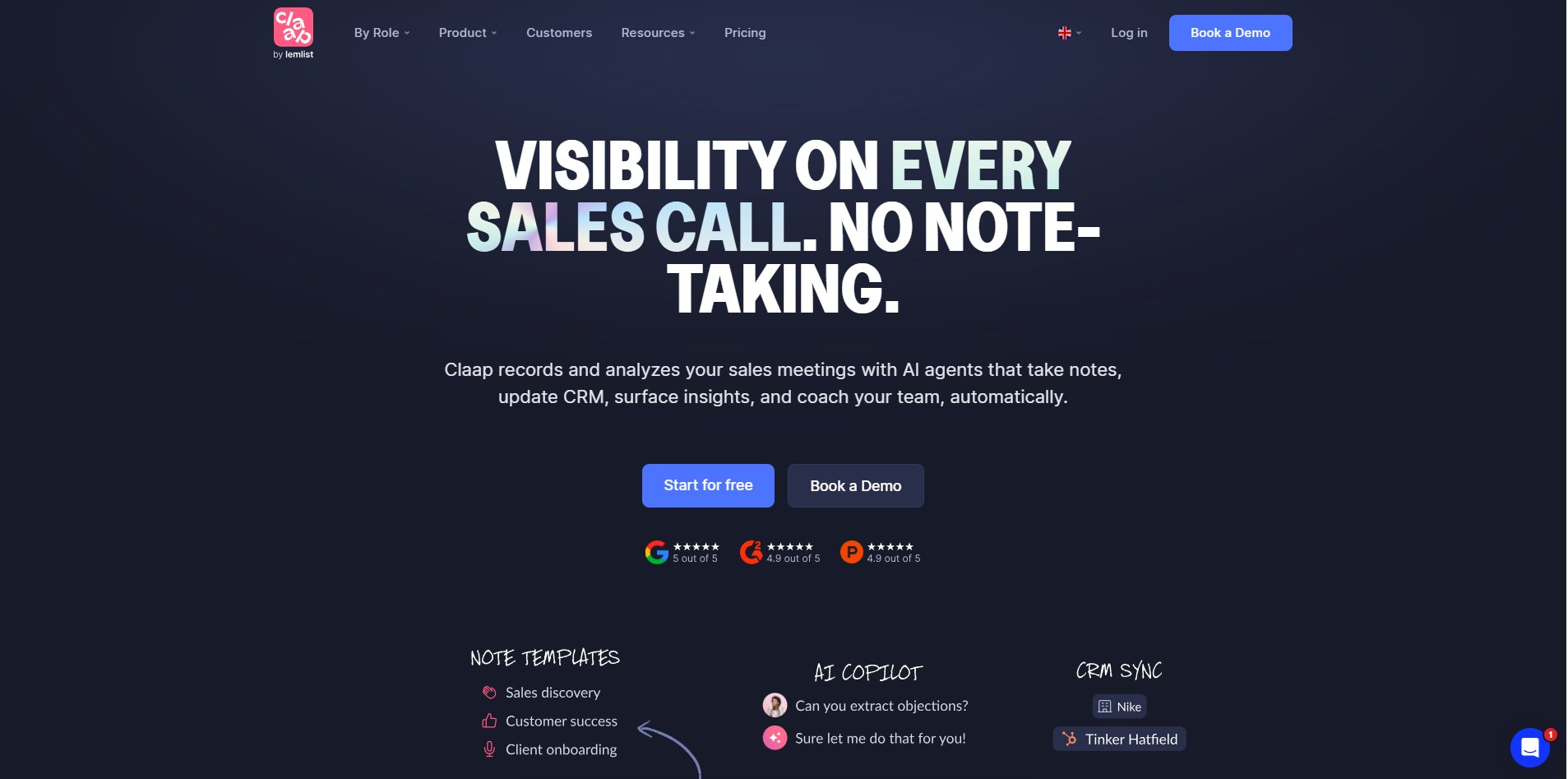
Claap has moved well beyond general async video collaboration. It's now built specifically for revenue teams: meeting recording syncs with your calendar and conferencing tools, AI notes summarise every call, and CRM Auto-Complete pushes deal data straight into HubSpot, Salesforce, Attio, or Pipedrive without manual entry. Claap AI lets you "ask anything" across a single meeting or search patterns across your entire call history, useful for sales leaders trying to spot why deals stall. AI-generated follow-up emails and deal insights round out a workflow built around closing, not just recording.
Sharing experience: Excellent: meeting recordings and AI summaries are available immediately after the call ends, with recap emails sent automatically.
Pricing: Basic (free) 10 videos per user, 300 minutes total, 99-language transcription, basic AI summary · Pro ( 30 Euro/month) unlimited recordings, 1,000 AI-summary minutes/mo, 500 AI credits/mo · Business ( 60 Euro/month ) unlimited recording time, 1,000 AI credits/mo, CRM auto-complete and AI coaching · checked July 2026
Watch-outs: Exact monthly pricing for Pro and Business isn't published, you'll need to start a trial or talk to sales to get a number. The product has also shifted hard toward sales and revenue use cases, so teams looking for general internal async video collaboration (its original positioning) may find it narrower than expected.
Best for: Sales reps, sales leaders, and RevOps teams who want meeting recordings to become CRM-ready deal data automatically.
11. Supademo: Best for interactive product demos
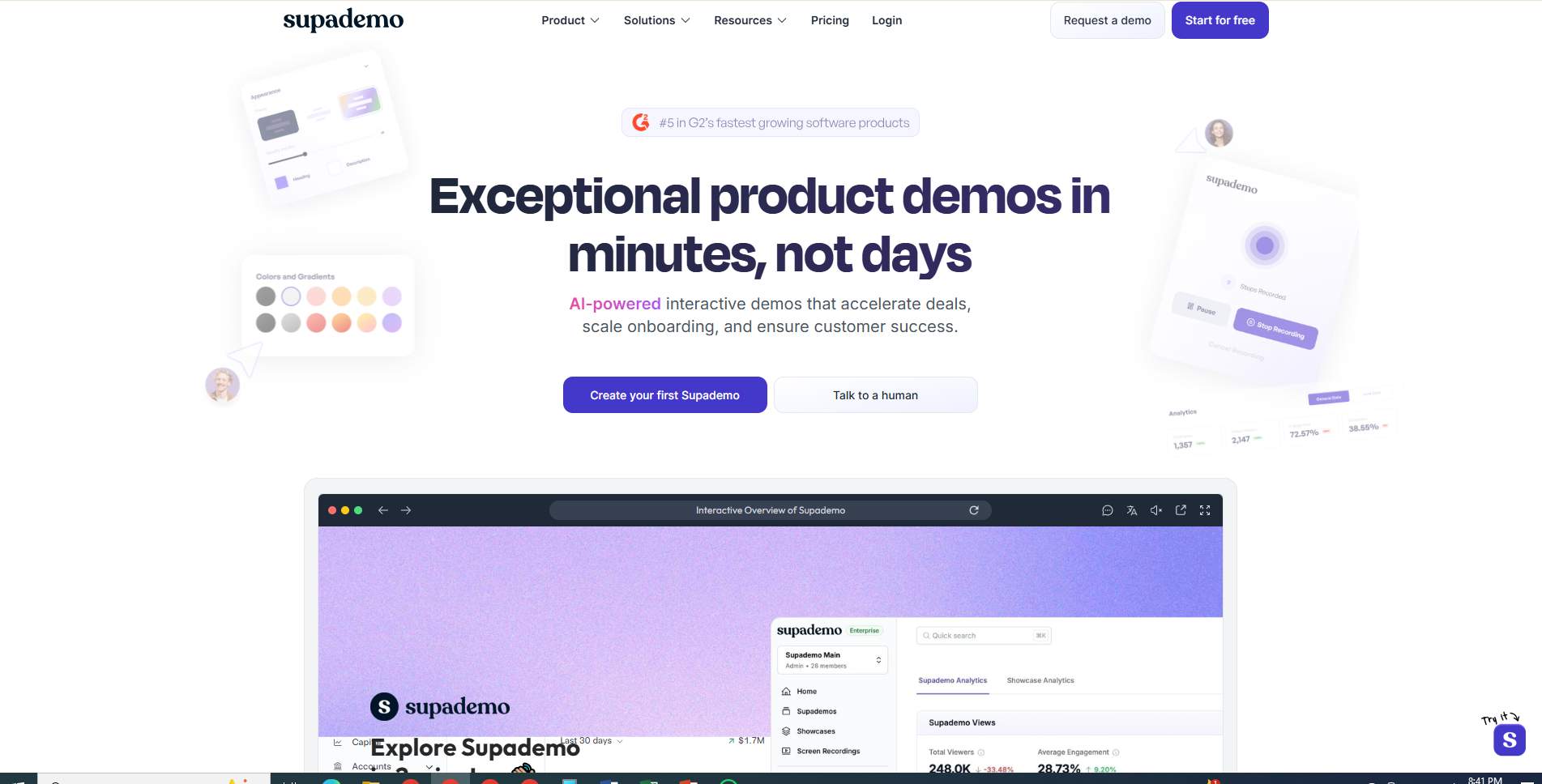
Supademo covers a gap that pure video tools leave open: letting viewers click through your product themselves rather than watching passively. HTML screen capture creates fully interactive click-through demos. Auto-zoom, click tracking, and dynamic variables allow prospect-name or company personalisation across demos. Viewer seats remain free on all plans, which keeps team costs manageable when you have more watchers than creators. For B2B SaaS product and presales teams embedding demos in email sequences or landing pages, it's one of the most practical tools on this list.
Sharing experience: Mixed: screenshot-step capture is quick, but assembly into an interactive flow link requires brief automated processing.
Pricing: Free (5 interactive demos, screenshot and extension capture) · Pro $27/user/mo (annual) · $36/user/mo (monthly) ·Checked July 2026
Watch-outs: Supademo captures interactions, not live screen video. For demos that require real motion. scrolling interfaces, animations, complex UI flows. It can feel flat compared to video-based alternatives.
Best for: B2B SaaS product teams, presales engineers, and marketers embedding demos on landing pages and in outbound sequences.
G2 : 4.8
12. Camtasia: Best for professional training and e-learning
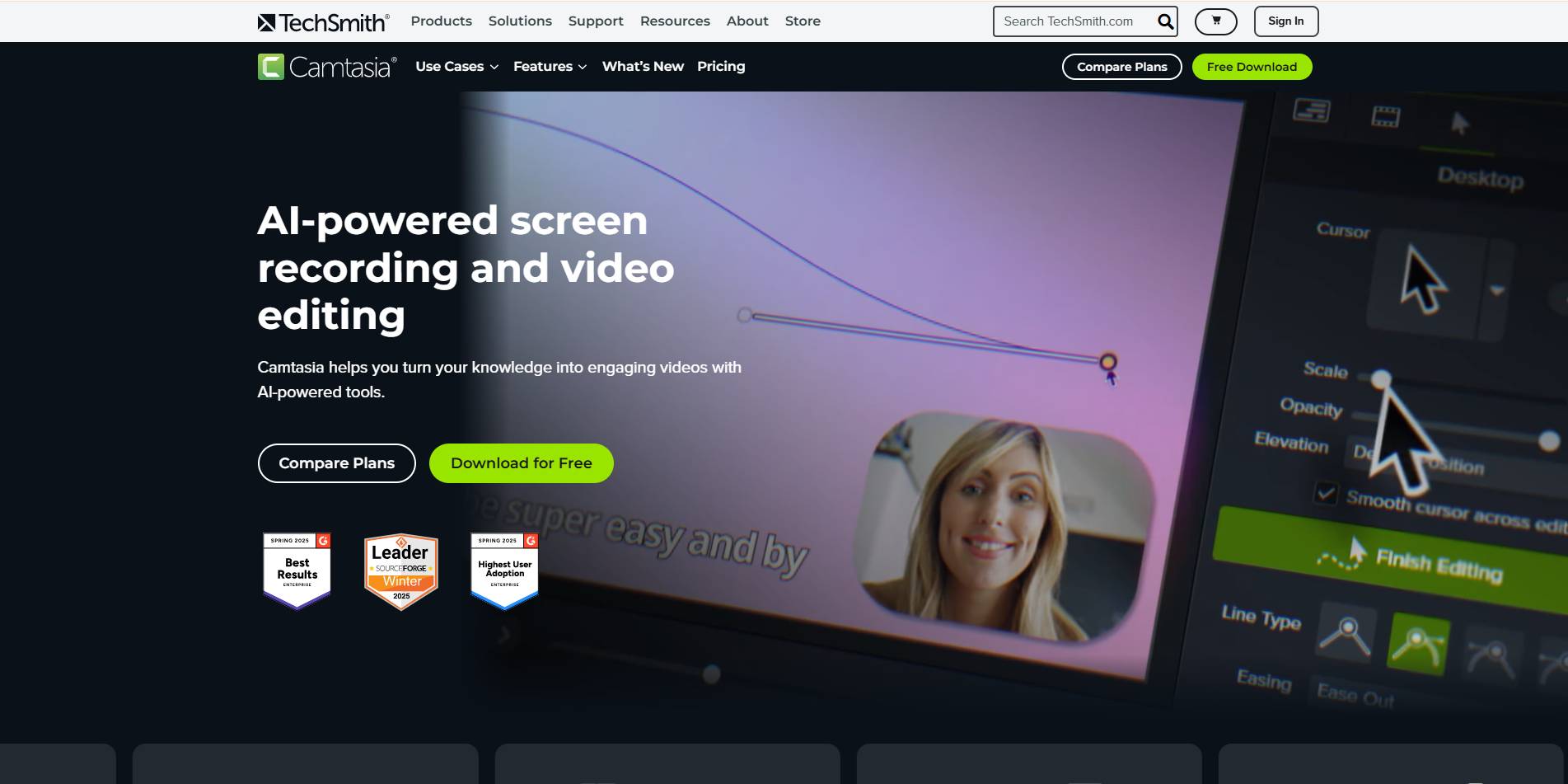
Camtasia is a desktop video editing suite that includes screen recording, not the other way around. Multi-track timeline editing, interactive quizzes, LMS integrations, a royalty-free asset library, cursor effects, and AI-powered scriptwriting make it the definitive choice for instructional designers and L&D teams building formal e-learning programs. It is not fast. It is not lightweight. But nothing else on this list offers comparable editing depth for structured training content. If you're producing SCORM-compatible courses or internal certification programs, Camtasia is the serious option.
Sharing experience: Poor. Videos must be exported to MP4 and then manually uploaded to Drive, an LMS, or another hosting platform before anyone can watch.
Pricing: ~$39/yr (subscription, annual billing) · Free trial with watermarked exports · Checked July 2026
Watch-outs: Camtasia is a serious editor with a real learning curve. It's not the right tool for quick async updates, and its sharing workflow adds friction that most Loom users aren't expecting.
Best for: Instructional designers, L&D departments, and e-learning developers building formal training programs.
G2 / Capterra: 4.6 / 4.7
13. VEED.io: Best browser-based editor for content teams
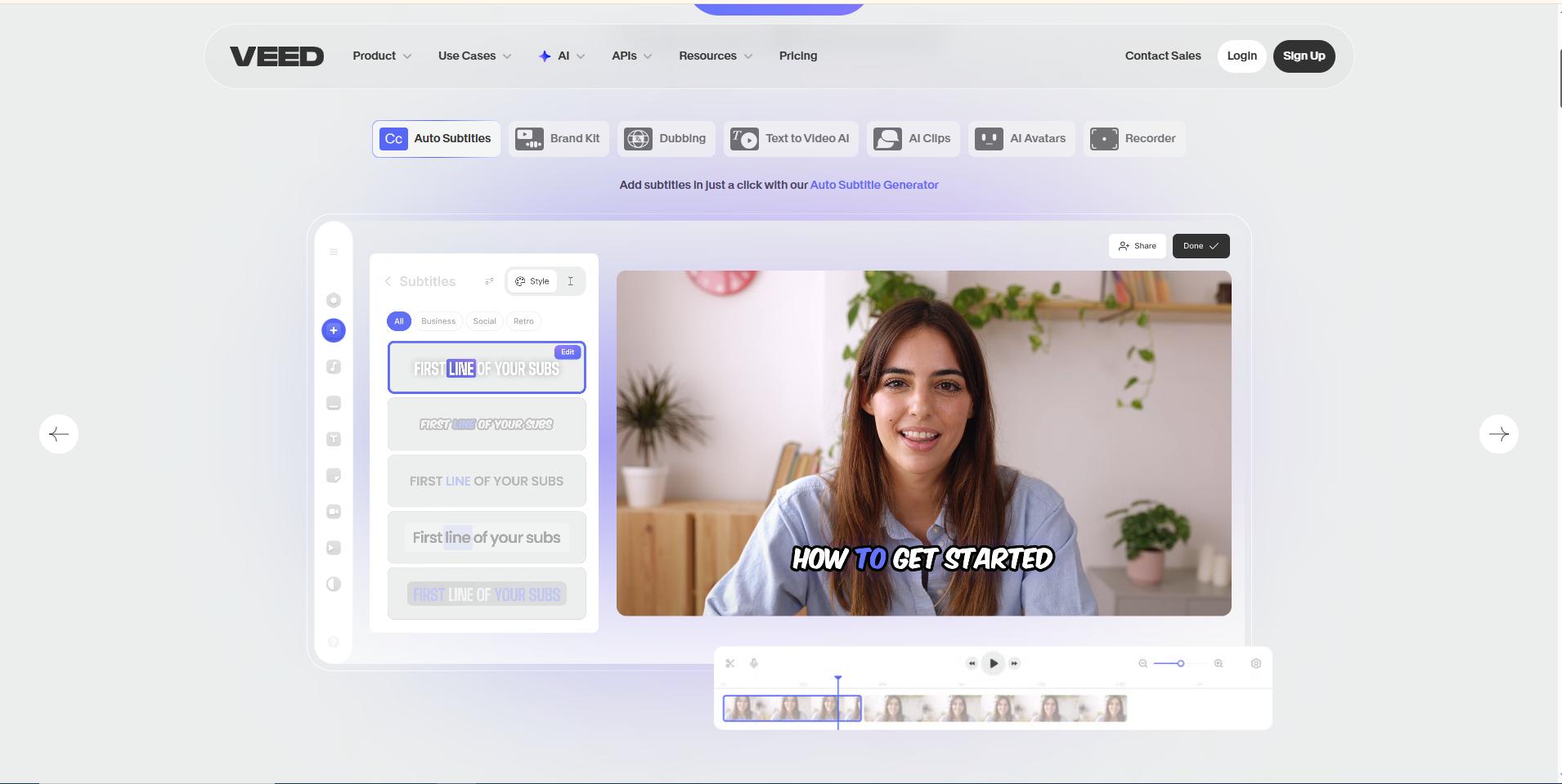
VEED runs entirely in a browser, and that sounds limiting until you see the feature surface: full timeline editing, AI eye contact correction, auto-subtitles, noise cancellation, background removal, and video translation to 50-plus languages. No installation required. For social media managers and content teams producing short-form video, the workflow is genuinely efficient. It's not built for corporate async documentation, and the free tier adds a watermark on exports. But for teams regularly repurposing screen recordings into social content, it's one of the more versatile Loom video alternatives available today.
Sharing experience: Mixed. Browser-based editor requires cloud rendering and processing before a final shareable URL is generated.
Pricing: Free (watermark, capped recording) · Lite $10–12/user/mo (annual) · Pro $24–30/user/mo (annual) · checked July 2026
Watch-outs: Capterra rating of 3.4/5 suggests real user frustration in some areas. worth reading recent reviews before committing to a team rollout.
Best for: Social media managers, content creators, and marketing teams repurposing screen recordings for external channels.
G2 / Capterra: 4.6 / 3.4
14. Guidde: Best for video-to-documentation
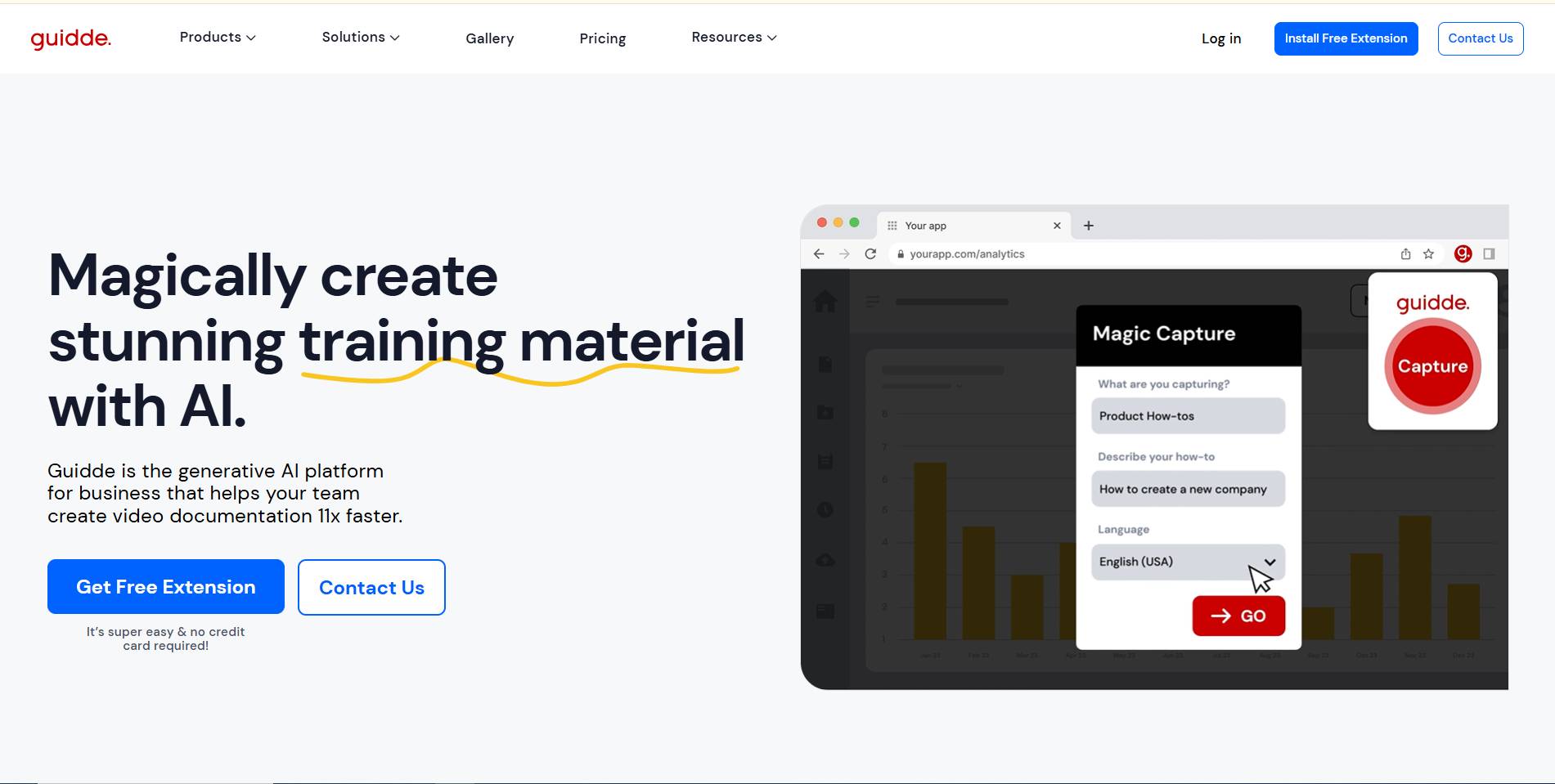
Guidde addresses one of Loom's biggest unspoken limitations: recorded videos are unsearchable six months later. Guidde captures your screen actions and simultaneously produces a step-by-step written guide with AI-generated narration, exportable directly to your help centre, Confluence, or an LMS via SCORM. Magic Mic, currently the #1 product on Product Hunt, lets you speak naturally during capture; your narration is transcribed, cleaned up, and automatically becomes the AI voiceover, removing a step most screen recorders leave entirely manual. One recording session produces two assets: the video and the written guide, which is genuinely useful for customer success, support, and operations teams building lasting knowledge bases.
Sharing experience: Excellent. Guidde’s are shareable via link or email immediately after creation, with tracked engagement on paid plans.
Pricing: Free, up to 25 how-to videos, watermarked, shareable link · Pro $19/creator/mo (billed annually) or $29/creator/mo (monthly), unlimited videos, watermark removed, brand kit, blur sensitive info · Business $39/creator/mo (annually) or $59/creator/mo (monthly), unlimited text-to-voice, analytics, up to 5 creators · Enterprise custom, with SSO and PII redaction · 7-day free Business trial, no credit card required · Checked July 2026
Watch-outs: The free plan caps you at 25 videos and keeps the Guidde watermark on every export. For teams building a real documentation library, you'll hit the paid tier fast. Business plan seats are billed per creator, so costs scale quickly with a growing content team; only Admins, Content Managers, and Creators consume paid seats, though, so Viewers are free.
Best for: Customer success teams, support teams, and operations teams building help centres and internal SOPs.
15. Glitter AI: Best for screen-to-SOP conversion
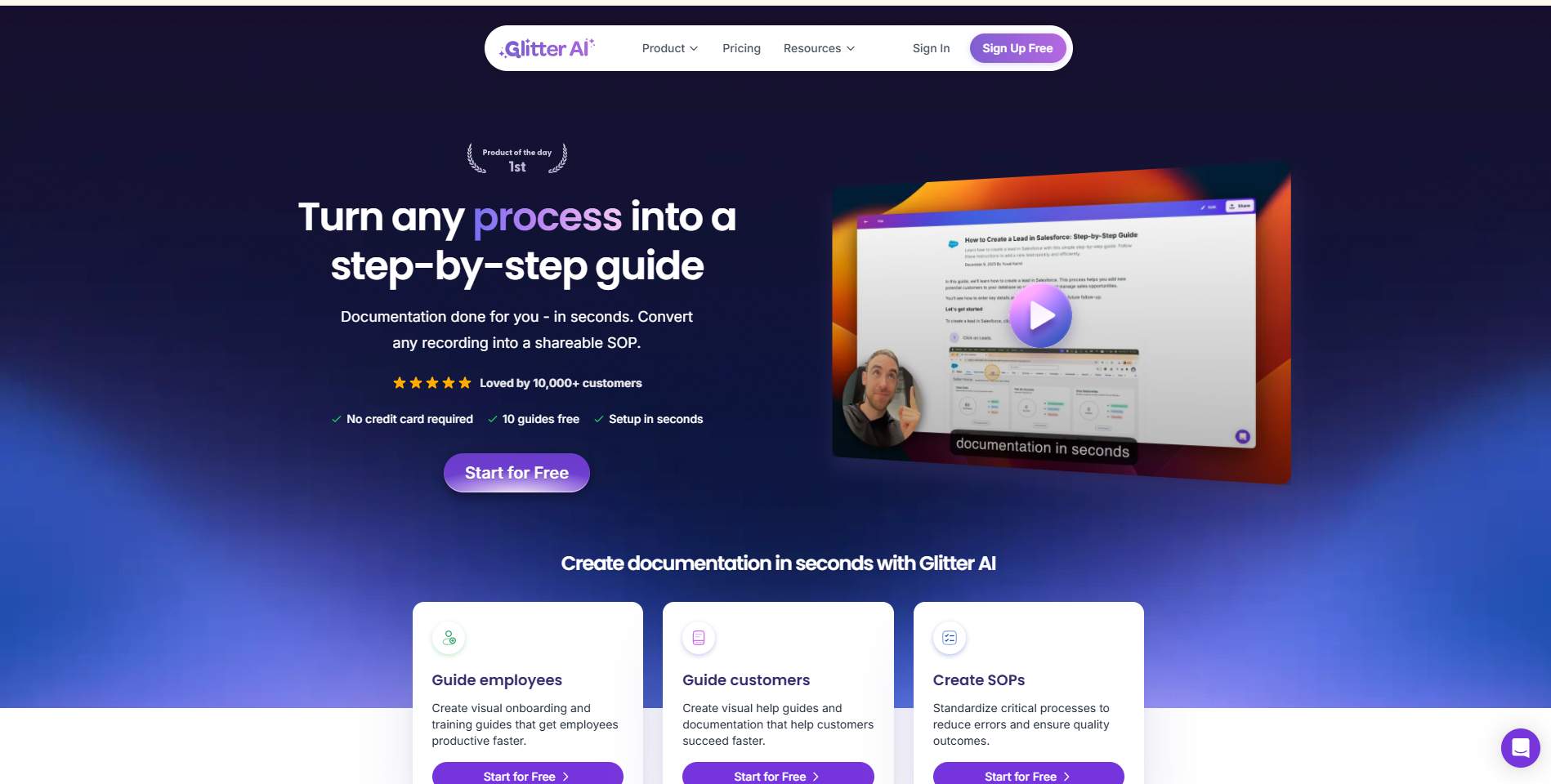
Glitter AI converts vocal walk-throughs into clean, formatted standard operating procedures with annotated screenshots. Talk through a process while recording, in any of 99 supported languages, and the AI Magic Editor turns your narration into written steps automatically. If you've ever narrated your way through a process on a call and then had to write up the same thing afterward, Glitter removes that second step entirely. It's SOC 2 Type II certified across every plan, including free, which matters for teams documenting sensitive internal processes. It's not a video tool in the traditional sense. The output is a formatted guide, not a polished video file.
Sharing experience: Mixed. Guides generate quickly after recording, but video-to-guide conversion (uploading an existing video rather than recording live) draws from a credit pool and can take longer for multi-minute videos.
Pricing: Free 10 guides total, 5-min recording cap · Pro $20/seat/mo unlimited guides, 15-min recording cap, watermark removed, $20 credits/mo · Team $15/seat/mo (5 seats included, $75/mo total) 30-min recording cap, AI Playbooks, $100 credits/mo, 7-day free trial · Enterprise custom, with SSO, on-device blur, SCORM export · Checked July 2026
Watch-outs: Recording live is unlimited and free of charge on any paid plan, but converting an existing video you already have costs 1 credit per minute. A team that primarily uploads pre-recorded Loom videos rather than recording fresh will burn through credits faster than expected. Free plan caps at just 10 total guides, not a monthly allowance.
Best for: Operations teams, IT and support teams, and compliance-heavy industries (financial services, SaaS) converting walk-throughs into audit-ready SOPs.
16. Sybill: Best for AI sales coaching and CRM automation
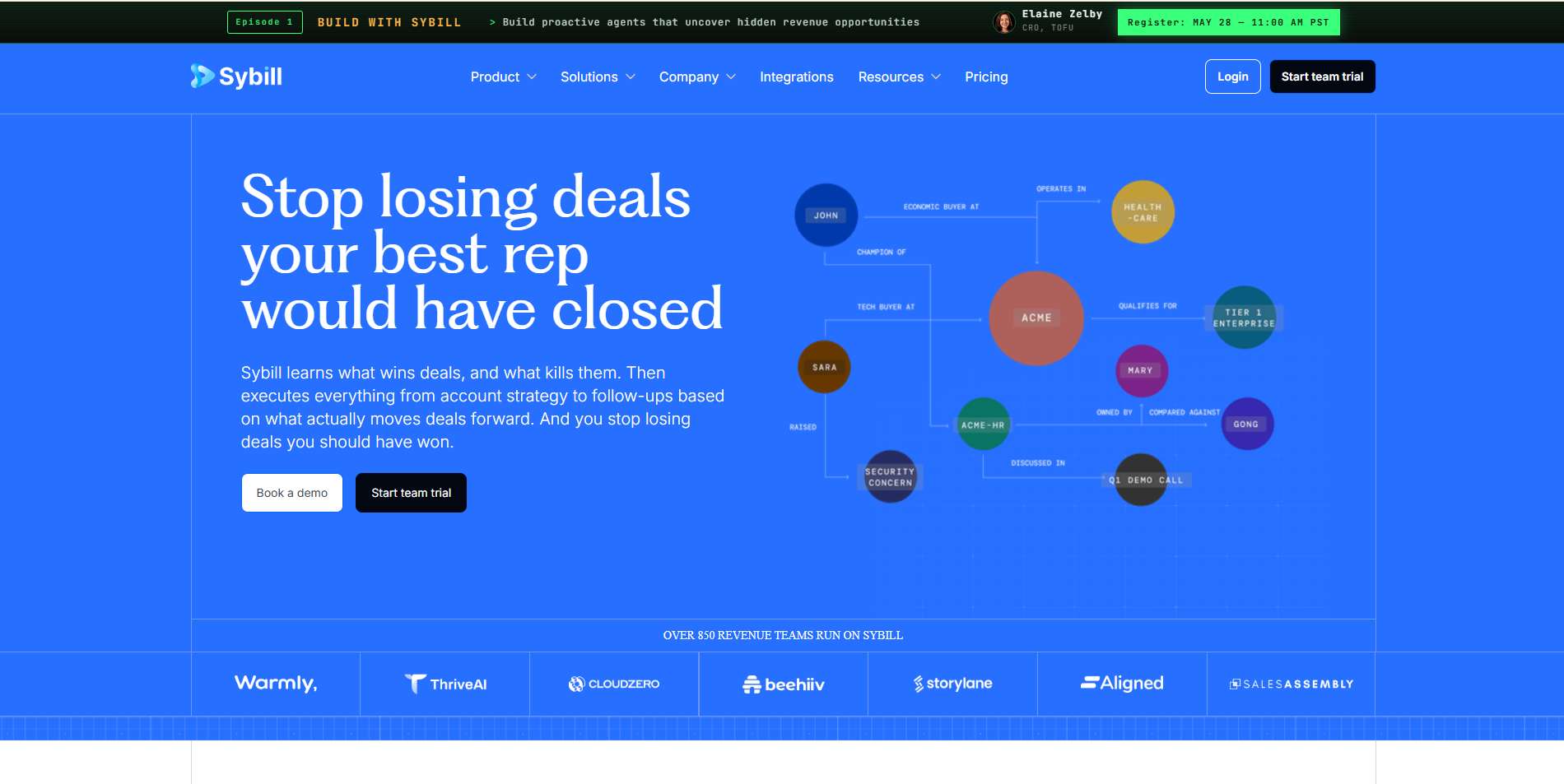
Sybill has evolved into a full AI sales assistant built around "deal memory." It pulls context from calls, emails, dialers, Slack, and your CRM into one place, then lets reps ask it anything about a deal instead of digging through transcripts. Meeting summaries, pre-meeting briefs, and follow-up emails run automatically and don't consume credits; credits are reserved for on-demand actions like pipeline analysis or generating a deck inside Ask Sybill. CRM Autofill populates up to 10 fields automatically after every call on the Business plan. It's one of the more expensive tools on this list, but for revenue teams drowning in post-call admin, the automation depth is real.
Sharing experience: Excellent. Call summaries, briefs, and CRM updates are generated and pushed automatically after every meeting, no manual export required.
Pricing: Free 500 credits/week, unlimited recordings/transcripts, 20 AI summaries/mo · Pro $30/user/mo (billed annually) or $36/user/mo (monthly) unlimited summaries, unlimited storage · Business $90/user/mo (annually) or $108/user/mo (monthly) CRM integration, CRM Autofill (10 fields), API/MCP access · checked July 2026
Watch-outs: Business plan pricing ($90–108/user/mo) is a significant jump from Pro and is the tier gating CRM Autofill teams need that specific feature will pay considerably more than the headline Free or Pro price suggests. Credit usage for on-demand AI tasks (pipeline analysis, deck creation) is separate from the always-on automation, so heavy analytical use can burn through the weekly allowance faster than expected.
Best for: Account executives, sales managers, and revenue teams that want call recordings to automatically become CRM-ready deal context.
17. OBS Studio: Best open-source option for power users
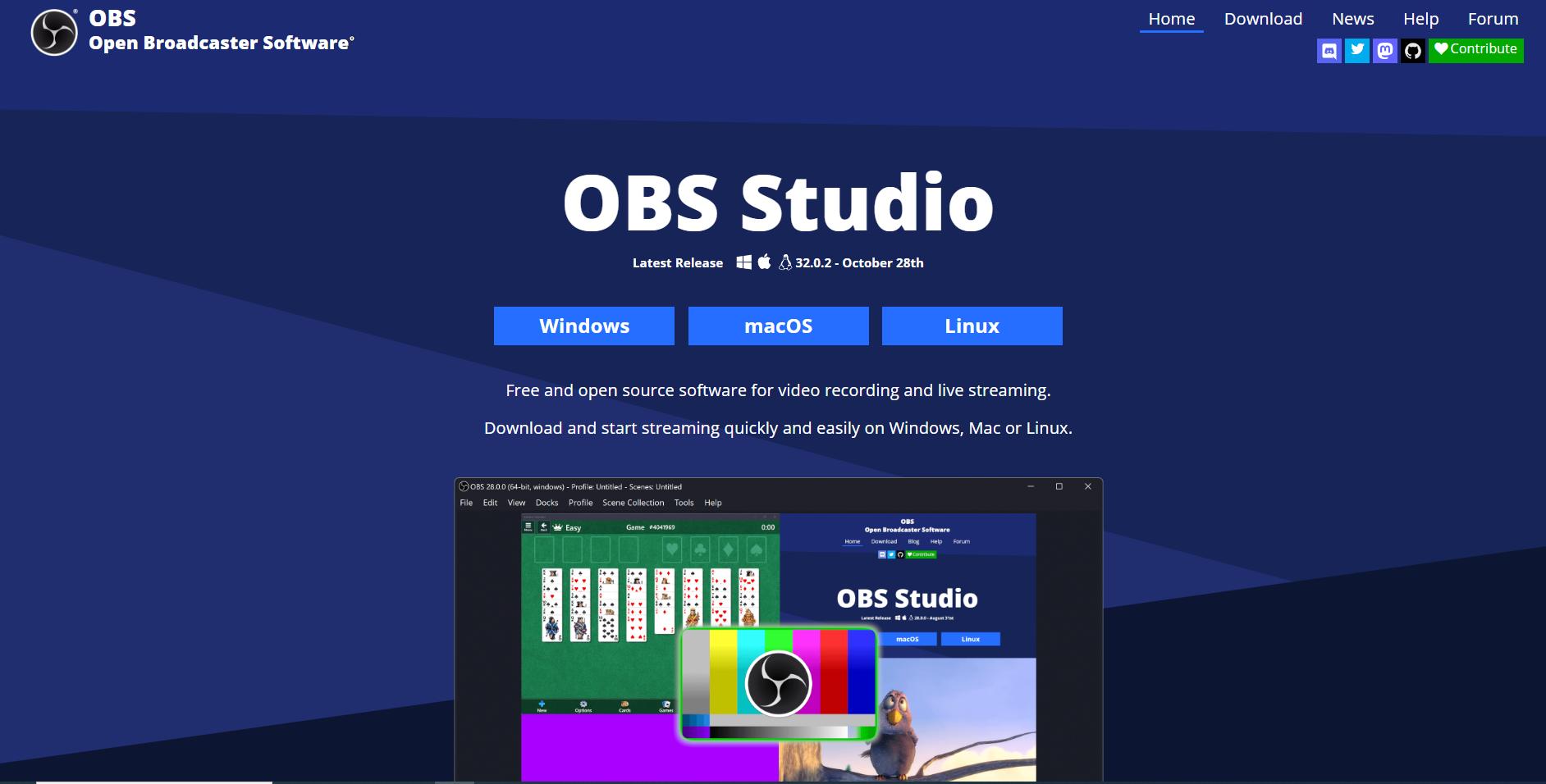
OBS has 17-plus years of active development behind it, and it shows. Multi-source canvas compositing, scene switching, plugin support, and completely unlimited local recording make it the most capable free recording tool available anywhere. Version 32.2.1, released July 24, 2026, is the current stable build. Linux support across Ubuntu, Fedora, Arch, and Snap makes it the only tool on this list with genuine cross-platform parity. The honest caveat: it is not a Loom replacement. It produces MP4 files. Sharing means uploading somewhere else. For power users who already have cloud storage infrastructure, that's a reasonable trade-off. For teams who just want to share a link, it isn't.
Sharing experience: Poor. Records to local disk only; sharing requires manual upload to a third-party hosting platform.
Pricing: $0 · Open source (GPL-2.0) · No watermark, no recording limits ·
Watch-outs: No cloud hosting, no shareable links, no viewer analytics. Every share is a manual process. New users also face a meaningful learning curve before the interface makes sense.
Best for: Power users, streamers, and developers who need high-quality local recording and already have hosting infrastructure.
G2 / Capterra: 4.6 / 4.7
18. ShareX: Best free utility recorder for Windows
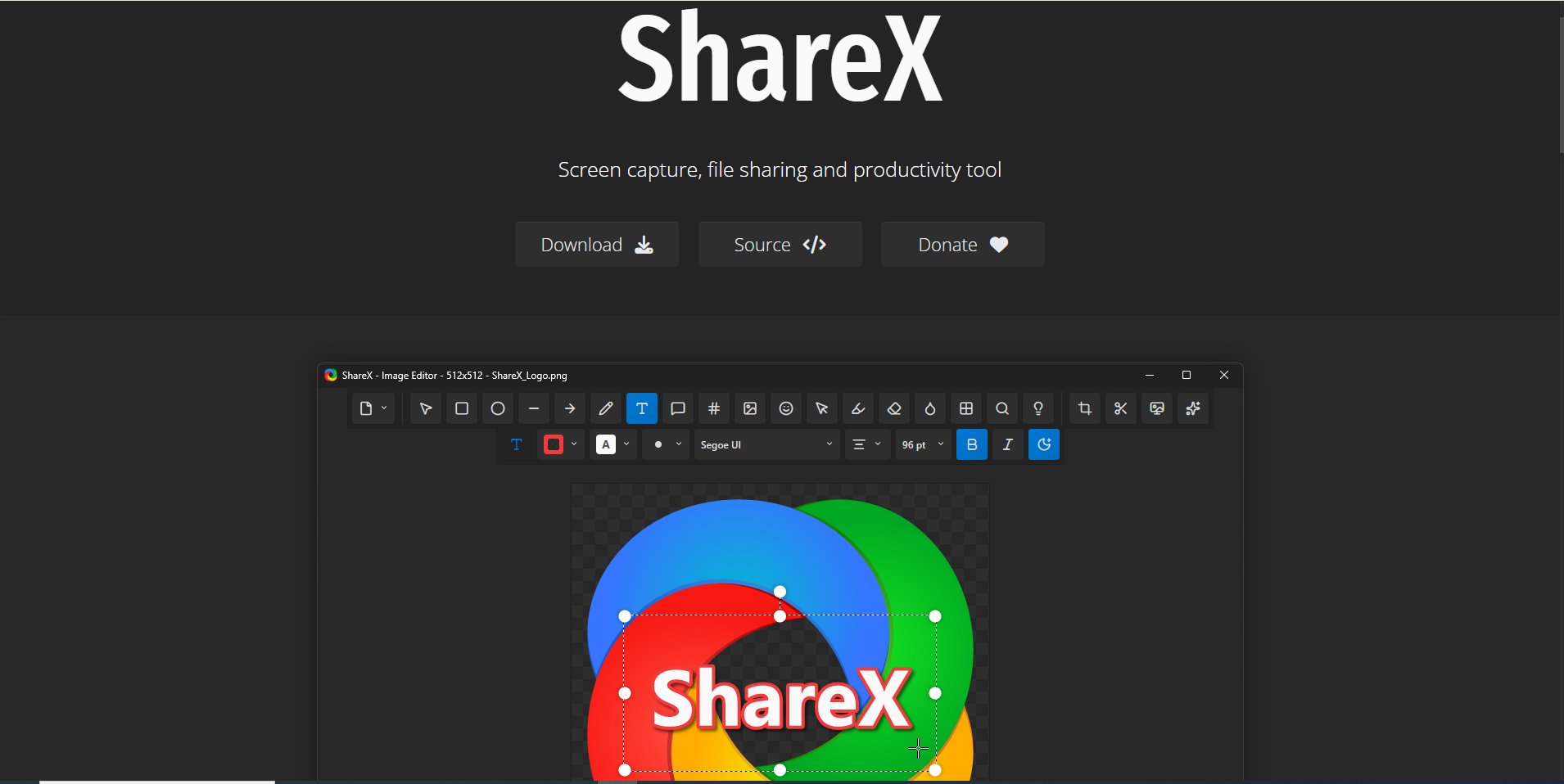
ShareX is Windows-only, completely free, and entirely without frills. Version 21.0.0, released July 2, 2026, is the current stable build. Hotkey-triggered capture, GIF recording, image annotation, and configurable upload destinations to S3, FTP, or Imgur make it the most customisable free capture tool available for Windows. It's not an async video platform. It has no cloud hosting, no built-in sharing, and no viewer analytics. But for Windows-based developers, support teams, and technical users who want a zero-cost capture utility they can configure exactly the way they need it, ShareX delivers without compromise.
Sharing experience: Poor. Requires manual configuration of upload destinations to produce any shareable link.
Pricing: $0 · Open source · No ads, no feature gates ·
Watch-outs: Windows-only with no Mac or Linux version. The interface assumes technical literacy. New users without experience in tools like this will find the initial setup confusing.
Best for: Windows-based developers, support teams, and technical users who want a configurable free capture utility.
G2 / Capterra: 4.8 / 4.8
19. Screenity: Best free Chrome-based recorder
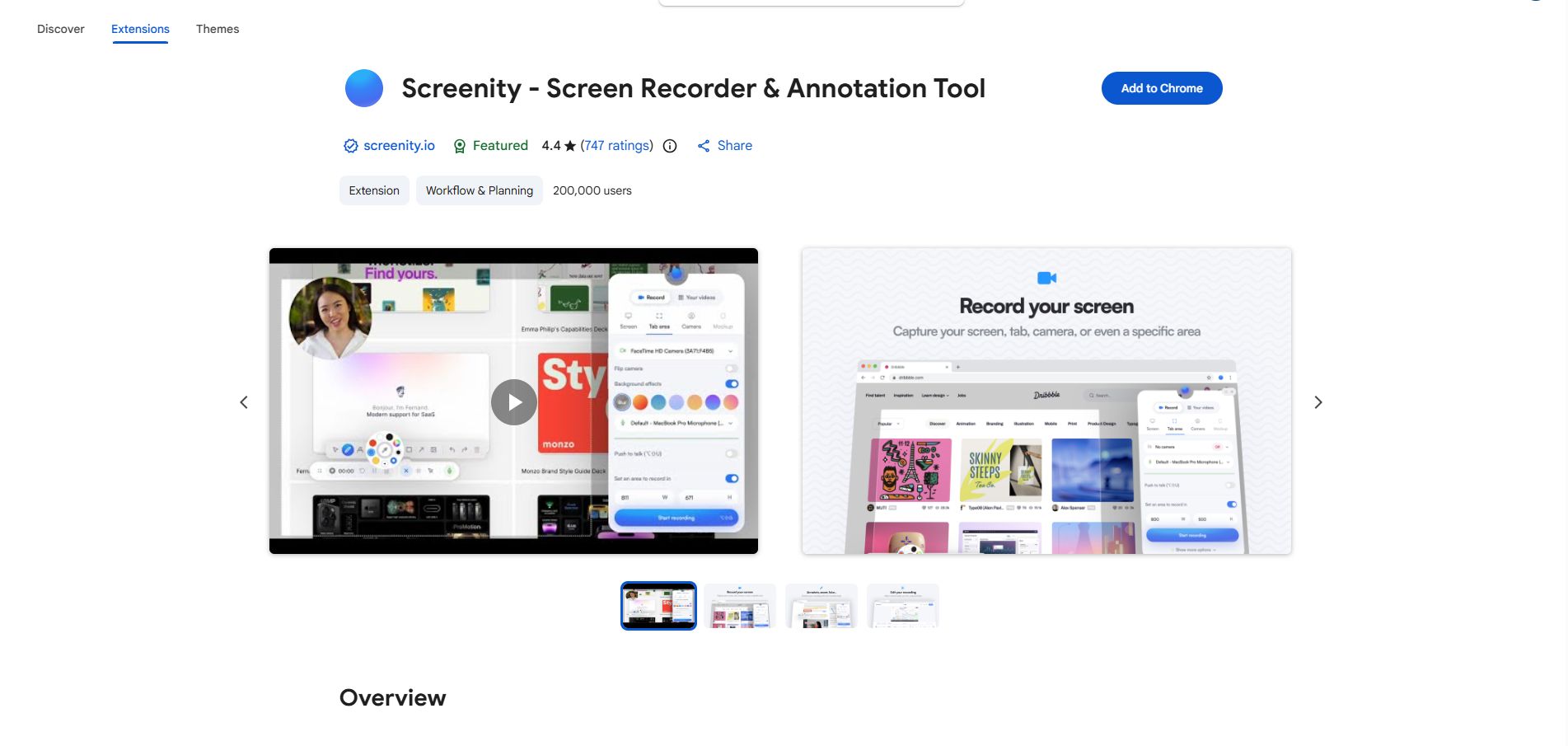
Screenity is a Chrome extension, open source, completely free, and works on any Chromium-based browser across Mac, Windows, Linux, and Chrome OS.Google Drive integration produces a shareable link without requiring a server queue, which puts it in the Excellent category for time-to-share. For teams that just need to capture something quickly from a browser without installing software, it's the lowest-friction option on this entire list. It's also one of the best sites like Loom for Chrome-first workflows, and genuinely requires no account to start recording.
Sharing experience: Instant. Direct Google Drive integration generates shareable links immediately after recording.
Pricing: $0 · Open source · No watermark, no account required · Checked July 2026
Watch-outs: Chrome and Chromium-only. No desktop app, no meeting recording, no analytics, no team workspace features. The simplicity that makes it great also marks its ceiling.
Best for: Individuals and teams who need zero-friction browser-based recording with no installation, no subscription, and no account.
20. ScreenApp: Best for AI meeting notes and video summarisation
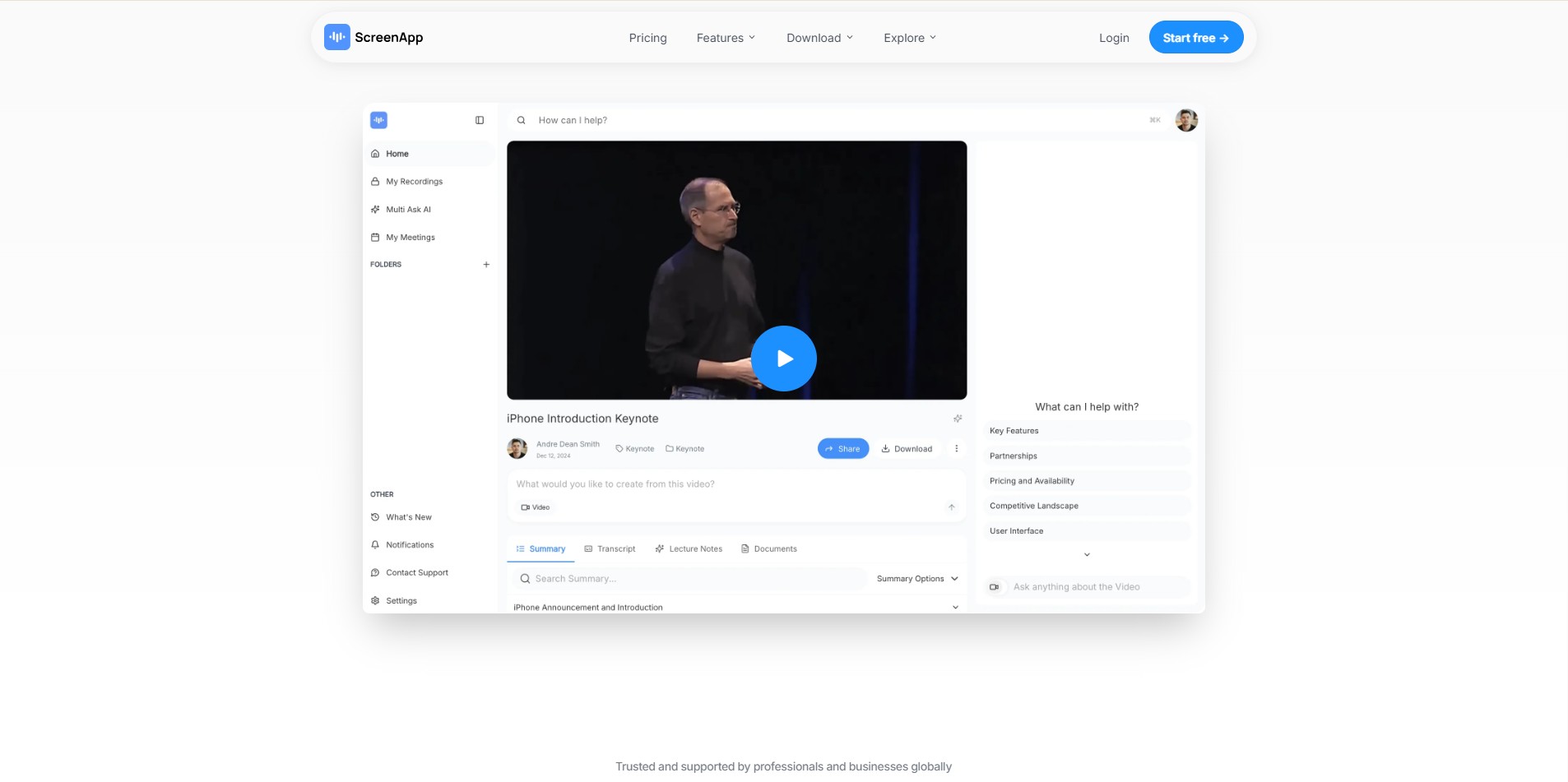
ScreenApp started as an AI notetaker and meeting summariser before expanding into broader screen recording and video analysis. Browser, Mac, Windows, iOS, and Android apps all record natively, and every plan includes AI summaries, chat-with-your-recording, and full transcripts. The pitch is explicitly anti-Loom on pricing: where Loom keeps AI features behind a $24/user/mo tier, ScreenApp bundles unlimited AI into its $19/mo Growth plan with no per-user fees until you add team members. Video analysis, API access, and white-labelling are reserved for the Business tier, which is aimed squarely at teams already using recordings as a data source rather than just a message.
Sharing experience: Mixed. Recordings and transcripts are available immediately, but AI summary generation and video analysis draw from a credit pool that can add brief processing time on longer files.
Pricing: Free 3 recordings total, 3 AI generations/mo, 1 transcription/mo · Growth $19/mo (billed annually, $228/yr) unlimited recordings, 600 AI credits/year, meeting bot, 7-day free trial (requires card) · Business $34/mo (billed annually) unlimited AI credits and transcriptions, video analysis, API access, white label · Checked July 2026
Watch-outs: The free plan is genuinely thin, just 3 total recordings, not a monthly allowance, so it's really a product trial rather than a usable free tier. Growth's 600 AI credits are an annual allowance, not monthly, so heavy AI users doing frequent summaries or analysis may need Business sooner than the plan names suggest.
Best for: Teams that need combined meeting summarisation and screen recording in one browser-and-desktop tool, without per-seat AI pricing.
Loom vs the alternatives: head to head
These matchups come up constantly in search and in buying conversations. We've kept each verdict short. Where standalone comparison pages exist, we'll link them.
What is the best free Loom alternative?
You might be wondering whether "free Loom alternative" is just shorthand for "seven-day trial." It isn't. Several tools on this list have genuinely functional free tiers.
When people search for a free alternative to Loom, they usually mean one of two things: a free screen recorder that generates shareable links, or a free meeting recorder. Those are different workflows, and the best answers are different.
For everyday screen recording, ScreenPal's free tier unlimited clips, 15-minute cap, cloud hosting, no watermark is the most practical free alternative to Loom for standard async communication. It's not flashy, but it works.
For meeting recording, Fathom's free tier, unlimited recordings, unlimited transcripts, no time limits, is the most generous free option in the meeting intelligence category. tl;dv's free plan (unlimited recordings, 10 deep AI notes per month) is a close second.
For teams that don't need cloud hosting at all, OBS Studio and ShareX are free alternatives to Loom with no recording limits whatsoever. Screenity offers the same for Chrome users without any installation.
Here's the complete picture of what's genuinely free in July 2026, with honest limits included:
The Loom alternative free question doesn't have one right answer. It has a right answer per workflow. For general async, ScreenPal. For meetings, Fathom. For Chrome, Screenity. For full local power, OBS or ShareX. These represent the most useful Loom alternatives free of charge in July 2026.
Open source Loom alternatives
Four tools on this list are genuinely open source. They share one thing in common beyond the code being public: they shift responsibility onto you.
Cap is the most modern open-source option. Self-hostable on S3-compatible storage, with Instant Mode for quick shareable links and Studio Mode for local editing. Active public beta as of July 2026. GitHub star count was unverified at the time of writing. The community is active, and the self-hosting documentation is solid, but beta status means real instability remains.
OBS Studio is the established option. Version 32.2.1, released July 24, 2026, supports Mac, Windows, and Linux natively. No recording limits, no watermarks, no cloud hosting. It's free the way power tools are free unlimited capability, meaningful learning curve.
ShareX is the Windows-only utility for technical users. Version 21.0.0, released July 2, 2026. Configurable upload destinations, GIF recording, and annotation tools. Zero cost, zero frills.
Screenity is the Chrome-based option. A free, open source screen recorder that works in any Chromium-based browser and saves directly to Google Drive. No account required.
What open source shifts onto your team is worth naming plainly. Security patching is your responsibility. Maintenance is your responsibility. If something breaks, there is no support SLA and no one obligated to fix it on your timeline. That trade-off is worth it for engineering teams with the capacity to manage it. It's not worth it for marketing or sales teams that need reliability guarantees for customer-facing workflows.
Cap, OBS Studio, ShareX, and Screenity are all legitimate open source Loom alternatives but each serves a specific kind of user and requires honest self-assessment before adoption.
Apps like Loom, by platform
Not every tool works everywhere. These are the tools that consistently perform best on each platform, based on our testing in July 2026.
Best Loom alternatives for Windows
Windows users have solid options across every price point. ScreenPal covers most standard Loom use cases at $4/month and runs natively on Windows with full cloud hosting. ShareX is the best free utility for technical users who want hotkey-triggered captures without a subscription. Descript handles text-based video editing and runs stably on Windows 10 and 11. Camtasia is the right choice for formal training production on Windows. VEED.io is fully browser-based, making it platform-agnostic for teams that prefer not to install software.
Best Loom alternatives for Mac
Mac users have the widest selection. Screen Studio is the standout for product marketing and demo creation; it uses macOS graphics to deliver automatic zoom and cursor smoothing that no other tool on this list matches. Tella offers polished async recording without the local-only limitation. Descript runs well on Mac and handles transcript-based editing cleanly. OBS Studio is the free option for power users who need multi-source recording. Fathom and tl;dv cover meeting recording on Mac without a visible bot participant.
Best Loom alternatives for Linux
Linux is under-served by commercial video tools, but open-source options are strong. OBS Studio is the clear first choice native support across Ubuntu, Fedora, Arch, openSUSE, and Snap, with version 32.2.1 as the current stable build. Cap supports Linux in beta, with self-hosting via S3. Screenity works on Linux through any Chromium-based browser. VEED.io and ScreenApp are browser-based and therefore platform-agnostic. For teams running Linux who need cloud-hosted shareable links, the browser-based options cover the gap while OBS handles the recording itself.
Best Loom alternatives for Chrome
For Chrome-first workflows, Screenity is the best Loom alternative for Chrome: free, open source, no installation, and Google Drive integration produces shareable links instantly. ScreenPal also offers a Chrome extension with cloud hosting. Vidyard and tl;dv have Chrome extensions that integrate directly into Gmail and LinkedIn workflows, which matters for sales teams doing outreach. Supademo captures interactive demos directly from the browser via extension.
How to switch from Loom without losing your videos
Migration is where most teams underestimate the work. Here's a realistic timeline.
Step 1: Audit your seat roster (Days 1–2). Log into the Atlassian Admin Console. Export your full user list as a CSV. Flag every account that hasn't logged in within 90 days. Deactivate those accounts before your next billing cycle. This stops ghost-billing for seats that shouldn't be paid in the first place.
Step 2: Export your video library (Days 3–5). Loom does not offer a one-click bulk MP4 export. You'll need to export through Atlassian Admin tools, download videos individually, or write a script against the Loom API to pull raw MP4 links. Prioritise any video embedded in customer-facing help centres, active email onboarding sequences, or Confluence/Notion pages before you do anything else. Budget two to three days for a library of more than 200 videos.
Step 3: Understand what cancellation breaks (Days 5–7). If you downgrade to the free Starter tier rather than fully cancelling, historical embedded videos remain viewable, but you lose custom branding, editing access to videos above the 25-video storage limit, CTA buttons, custom domains, and all analytics across previously sent links. SSO and SCIM provisioning disable immediately. If you delete the workspace entirely, all embedded links break immediately, displaying broken player frames and 404 errors wherever they were embedded.
Step 4: Replace embedded links (Days 7–14). Audit your knowledge base, email templates, and internal documentation for Loom URLs. Re-host the core videos on your new platform and update every embedded link before deactivating Loom. For large help centres, this is the most time-consuming step. Allocate a full week for teams with 50-plus embedded videos.
Step 5: Match tools to workflows and deactivate (Day 14–28). Different teams often need different tools. Outbound sales and personalised demos: Puppydog.io. Everyday async video: ScreenPal or Tella. Meeting recording and AI summaries: Fathom or tl;dv. Training and e-learning: Camtasia or ScreenPal. Interactive product tours: Supademo. Process documentation: Glitter AI or Guidde. Remove Creator seats in Atlassian Admin before your next billing renewal.
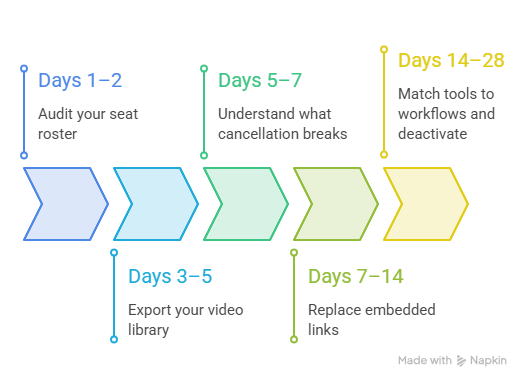
Realistic total timeline for a team of 10–50: four weeks from start to full deactivation. Teams with large embedded video libraries or complex knowledge bases should budget six weeks.
Frequently asked questions
Is Loom still free in 2026?
Loom's free Starter plan exists but is barely functional for team use: 25 total videos, 5-minute recording cap, 720p maximum, and a 10-user limit. ScreenPal's free tier, unlimited clips, 15-minute cap, cloud hosting, no watermark, is a more usable free alternative for most workflows.
Why did my Loom bill increase so much after the Atlassian migration?
Atlassian discontinued the free Creator Lite seat role in February 2026. Every seat in that role converted automatically to a full paid Creator account unless you manually removed those accounts during a grace period ending at your next billing date. Teams with 90 passive viewers and 10 active creators saw annual bills jump from $240 to $24,000.
What is the best free Loom alternative with no watermark?
ScreenPal (free tier), OBS Studio, ShareX, Screenity, and Fathom (for meeting recordings) all offer watermark-free recording. ScreenPal is the most practical for everyday async video communication.
What is the best Loom alternative for Mac?
Screen Studio for polished product and marketing recordings. Tella for quick, presenter-led async updates. Both are strong Mac options with different trade-offs: Screen Studio wins on cinematic output quality, Tella wins on sharing speed.
What is the best Loom alternative for Windows?
ScreenPal for a full Loom replacement with cloud hosting. ShareX for power users who want free, hotkey-triggered captures. Camtasia for professional editing depth. All three are confirmed Windows-compatible as of July 2026.
Is there an open source alternative to Loom?
Yes. Cap is the most modern option self-hostable on S3, active beta as of July 2026. OBS Studio (version 32.2.1) and ShareX (version 21.0.0) are also fully free and open source. Screenity covers the Chrome-based use case for free. Cap is in beta, and some instability should be expected.
What Loom alternative works on Linux?
OBS Studio is the strongest Linux-native option, with support across Ubuntu, Fedora, Arch, and Snap. Cap also supports Linux in beta. VEED.io and ScreenApp work in the browser on Linux. ShareX is Windows-only.
Which Loom alternative supports text-based video editing?
Descript. Edit the auto-generated transcript and the corresponding video segments update automatically. It's the fastest way to cut mistakes and filler words without touching a timeline editor.
Can I use a Loom alternative for meeting recording?
Yes. Fathom, tl;dv, Claap, and Sybill are all purpose-built for meeting recording with AI-generated summaries. Fathom's free tier offers unlimited recordings and transcripts with no cap. It's the most generous starting point.
What is the cheapest Loom alternative for teams?
ScreenPal at $10/user/month for the Team Business plan. Unlimited recordings, shared channels, cloud hosting, and basic admin controls at a fraction of Loom's Business tier cost.
Can I convert my old Loom recordings into written guides?
Yes. Glitter AI can convert screen recordings into formatted, annotated SOPs. Guidde generates written documentation alongside AI-narrated video guides from a single screen capture session.
Does Loom work on Linux?
No. Loom does not support Linux natively. OBS Studio is the strongest Linux-native recording option. Screenity covers Chrome-based capture on Linux. Cap has Linux support in beta.
What is the best Loom alternative for sales teams?
Vidyard is the strongest dedicated sales alternative, built around CRM integrations, branded sharing pages, call-to-action buttons, and viewer engagement analytics. Puppydog.io is the better choice when the goal is personalised demo videos at scale rather than tracked outreach links.
What is the best Loom alternative for product demos?
Puppydog.io for AI-personalised demos generated at scale from a single recording. Screen Studio for polished Mac-native product capture. Supademo for interactive click-through demos that let prospects explore the product themselves.
Is Tella better than Loom?
Tella is better than Loom for teams that need polished output without editing time. Tella adds auto layouts, AI filler-word removal, custom branding, and a cleaner sharing experience. Loom is still faster for a simple internal async update in environments already using Atlassian tools.
What are the best apps like Loom for Windows?
ScreenPal, Camtasia, Descript, VEED.io (browser-based), and ShareX (free utility) are the strongest options. All are confirmed Windows-compatible as of July 2026.
Do I need to pay for a Loom alternative?
No. ScreenPal, Fathom, tl;dv, OBS Studio, ShareX, Screenity, and Cap all have genuinely free tiers that work for real workflows. Whether you need to pay depends on your use case. Personalised demos and CRM analytics require paid tools, but basic async recording does not.
Which Loom alternative should you choose?
Choose Puppydog.io if you need one recording to generate hundreds of personalised demos, each with its own script, narration, and branded landing page connected to your CRM pipeline.
Choose Tella if you want polished async video with instant sharing and no editing time the cleanest direct Loom replacement for creators and founders.
Choose ScreenPal if budget is the primary constraint and you need a reliable, cloud-hosted Loom replacement that works across Mac, Windows, and browser.
Choose Descript if you think in transcripts and need to edit video the way you'd edit a document. Fast filler-word removal and text-based cutting.
Choose Screen Studio if you're on Mac and producing product marketing or developer advocacy content that needs to look cinematic without post-production.
Choose Cap if your team needs data sovereignty, self-hosted video storage, and open-source transparency. And has engineering capacity to manage a beta tool.
Choose Fathom if your primary use case is meeting notes and you want unlimited free recording without a bot appearing on your calls.
Choose tl;dv if you're a sales manager who needs cross-call intelligence, CRM-connected coaching data, and structured deal review workflows.
Choose Vidyard if you're in a revenue team that needs viewer-level analytics, CRM attribution, and branded video sharing pages tied to pipeline.
Choose Claap if your sales team needs meeting recordings to automatically become CRM-ready deal data, AI coaching notes, and follow-up emails, not just a searchable video library.
Choose Supademo if you want prospects to click through your product themselves rather than watch a recording passively.
Choose Camtasia if you're building formal e-learning programs, SCORM-compatible courses, or structured training content that requires a full desktop editing suite.
Choose VEED.io if your screen recordings regularly become social clips, need subtitles for multiple languages, or require browser-based editing without software installation.
Choose Guidde if a single recording session needs to produce both a video guide and a written step-by-step document for your help centre.
Choose Glitter AI if you need to convert vocal walk-throughs into formatted SOPs with annotated screenshots without writing them manually afterward.
Choose Sybill if your enterprise sales team needs AI coaching, behavioural prospect analysis, and automated CRM population from recorded calls.
Choose OBS Studio if you need unlimited local recording at zero cost, have existing cloud infrastructure for hosting, and are comfortable with a technical setup process.
Choose ShareX if you're on Windows, want a free hotkey-triggered capture utility you can configure exactly to your needs, and don't need cloud hosting.
Choose Screenity if you need the fastest possible zero-friction recording from Chrome with no installation, no account, and no cost.
Choose ScreenApp if you need browser-based recording and meeting summarisation in one tool and are comfortable with a newer platform still building its track record.
Sources checked for this update: July 27, 2026
- Atlassian Loom pricing: loom.com/pricing
- Loom Creator Lite seat deprecation: support.atlassian.com/loom/docs/loom-customer-integration-with-atlassian-pricing-billing-and-role-changes
- Loom workspace roles: support.atlassian.com/loom/docs/understand-workspaces-roles-and-permissions
- Loom AI features: support.atlassian.com/loom/docs/upgrade-to-or-downgrade-from-business-ai
- Loom plan downgrade/cancellation: support.atlassian.com/loom/docs/downgrade-or-cancel-your-loom-plan
- Loom status page: loom.status.atlassian.com
- Loom Trustpilot: trustpilot.com/review/loom.com
- Puppydog.io pricing: puppydog.io/pricing
- Tella pricing: tella.tv/pricing
- ScreenPal plans: screenpal.com/plans
- Descript pricing: descript.com/pricing
- Screen Studio: screen.studio
- Cap: cap.so
- Fathom pricing: fathom.video/pricing
- tl;dv pricing: tldv.io/pricing
- Vidyard pricing: vidyard.com/pricing
- Claap pricing: claap.io/pricing
- Supademo pricing: supademo.com/pricing
- Camtasia: techsmith.com/camtasia
- VEED.io pricing: veed.io/pricing
- Guidde pricing: guidde.com/pricing
- Glitter AI pricing: glitter.io/pricing
- Sybill pricing: sybill.ai/pricing
- OBS Studio: obsproject.com
- ShareX: getsharex.com
- Screenity: Chrome Web Store
- ScreenApp pricing: screenapp.io/pricing
- Puppydog.io FAQ / CRM integrations: puppydog.io/resources/frequently-asked-questions

Sarah Thompson is a storyteller at heart and Business Developer at PuppyDog.io. She’s passionate about creating meaningful content that connects people with ideas, especially where technology and creativity meet.