Top 16 AI Marketing Tools For Teams in 2026

AI in marketing isn’t experimental anymore. In 2026, marketing teams are judged on one thing: business outcomes. It’s no longer about generating more content. It’s about improving conversion rates, lowering customer acquisition cost (CAC), and increasing lifetime value (LTV).
But there’s a catch. As AI adoption explodes, so does tool bloat. Too many disconnected platforms create messy workflows, inconsistent branding, and zero visibility into performance indicators that actually matter. That’s why leading teams now treat AI marketing tools as core go-to-market infrastructure, not side experiments.
The goal isn’t to use more AI. It’s about building a smarter, modular AI ecosystem that integrates AI content creation, visual creatives, studio-quality video, and campaign workflows into a single performance engine.
Here’s what you’ll learn in this article:
- A simple definition of AI marketing tools (and how they differ from traditional martech)
- How AI helps reduce CAC and improve conversion rates
- The role of AI in increasing customer lifetime value (LTV)
- How to avoid tool bloat with modular vs all-in-one tools
- The top 16 AI marketing tools for copywriting, design, video, and podcasting
- Which tools are best for marketing teams, not solo creators
- How AI-generated video and demo automation boost engagement and pipeline
- The key performance indicators to track for AI-driven campaigns
What Are AI Marketing Tools? (Quick Definition for Decision-Makers)
AI marketing tools are software platforms that use artificial intelligence to help teams plan, create, personalize, and optimize marketing campaigns at scale. Instead of just storing data or scheduling posts like traditional martechtools, these tools actively generate content, automate decision-making, and improve performance over time.
In simple terms, they don’t just support marketing work. They do part of the work for you.
Modern AI marketing tools power things like:
- AI content creation for blogs, ads, emails, and landing pages
- Visual creatives and branded designs produced in minutes
- Studio-quality video and personalized product demos without film crews
- AI-generated podcasts and voice content from a single recording
- Automated campaign workflows that move projects from brief to launch
How They’re Different from Traditional Marketing Software
Traditional marketing tools are mostly systems of record. They store contacts, track emails, or manage ad spend. AI marketing tools are systems of execution. They actually produce assets, suggest improvements, and optimize based on outcome metrics.
Modular Tools vs All-in-One AI Platforms
Decision-makers in 2026 typically choose between two approaches:
Modular AI Ecosystem
- Specialized tools connected
- Greater flexibility and tool interoperability
- Best for teams with complex campaign workflows
All-in-One AI Tool
- Single platform handling multiple functions
- Simpler to manage and faster to deploy
- Best for lean teams avoiding tool bloat
There’s no universal “right” answer. The best AI marketing stack is the one that aligns with your team’s structure, governance needs, and performance goals.
At their core, AI marketing tools exist for one reason: to help teams produce better marketing, faster, while tying creative output directly to measurable business outcomes.
How AI Marketing Tools Drive Measurable Business Outcomes
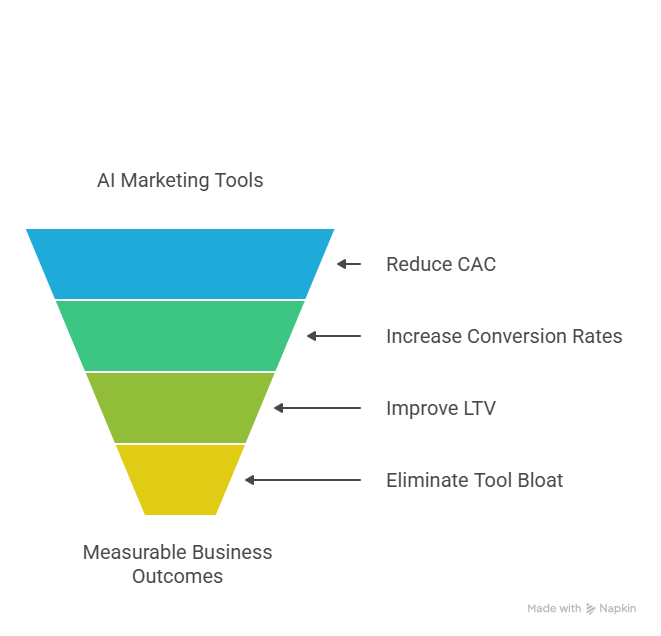
AI marketing tools sound impressive on the surface. automation, personalization, predictive insights. But marketing leaders don’t get a budget for “impressive.” They get a budget for results.
In 2026, the real value of AI shows up in hard metrics: lower costs, faster execution, and stronger revenue performance. Here’s how modern AI marketing tools connect directly to the numbers your leadership team actually cares about.
Reducing Customer Acquisition Cost (CAC) with Automation
Customer acquisition is getting more expensive every year. More competition, higher ad costs, and crowded channels mean teams have to do more with less. AI helps by dramatically lowering the cost of producing and testing marketing assets.
Instead of hiring external agencies or overloading internal teams, AI tools can generate:
- Ad variations for rapid A/B testing
- Landing page copy tailored to different audiences
- Visual creatives resized for every channel
- Product demo videos personalized for different segments
Use case → Benefit
- Automating ad creative production → More tests, lower cost per winning ad
- AI-generated landing page copy → Faster optimization cycles
- Personalized video at scale → Higher engagement without higher production budgets
The result? Teams reach performance goals with fewer resources, driving down overall CAC.
Increasing Conversion Rates with Personalization at Scale
Personalization used to mean adding a first name to an email. Now, AI marketing tools allow teams to tailor entire experiences, from ad copy to product demos, based on audience data and intent signals.
AI enables:
- Dynamic messaging for different industries or roles
- Website content that adapts to visitor behavior
- Personalized sales and product demo videos
- AI-driven email sequences based on engagement patterns
Use case → Benefit
- Role-specific landing page messaging → Higher relevance, higher conversions
- AI-personalized product demos → Better understanding, stronger buying intent
- Behavior-triggered email flows → Improved nurture performance
When content feels made for the buyer, conversion rates rise. It’s not magic, it’s relevance delivered at scale.
Improving Lifetime Value (LTV) Through Better Content Journeys
AI doesn’t just help win customers; it helps keep them. By automating onboarding, education, and ongoing engagement, teams can improve customer lifetime value (LTV) without constantly increasing acquisition spend.
AI marketing tools support:
- Automated onboarding content tailored by use case
- Educational video and knowledge content generated at scale
- Ongoing personalized updates and feature announcements
Use case → Benefit
- AI-generated onboarding sequences → Faster time to value for new users
- Scalable educational video content → Reduced churn through better adoption
- Personalized upsell messaging → Increased expansion revenue
Better education and engagement mean customers stay longer and spend more — the core drivers of higher LTV.
Eliminating Tool Bloat with Smarter AI Stacks
Ironically, adding more tools can hurt performance. Disconnected platforms create delays, inconsistent brand messaging, and messy campaign workflows. That’s where a well-planned AI stack makes a difference.
Modern AI marketing tools reduce tool bloat by:
- Automating multi-step workflows inside a single system
- Integrating creative production with distribution channels
- Maintaining brand consistency across assets
Use case → Benefit
- Unified AI content and design workflows → Faster campaign launches
- Centralized brand governance → Consistent messaging across markets
- Connected data between tools → Clearer performance indicators
When teams spend less time moving files and fixing inconsistencies, they spend more time optimizing performance. That operational efficiency translates directly into better business outcomes.
At the end of the day, AI marketing tools are valuable for one simple reason: they connect creative output to measurable performance. Lower CAC, higher conversion rates, stronger LTV, and smoother campaign execution, that’s the real story behind AI in marketing today.
CATEGORY 1: COPY & STRATEGY
Best AI Marketing Tools for Copywriting and GTM Orchestration
In 2026, AI copywriting and GTM orchestration tools aren’t just about faster text production. They’re central to how high‑performing marketing teams plan, execute, and scale campaigns that deliver real ROI. From automating multi‑channel messaging to eliminating redundant work, these platforms help teams reduce CAC, accelerate GTM velocity, and improve conversion rates, backed by real adoption and performance data. For example, over 88% of marketers now use AI daily, and most report measurable improvements in productivity and ROI from these tools.
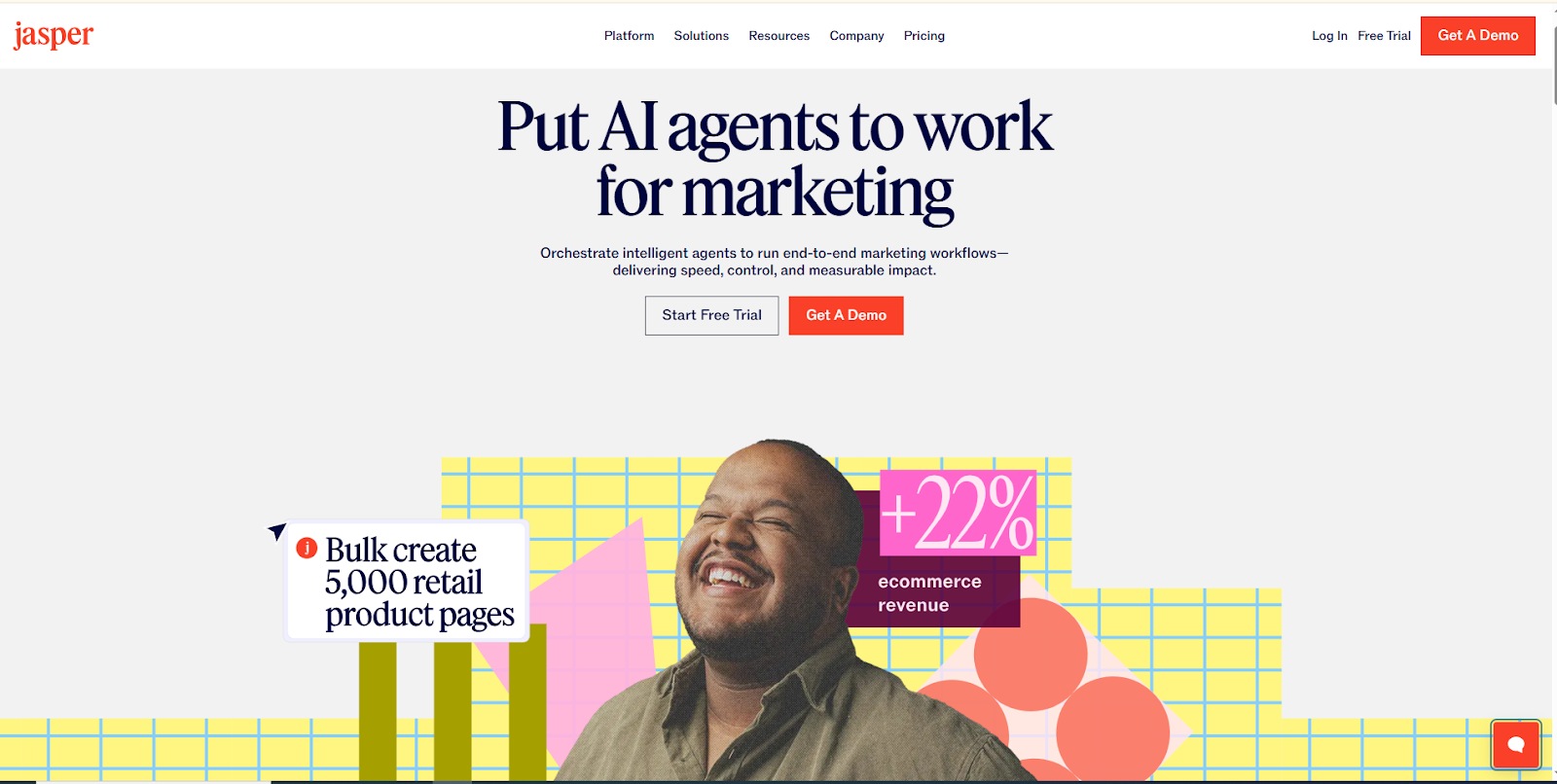
1. Jasper: AI Campaign Orchestration for Enterprise Teams
Definition:
Jasper is an AI‑powered content and campaign agent platform designed to automate strategy execution across channels, not just generate text but orchestrate multi‑asset, multi‑touch campaigns.
Use Case → Business Benefit
- Strategic brief → Full campaign assets
→ Consistent cross‑channel messaging without manual effort - Centralized brand voice repository
→ Stronger brand consistency and reduced revision cycles - Autonomous campaign workflows
→ Up to 57% faster time‑to‑market for assets
Why It Matters in 2026:
As teams push beyond isolated copy generation, Jasper’s ability to process a strategic brief into a coordinated set of deliverables helps reduce GTM bloat and align creative output with performance indicators such as conversion rates and campaign velocity. Additionally, enterprise adoption of AI tools like Jasper reflects the overall industry trend toward operationalizing AI rather than experimenting with it 88% of marketers use AI daily in 2026 workflows.
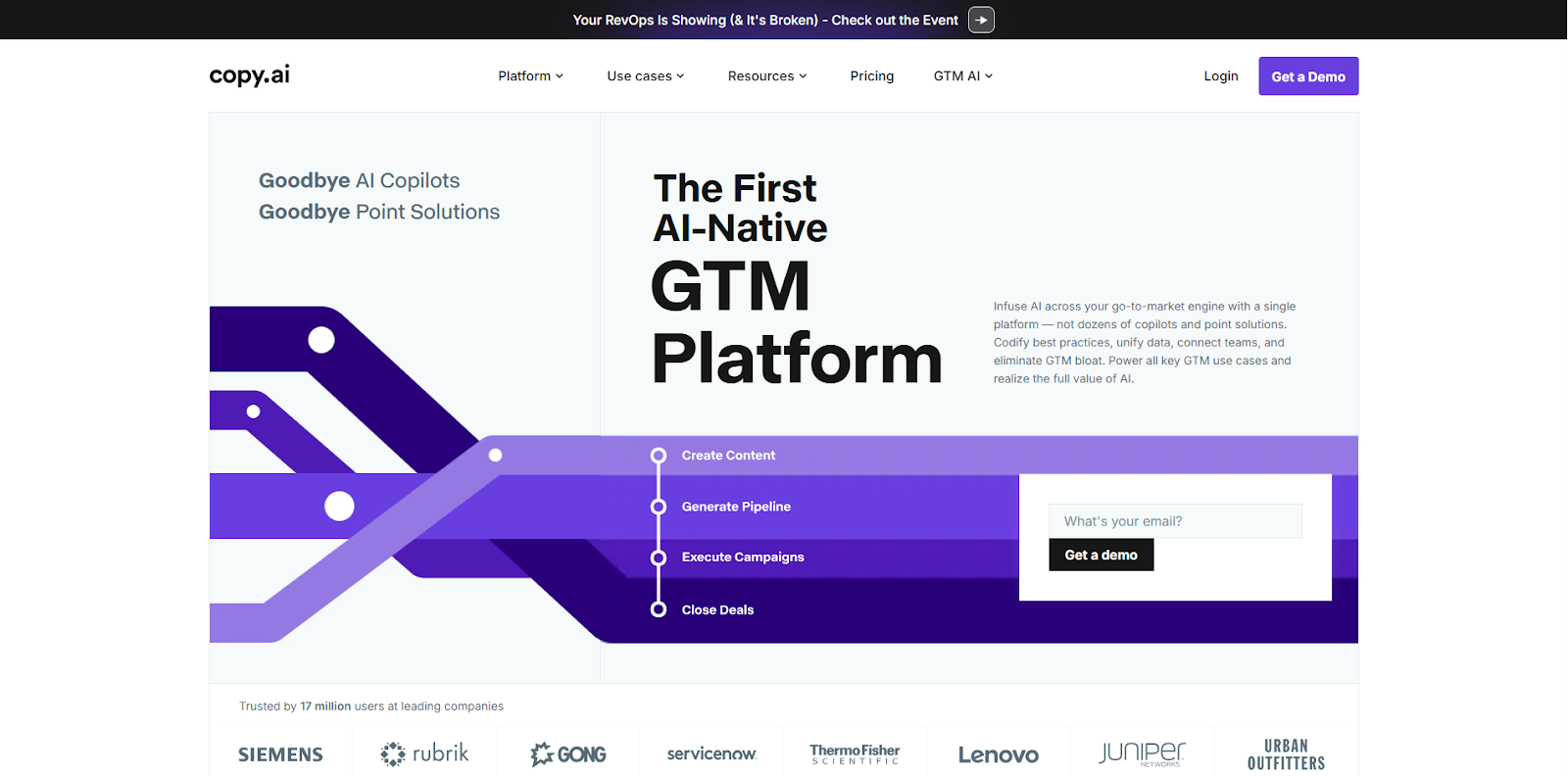
2. Copy.ai: Eliminating GTM Bloat through Workflow Automation
Definition:
Copy.ai is an AI GTM automation platform that codifies repeatable revenue processes, transforming workflows like webinar transcripts and sales calls into multi‑format content automatically.
Use Case → Business Benefit
- Sales webinar → Blog + social clips + email sequences
→ Higher content reuse and lower production time - CRM data analysis → Personalized messaging
→ Better audience relevance and improved conversion - Automated outbound research and outreach
→ Shorter sales cycles and higher qualified leads
Why It Matters in 2026:
With most marketing teams now using AI for everyday content tasks, tools that eliminate manual handoffs and remove internal process friction become strategic multipliers. Copy.ai’s workflow automation tackles tool bloat by replacing chains of actions with single, automated pipelines, allowing teams to focus on strategy instead of busywork. Adoption stats show AI is deeply embedded in marketing operations, with 60% of departments integrating AI into daily work by 2025–26.
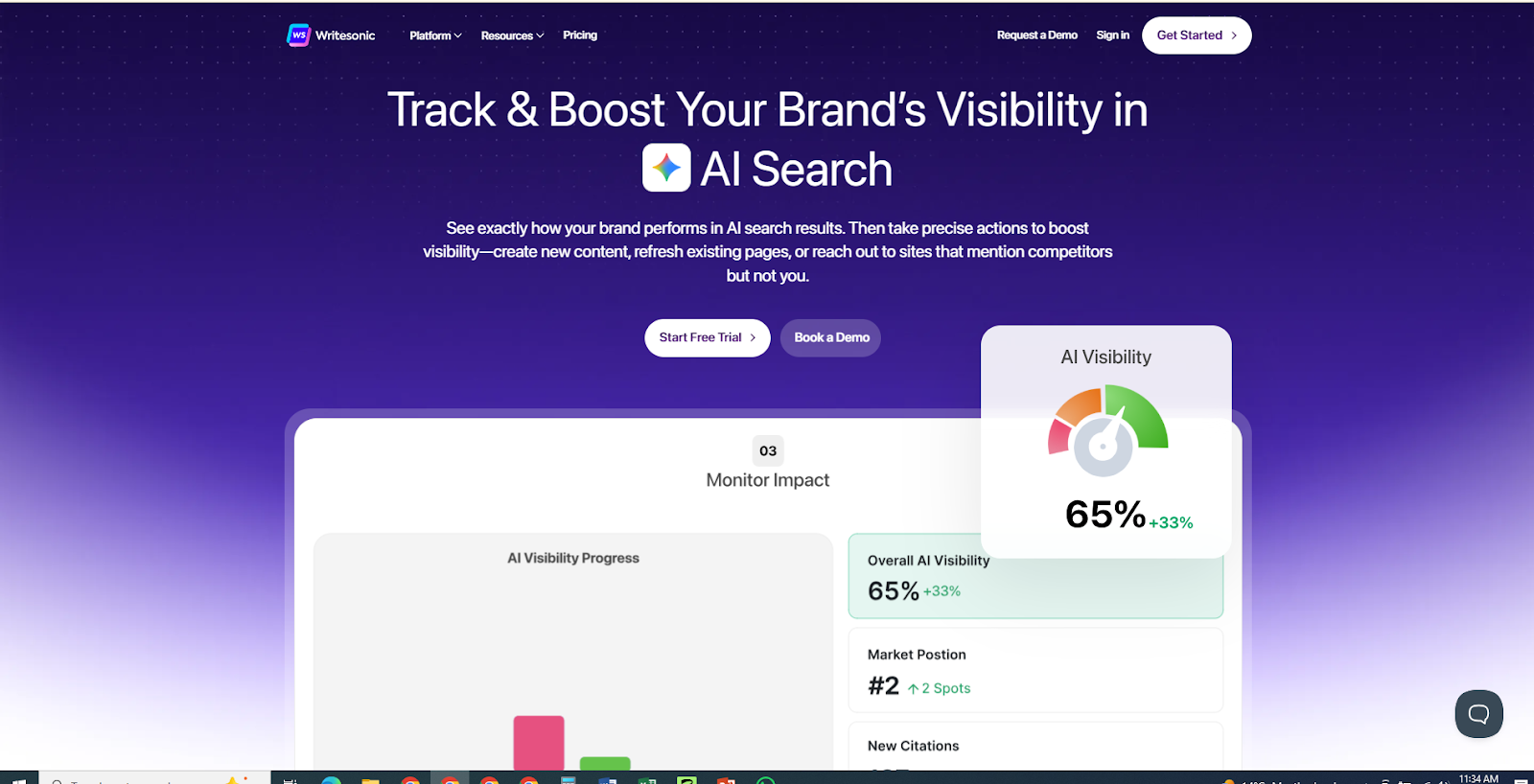
3. Writesonic: Navigating the Generative Engine Optimization (GEO) Era
Definition:
Writesonic is a generative AI platform focused on content optimization in emerging AI search environments. tracking brand presence within AI‑generated search answers and optimizing content for modern visibility.
Use Case → Business Benefit
- AI SEO agent automates keyword research + publishing
→ Deeper search relevance and improved organic reach - GEO tracking of AI citations
→ Higher impressions where AI search dominates - High‑volume product descriptions
→ Lower agency spend and higher catalog coverage
Why It Matters in 2026:
As generative search alters how users discover information, teams must go beyond traditional SEO to optimize for AI‑driven discovery. Writesonic’s ability to automate content creation while tuning it for generative engine visibility helps marketing leaders stay ahead in performance‑based search metrics, a priority reflected in broad AI adoption trends where content creation is the top use case for AI among marketers.
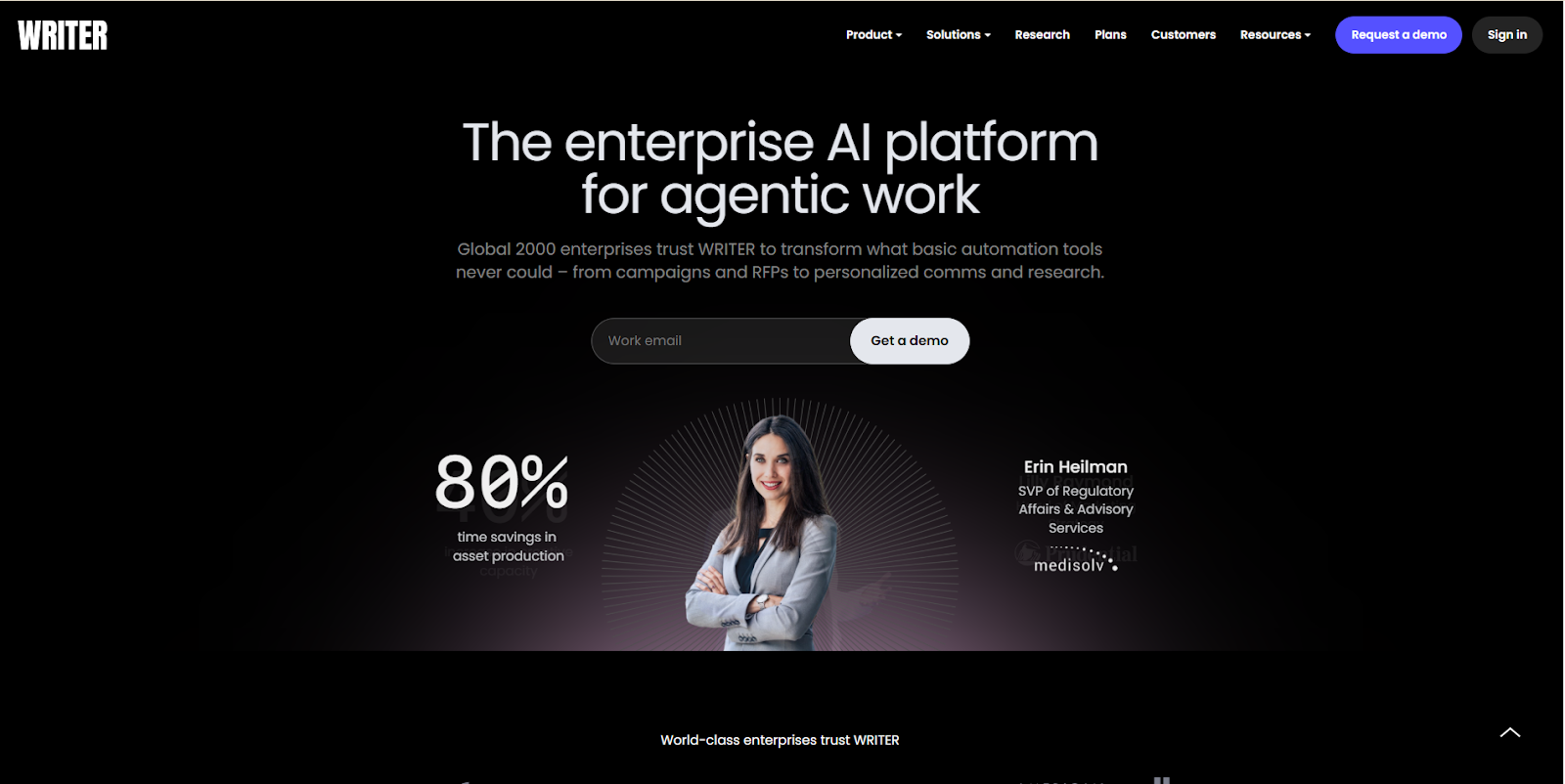
4. Writer.com: Secure AI for Regulated Enterprise Content
Definition:
Writer.com is a generative AI platform built for secure, compliant copy operations in industries with strict governance requirements like healthcare, finance, and retail.
Use Case → Business Benefit
- RAG‑backed internal knowledge access
→ Faster content grounded in verified company data - Multi‑agent compliant workflows
→ Reduced compliance risk and consistent messaging - Department‑specific brand profiles
→ Unified brand voice across distributed teams
Why It Matters in 2026:
Enterprise teams are deploying AI not just to create copy but to manage compliance, governance, and brand safety at scale. With adoption increasing across sectors, organizations need tools that integrate secure data access and compliance into copy workflows, a major consideration as AI adoption becomes widespread, but concerns about accuracy and governance persist.
Quick Stats That Reinforce This Trend
- 88% of marketers now use AI in their daily workflows, not just testing phases.
- 85% of teams leverage AI to create content more efficiently and at scale.
- AI content creation and optimization consistently rank as the top use cases within marketing functions in 2026.
- Adoption isn’t superficial. Most high‑performing organizations link AI use directly with measurable outcomes like faster launches and improved campaign metrics.
These tools represent not just copy generators, but platforms that embed AI into marketing strategy and execution workflows, precisely what teams need to turn creativity into measurable business impact in 2026.
CATEGORY 2: DESIGN & CREATIVE OPERATIONS
Best AI Marketing Tools for Design and Visual Creative Automation
In 2026, design isn’t just about pretty visuals anymore. It’s about delivering consistent brand visuals fast enough to drive real ROI. Teams face skyrocketing demand for social, ads, presentations, and campaign assets, and AI design tools are now essential parts of the creative workflow. In fact, about 75% of marketers say generative AI tools are an essential part of their creative toolkit, with 82% using AI to create or edit images and video regularly.
Here are the AI platforms helping teams scale visual production without sacrificing brand integrity or creative quality.
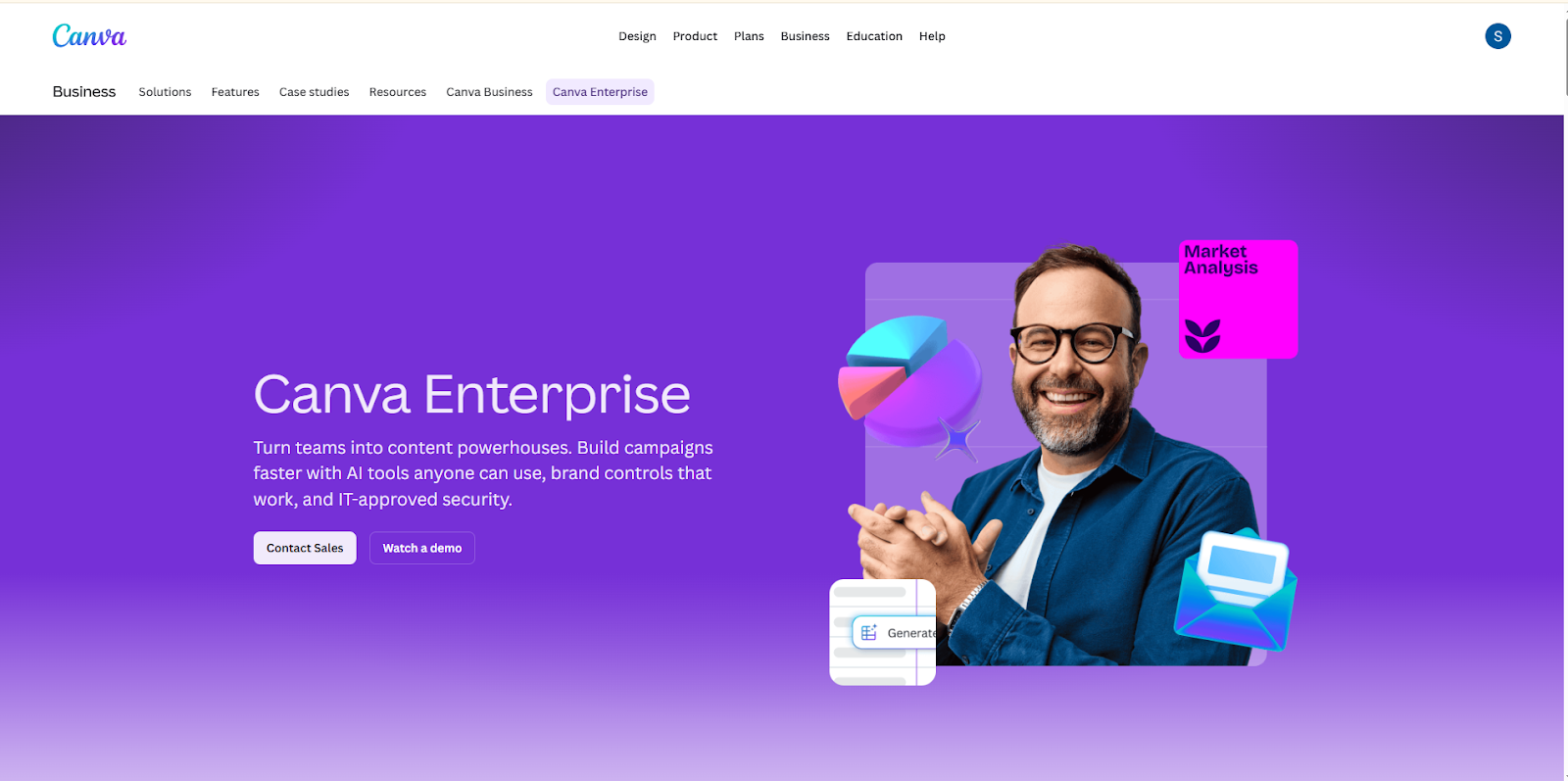
5. Canva Enterprise: All‑In‑One Visual Content Engine
Definition:
Canva Enterprise is a unified AI-powered design platform that lets marketing teams create, manage, and produce visual creatives, from static graphics to templates for global campaigns, all while maintaining brand consistency at scale.
Use Case → Business Benefit
- Centralized Brand Kit + templates → Consistent visuals across channels
- Magic Studio tools for image/graphic generation → Fast ideation and prototyping
- Automated resizing & translation workflows → Faster global deployments
Impact on Teams
- 82% of teams report using AI for image creation and editing.
- AI reduces repetitive design work, letting teams focus on strategy and story.
Why It Matters in 2026:
With creative demand outpacing internal design capacity, Canva’s AI tools help marketing ops and design teams push more assets through approval while saving hours per week, contributing directly to faster campaign launch cycles and lower design costs.
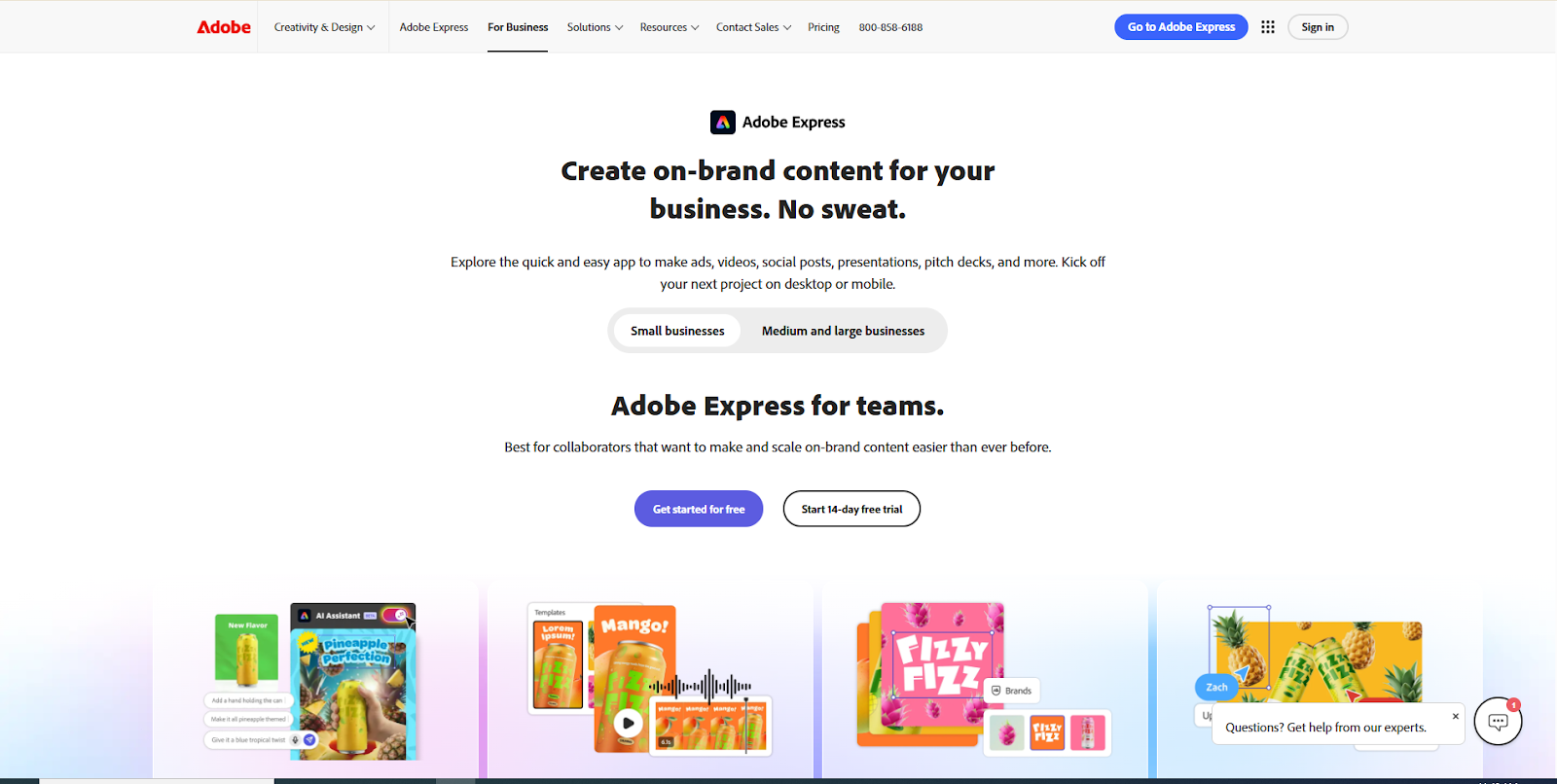
6. Adobe Express for Business: Integrated AI Design + Brand Governance
Definition:
Adobe Express for Business brings Adobe’s generative AI into a lightweight, easy‑to‑use design tool tailored for enterprise workflows, connecting templates, brand kits, and AI‑enabled creative automation into daily marketing operations.
Use Case → Business Benefit
- On‑brand templates and Brand Kits → Design governance at scale
- Text‑to‑image & background removal → Professional visuals fast
- AI resizing & auto layout tools → Ready‑to‑publish assets for every channel
Impact on Teams
- Teams produce timely, culturally relevant visuals with fewer bottlenecks and reduced reliance on specialized design teams.
Why It Matters in 2026:
Marketing teams juggling multiple campaign launches need design systems that produce quality without delay. Adobe Express helps centralize branding rules, so decentralized teams can create without breaking guidelines, making it powerful for global brands and distributed creative ops.
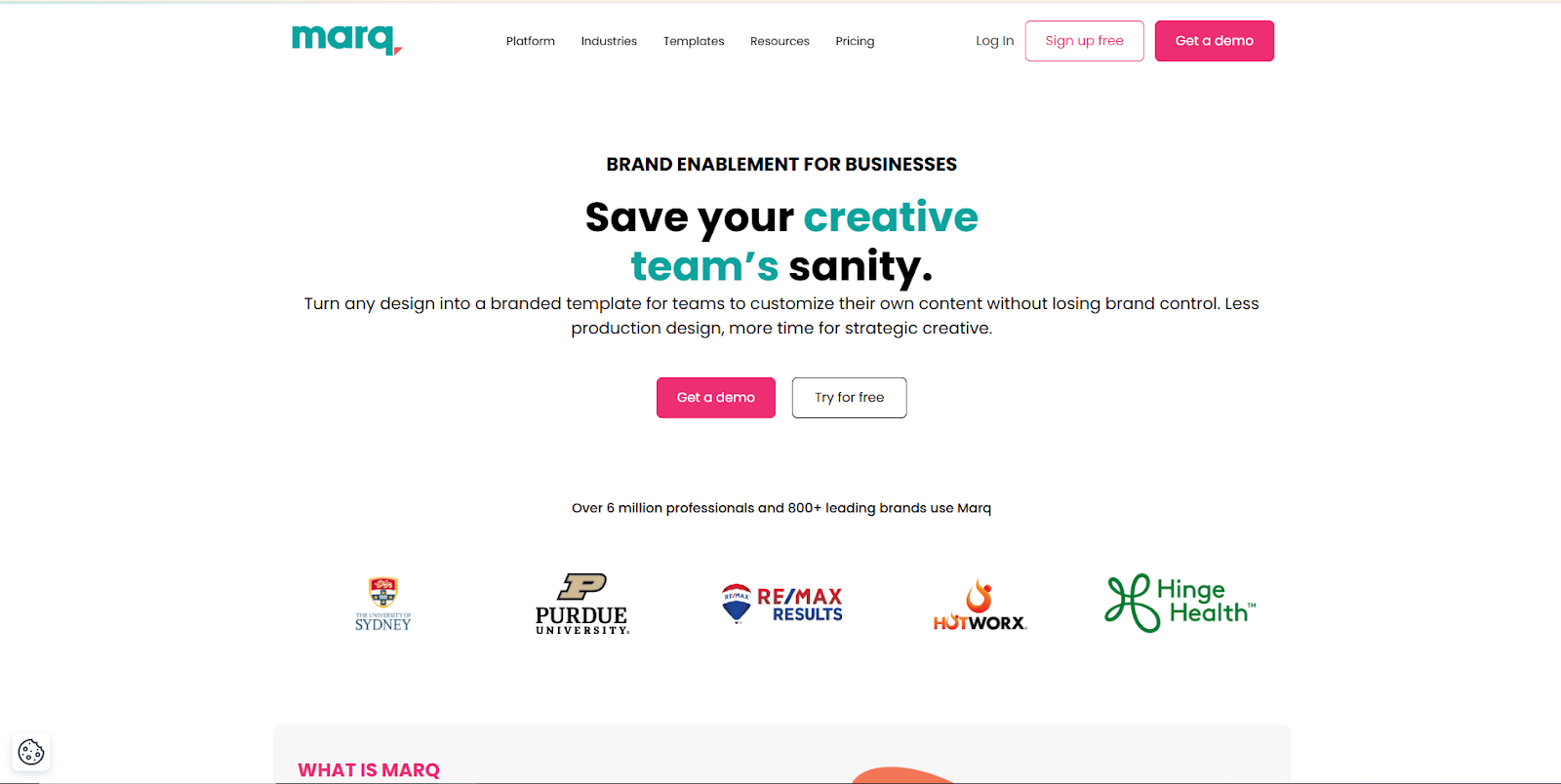
7. Marq: Creative Automation for Distributed Sales & Marketing Teams
Definition:
Marq is a creative automation platform that connects design templates with CRM and business systems, enabling personalized, brand‑approved templates to populate automatically for distributed teams such as regional marketers or sales reps.
Use Case → Business Benefit
- Smartfields pulls CRM data into templates → Personalized collateral instantly
- Trigger‑based content (e.g., pitch decks) → Faster enablement for sales
- Brand compliance and locked templates → Fewer revisions
Impact on Teams
- Reduces revision cycles by up to ~90%, keeping creative consistent across touchpoints.
Why It Matters in 2026:
When design bottlenecks slow campaign velocity, automation like Marq’s can eliminate hours of manual editing and ensure even non‑designers produce on‑brand, high‑quality materials.
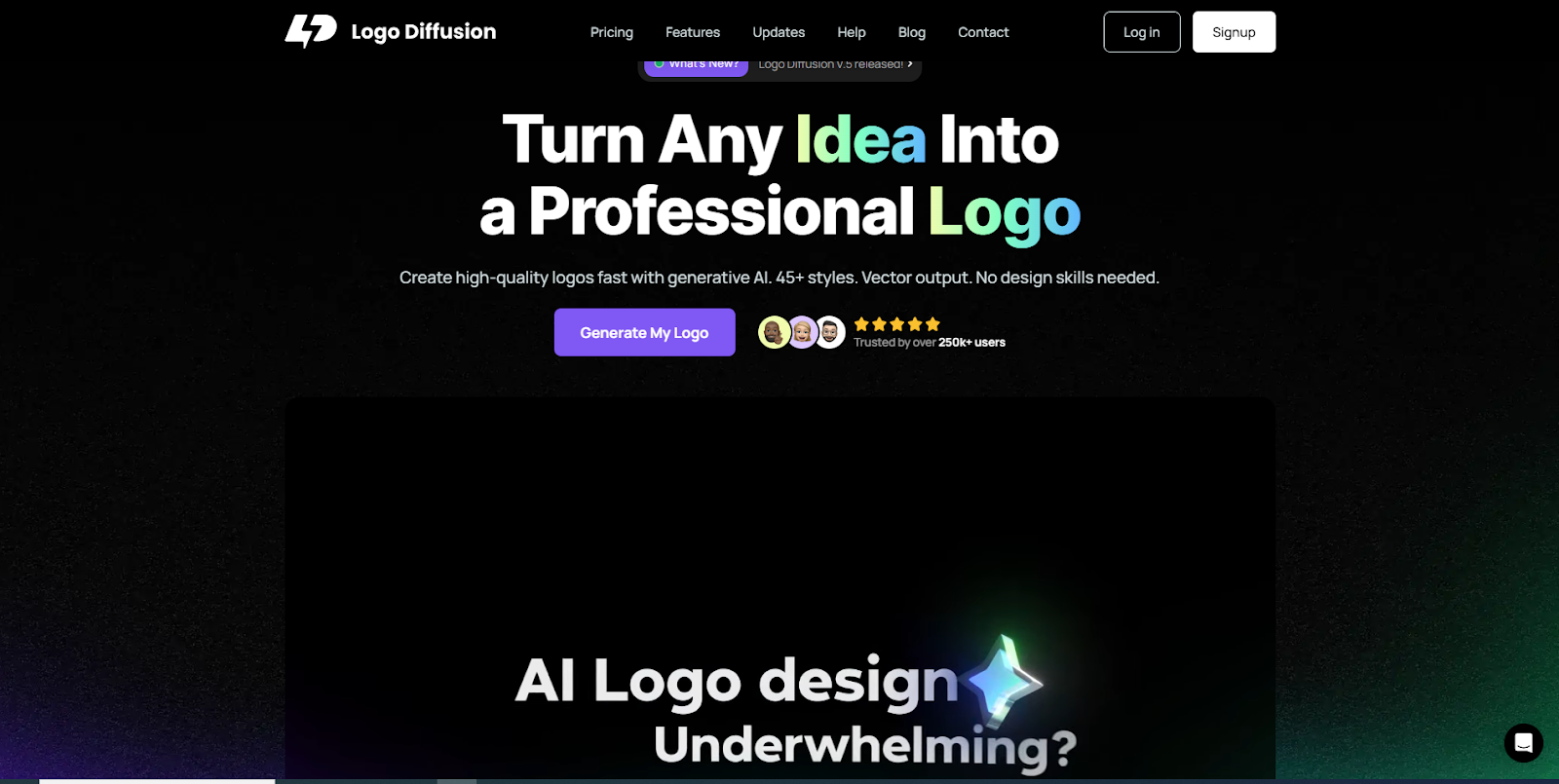
8. Logo Diffusion: AI‑Powered Branding & Asset Scaling
Definition:
Logo Diffusion focuses on brand asset generation and management, offering fine‑tuned control for logos and visual elements that must remain consistent across formats, from social posts to print and out‑of‑home.
Use Case → Business Benefit
- Auto vector export and resizing → Sharp visuals in every format
- Color refinement & style control → Maintain exact brand identity
- Bulk asset prep → Rapid multi‑channel campaigns
Impact on Teams
- Helps teams maintain visual consistency across expanding digital ecosystems with minimal overhead.
Why It Matters in 2026:
Brand consistency is a top priority for teams, especially as more visuals are deployed across markets and channels. With marketers reporting that keeping brand identity on track is one of the biggest hurdles in AI adoption, tools like Logo Diffusion ensure creative automation doesn’t erode your visual identity.
Design & Creative Automation, Market Momentum
Here’s a snapshot of current trends shaping design automation in marketing:
- Around 70–78% of creative and design professionals use AI tools to boost productivity and creativity in their workflows.
- AI design tools are increasingly used to automate repetitive tasks like resizing and mockup generation, freeing teams to focus on strategy.
- AI is now considered essential in creative toolkits, not just experimental tech, with more than 75% of marketers relying on AI for visual content creation.
These stats show design isn’t a siloed function anymore. It’s embedded in every campaign workflow, and AI helps make sure teams can meet demand without compromising speed, quality, or brand integrity.
CATEGORY 3: VIDEO & PERSONALIZED VISUAL CONTENT
Best AI Marketing Tools for Video and Hyper-Personalized Visuals
Video in 2026 has shifted from being a luxury marketing format to a core revenue-driving channel. Enterprises no longer just want videos. They want personalized, scalable, on-brand content that delivers measurable ROI. With Puppydog.io leading the charge, teams can create demo and product videos automatically, turning screen recordings or screenshots into high-converting, personalized content.
AI video tools now empower marketing and sales teams to:
- Reduce production costs by 70–90% compared to traditional methods.
- Increase engagement and watch-through rates by 80–200% using personalized messaging.
- Scale production across multiple campaigns, markets, and customer segments.
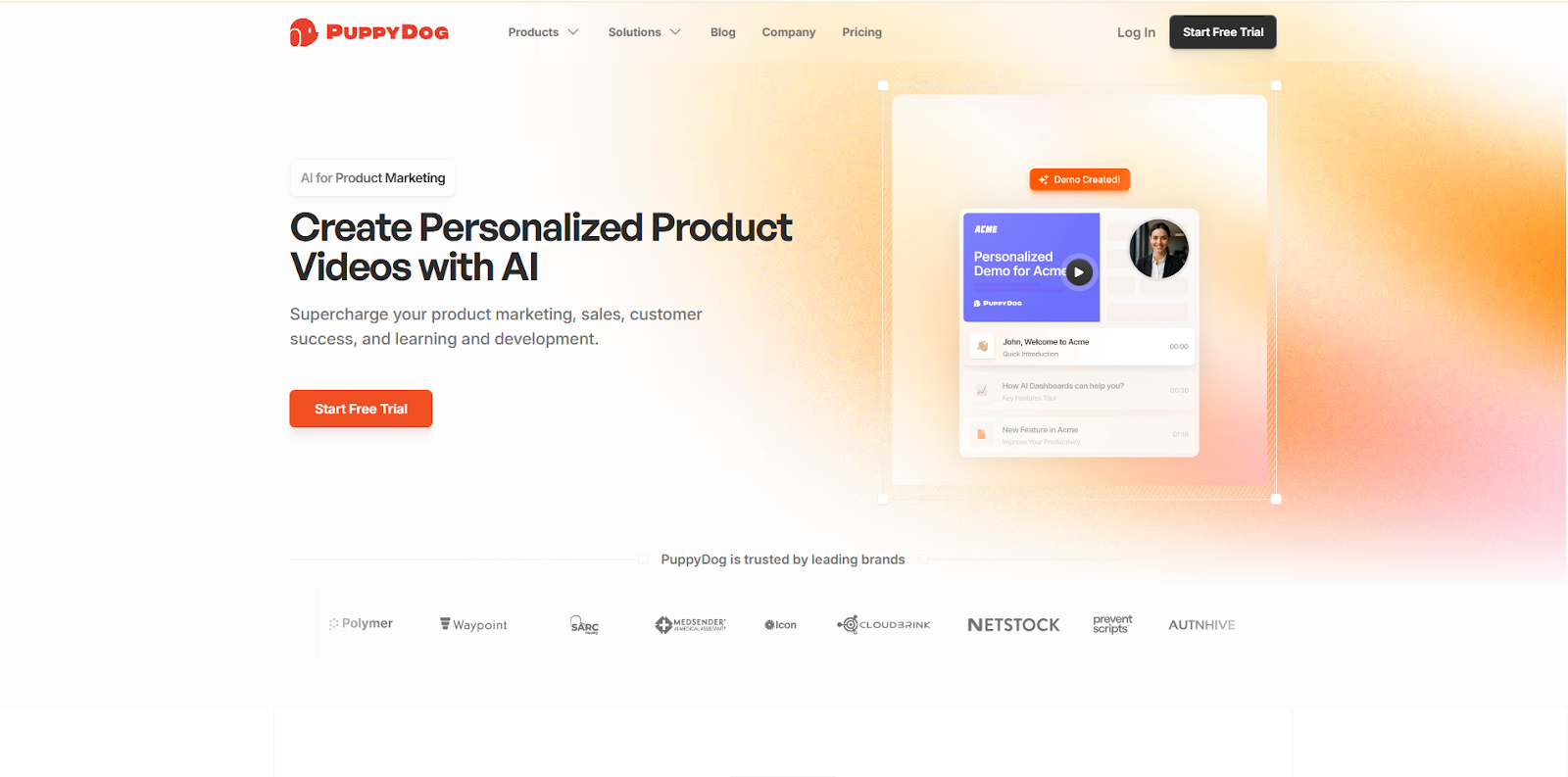
9. Puppydog.io: Enterprise-Grade AI Video for Demos and Sales
Definition:
Puppydog.io is an AI-powered platform that converts screen recordings or screenshots into personalized product demo videos, enabling marketing and sales teams to create tailored visual experiences for prospects at scale.
Use Case → Business Benefit
- Screen recording → Ready-to-send demo video
→ Reduce video production time from hours to minutes - Personalized messaging per account → Higher engagement and qualified leads
- Automated branding and voiceovers → Maintain brand consistency without manual editing
Impact on Teams
- Marketing teams report 5x faster video creation and a 40–60% increase in demo engagement.
- Sales teams can send customized videos to each prospect, improving conversion rates and lowering CAC.
- Integrates seamlessly into CRM and email workflows, turning video from a “nice-to-have” into a measurable revenue tool.
Why It Matters in 2026:
With AI-generated video now central to GTM strategy, Puppydog.io enables teams to move beyond generic demos to scalable, personalized visual experiences, addressing both speed and ROI. This is critical as 88% of marketers report AI video improves engagement, and personalized content consistently outperforms generic campaigns.
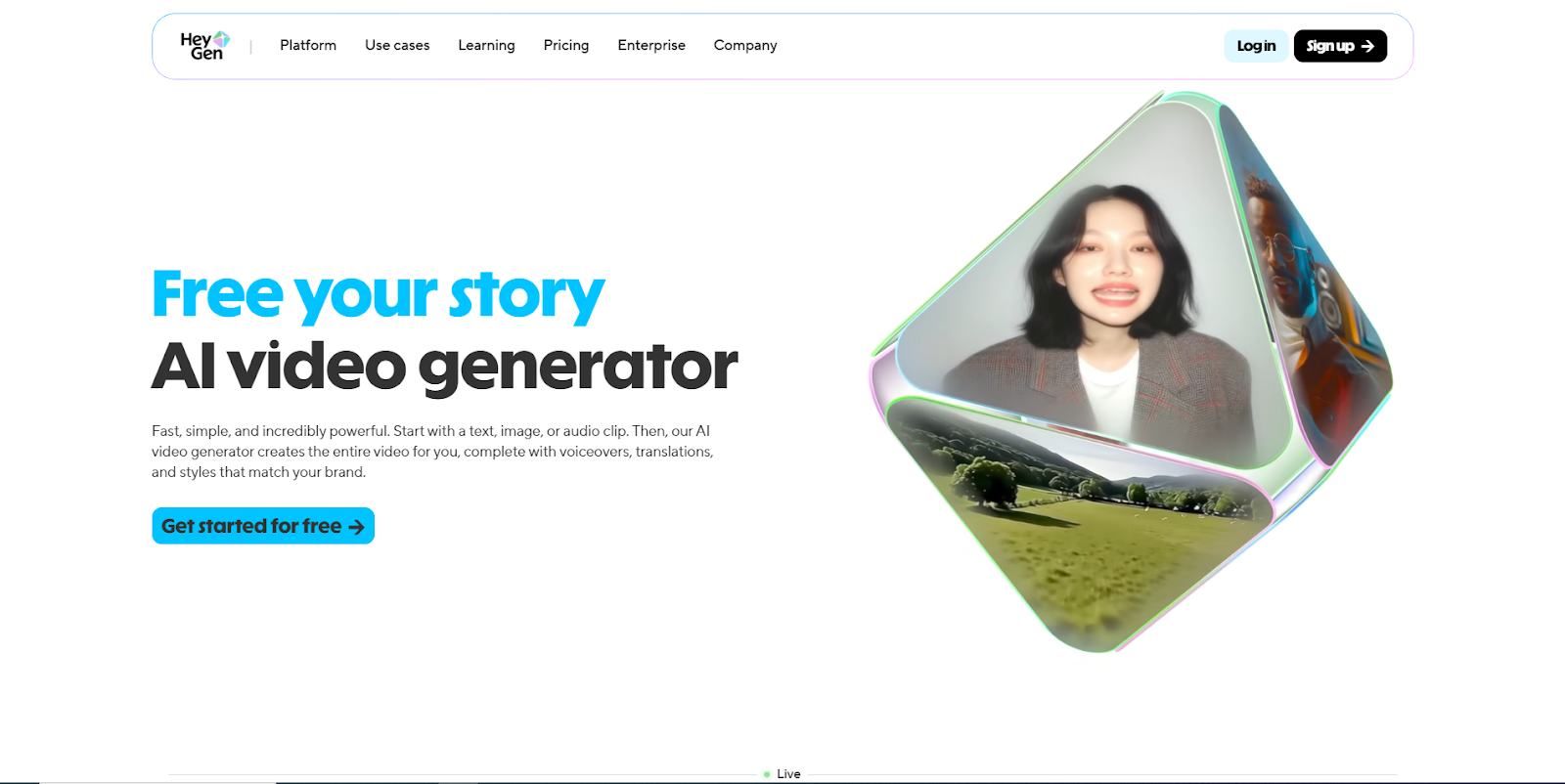
10. HeyGen: Hyper-Realistic Digital Presenters
Definition:
HeyGen offers hyper-realistic AI avatars capable of presenting video content with natural gestures and speech, ideal for personalized prospecting and internal communications.
Use Case → Business Benefit
- CRM data → Personalized sales videos
→ 2–3x higher click-through rates than generic content - Multi-language avatars → Reach global audiences efficiently
- API integrations → Automate video creation at scale
Impact on Teams
- 80% higher watch-through rates reported for personalized outreach campaigns.
- Marketing and sales teams achieve faster pipeline velocity by sending tailored videos to prospects.
Why It Matters in 2026:
HeyGen is perfect for teams prioritizing personalization at scale without increasing headcount, particularly for high-touch B2B sales outreach and global campaigns.
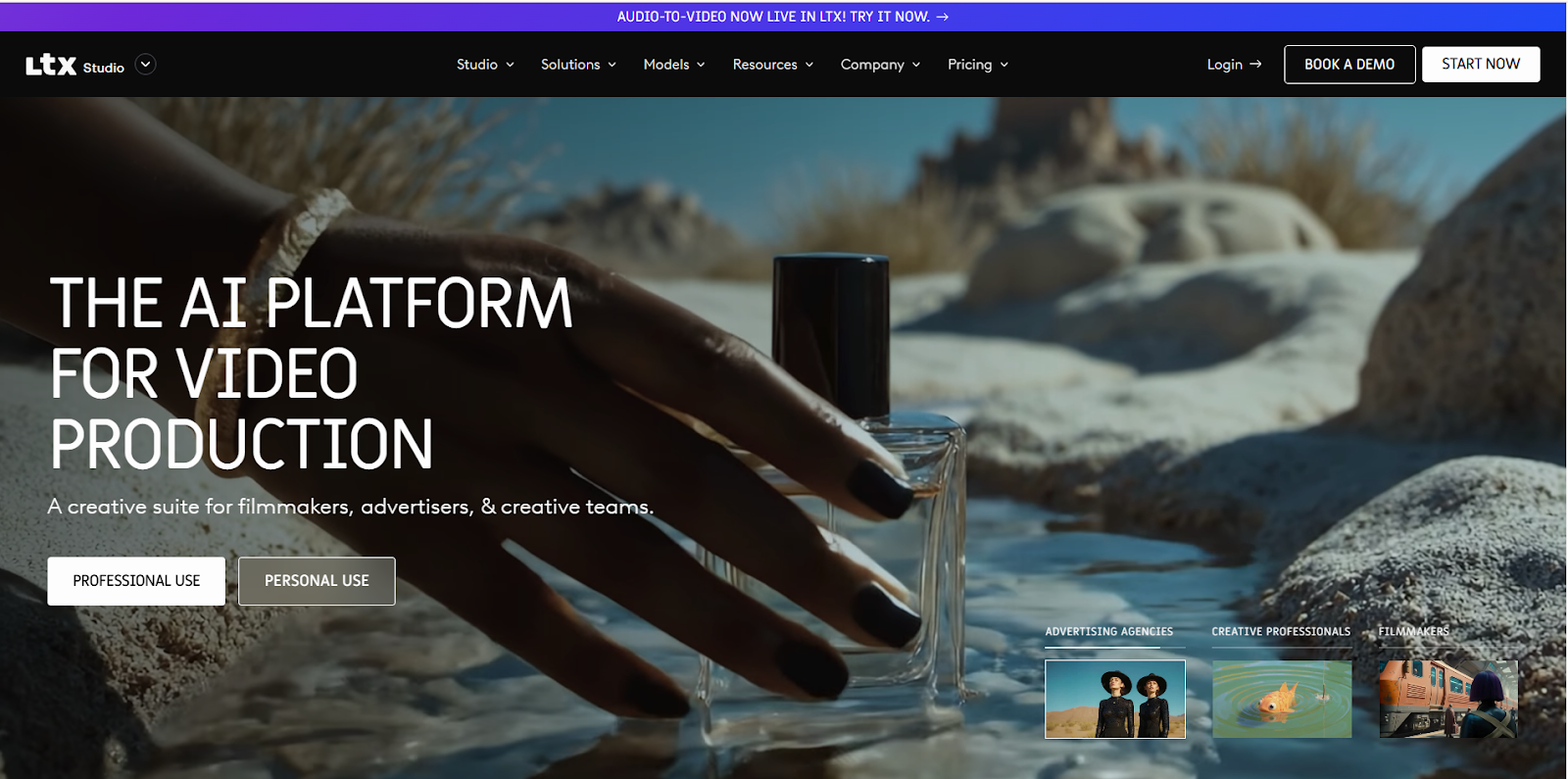
11. LTX Studio: Cinematic Video Production at Scale
Definition:
LTX Studio is an AI platform for creating cinematic, script-to-screen videos, including brand characters, environments, and multi-format outputs — ideal for enterprise advertising, social media, and training content.
Use Case → Business Benefit
- Script → Fully produced cinematic video
→ Reduces production time from weeks to hours - Reusable AI-generated brand elements
→ Maintain visual consistency across campaigns - Multi-format export (16:9, 9:16, 1:1)
→ Optimize content for every channel
Impact on Teams
- Centralized platform for multiple creators → Streamlined collaboration
- Supports high-volume content campaigns while ensuring brand consistency
Why It Matters in 2026:
For marketing leaders seeking cinematic-quality content at enterprise scale, LTX Studio replaces complex multi-department workflows with a single AI-driven production engine, saving both time and resources.
Video & Personalization: Market Benchmarks
- Personalized AI videos increase CTR by 2–3x compared to generic videos.
- Teams using AI for video production report 70% reduction in production costs.
- 88% of marketers now see AI video as essential for sales and demo content.
Puppydog.io stands out for its focus on demo automation, CRM integration, and personalized storytelling, making it the top choice for revenue-driven marketing teams in 2026
CATEGORY 4: AUDIO & PODCASTING OPERATIONS
Best AI Marketing Tools for Voice, Podcasts, and Audio Content
In 2026, audio is no longer just a supplementary marketing channel. It’s a core component of brand storytelling, customer engagement, and content repurposing. Marketing and creative teams are increasingly using AI to produce studio-quality audio for podcasts, webinars, and sales enablement content at scale. AI tools now allow enterprises to edit, enhance, and personalize audio, turning one recording into dozens of ready-to-publish assets.
Statistics highlight the growth of AI in audio:
- 73% of marketing teams report using AI tools for audio production regularly.
- 65% of teams repurpose long-form content (webinars, interviews) into short clips automatically.
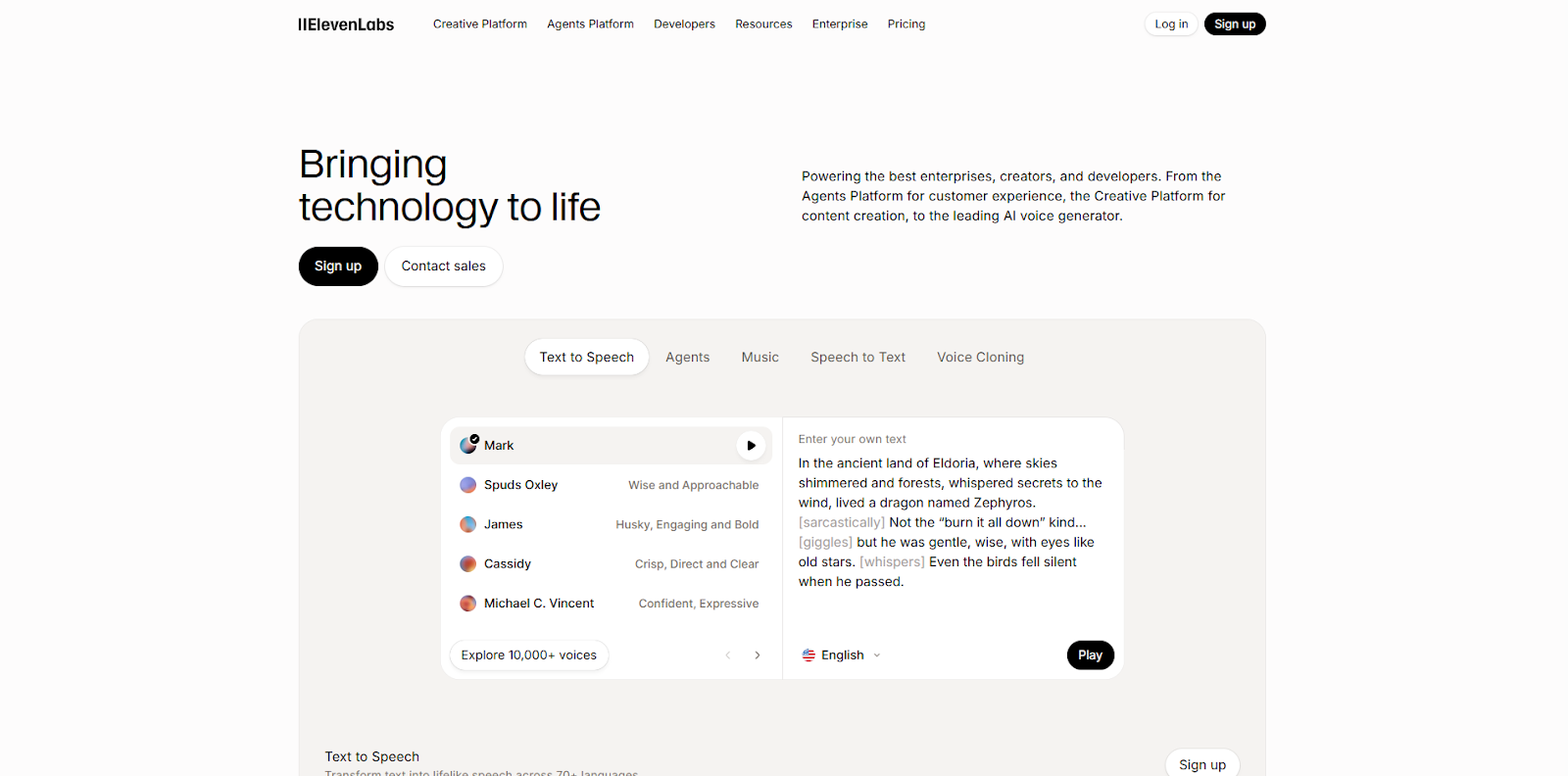
12. ElevenLabs: Voice Infrastructure for Global Brands
Definition:
ElevenLabs is an AI-powered voice platform enabling real-time voice synthesis, cloning, and multi-lingual audio production, designed for enterprises that need scalable, human-like voice content.
Use Case → Business Benefit
- Clone brand spokesperson’s voice → Consistent audio branding across content
- Multi-step workflows → Automate customer support, sales, and training audio
- Global language support → Localize content for 32+ markets
Impact on Teams
- 25% reduction in escalations using emotional AI detection.
- 10x faster production of voice content compared to traditional methods.
- Seamless multi-lingual publishing for global campaigns.
Why It Matters in 2026:
For global teams, ElevenLabs provides scalable, consistent voice content across campaigns, enhancing engagement without requiring large recording studios or voice talent.
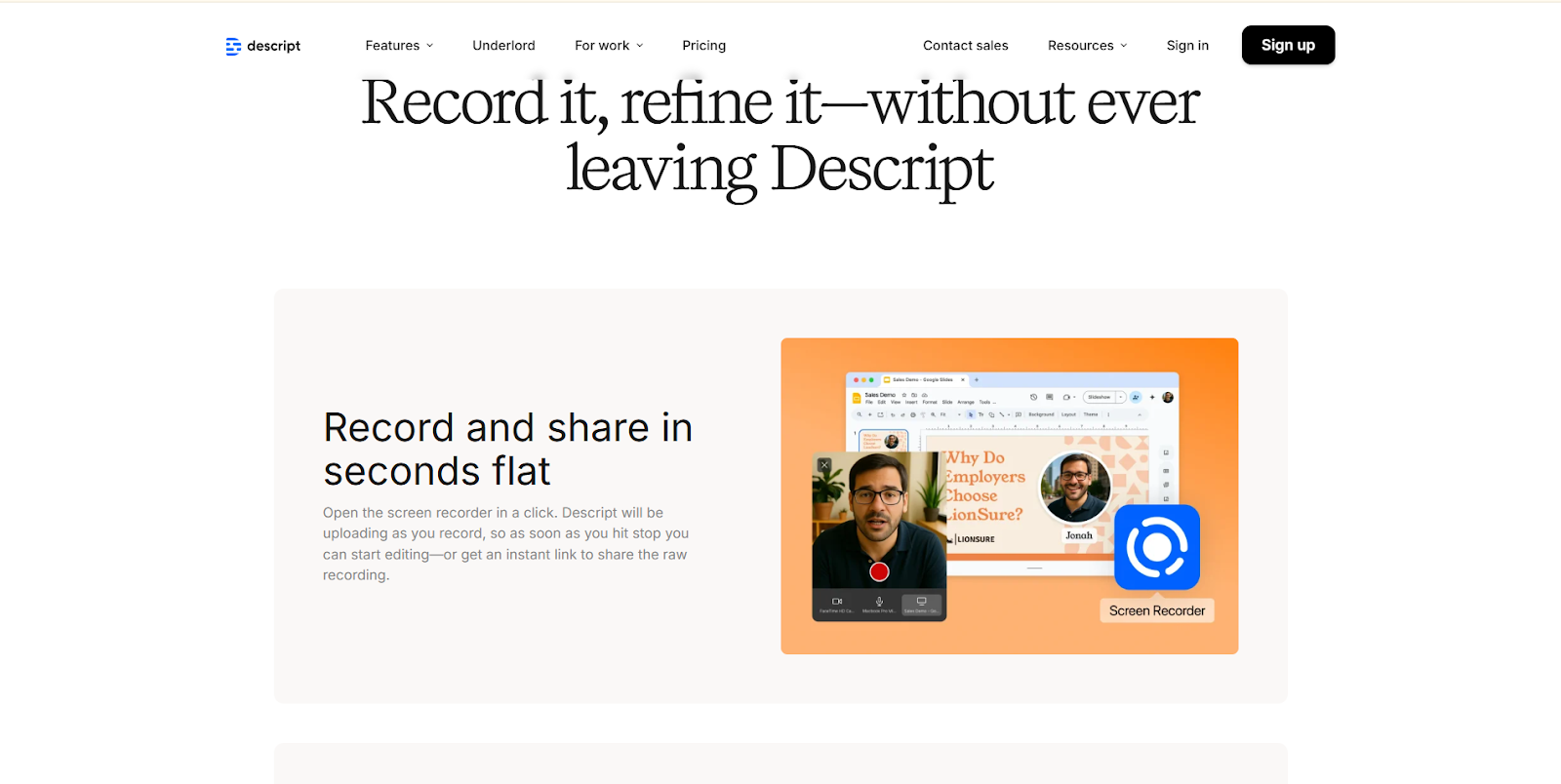
13. Descript: Fast, Text-Based Audio & Video Editing
Definition:
Descript simplifies audio and video editing with a transcription-first interface. Teams can edit recordings by editing text, making it accessible to non-technical users.
Use Case → Business Benefit
- Edit podcasts/webinars like a document → Quicker post-production
- Overdub AI voice → Fix errors without re-recording
- Clip suggestions → Easily create social shorts
Impact on Teams
- Up to 4x faster content output.
- 75% reduction in editing time for long-form content.
- Integrates with social publishing tools for seamless distribution.
Why It Matters in 2026:
Descript empowers marketing teams to repurpose and distribute content efficiently, ensuring that audio becomes a high-volume, high-impact part of the marketing mix.
14. Riverside: Studio-Quality Remote Recording

Definition:
Riverside is a remote recording platform offering 4K video and studio-quality audio, capturing each participant’s local track to guarantee pristine output.
Use Case → Business Benefit
- Automatic multi-track recording → Better editing and production flexibility
- “Magic clips” and auto-generated show notes → Quick content repurposing
- Live streaming with audience call-ins → Engagement in real-time webinars or podcasts
Impact on Teams
- Streamlines remote content creation for distributed teams.
- Reduces manual labor in editing and repurposing by up to 60%.
Why It Matters in 2026:
Riverside makes remote podcasting and webinar production scalable, enabling global teams to maintain high-quality standards without investing in studios or post-production staff.
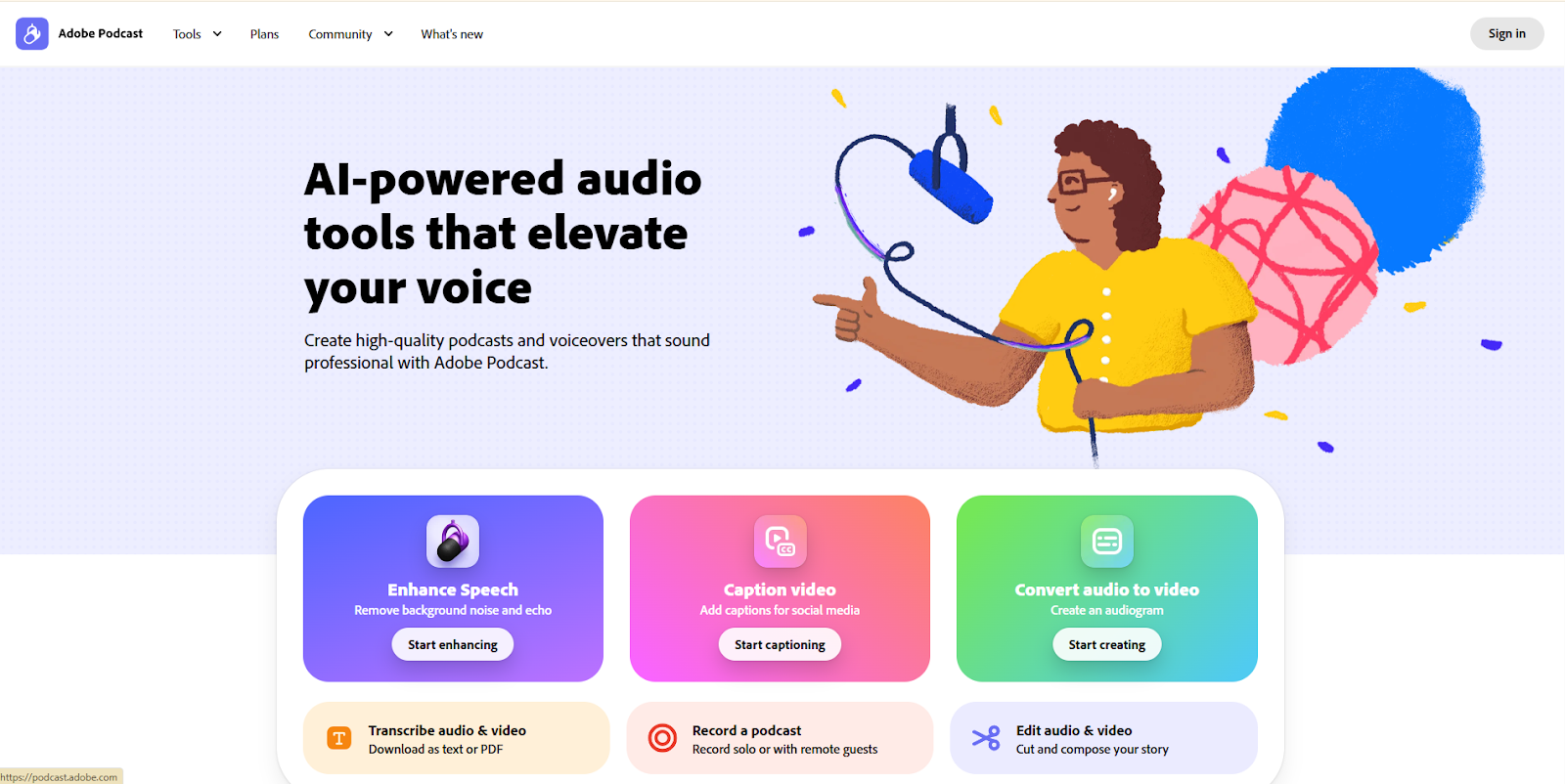
15. Adobe Podcast: Professional Audio Enhancement in Browser
Definition:
Adobe Podcast provides AI-powered browser tools to clean, enhance, and produce professional-quality audio for marketing teams, without requiring high-end equipment.
Use Case → Business Benefit
- Remove noise and echo → Studio-quality recordings in any environment
- Bulk file enhancement → Scale post-production across campaigns
- Integration with Adobe Express → Streamlined workflow for audio + visual assets
Impact on Teams
- Faster audio production for marketing campaigns and podcasts.
- Supports consistent, branded audio for teams producing multiple shows.
Why It Matters in 2026:
Adobe Podcast enables marketing teams to maintain professional audio standards across multiple campaigns while minimizing manual editing, making high-volume content creation feasible.
Audio & Podcasting Trends: Key Benchmarks
- 73% of marketing teams leverage AI for audio production.
- Repurposing long-form content into short clips improves reach and engagement by up to 50%.
- Studio-quality AI voice tools reduce production costs by 60–80%, freeing teams to focus on strategy.
AI audio platforms have become indispensable for teams seeking scalable, consistent, and high-quality audio, whether for podcasts, webinars, or internal communications.
Modular vs All‑in‑One AI Marketing Tools: What Should Teams Choose?
By 2026, AI marketing tools will no longer be one‑off utilities. They’re strategic pieces of a broader growth engine, and the way you compose that engine matters.
Do you build with modular components tailored to specific functions, or do you adopt an all‑in‑one platform that tries to do everything?
Both approaches have their advantages, your choice should reflect your team’s size, complexity, governance needs, and growth objectives.
What Is a Modular AI Ecosystem?
A modular AI ecosystem connects best‑in‑class tools for specific functions. Think: one platform for copy generation, another for video, another for design, all integrated into your workflows through APIs and shared data.
Pros of Modular Tools
- Best-in-class capabilities: Specialized tools excel at their niche (e.g., Puppydog.io for demos, Descript for audio editing).
- Flexible interoperability: Modular tools can connect to existing systems like CRMs, DAMs, and CDPs without lock‑in.
- Optimized performance workflows: Each tool targets specific outcome metrics, conversion rates, CAC, and campaign velocity.
- Easier upgrades: Swap out individual tools when better options arrive without disrupting the whole stack.
Cons of Modular Tools
- Integration overhead: Teams need governance and interoperability standards to connect tools seamlessly.
- Learning curve: Teams must master different platforms and workflows.
- Potential data silos: Without unified governance, performance data may fragment across tools.
Best for: Enterprise teams, distributed marketing ops, and organizations with complex campaign workflows demanding high performance and flexibility.
What Is an All‑in‑One AI Marketing Tool?
An all‑in‑one tool combines multiple AI functions, from copy and design to basic video, in a single platform. These are designed for teams that want simplicity without managing multiple interfaces.
Pros of All‑in‑One Tools
- Simplified workflows: One interface, fewer logins, and fewer handoffs.
- Lower overhead: Easier onboarding, centralized billing, and simplified governance.
- Unified data and analytics: All performance data lives in one place.
- Fast time-to-value: Teams can start creating immediately without custom integrations.
Cons of All‑in‑One Tools
- Jack of all trades, master of none: Unified platforms may lag behind specialists in depth.
- Less flexibility: If you outgrow a platform, migrating your stack can be harder.
- Risk of tool bloat: Trying to cover every function inside one platform can compromise performance.
Best for: Mid-market teams, lean marketing ops, and groups prioritizing speed, ease of use, and simplicity over deep specialization.
Key Tradeoffs Decision-Makers Should Consider
Scenario-Based Guidance
Choose Modular If You Need:
- Deep specialization in areas like video personalization, GEO optimization, or voice infrastructure.
- Custom campaign workflows across multiple teams.
- Best-in-class performance across key metrics like CAC reduction and conversion rate optimization.
Choose All‑in-One If You Want:
- A single, unified entry point for copywriting, design, and light video creation.
- Fast onboarding with minimal tech complexity.
- A consistent platform with shared performance analytics out of the box.
Hybrid: The Smart Middle Ground
Many high-performing teams adopt a hybrid approach:
- Core all‑in‑one platform for day-to-day content tasks
- Specialized tools for high-impact functions (like Puppydog.io for demo videos or Writesonic for GEO optimization)
This approach balances simplicity with specialized performance, keeping governance tight while maximizing outcome metrics.
Bottom Line
There’s no universal “best choice.” The right stack depends on your team’s goals, scale, and measurement expectations. In today’s outcome-driven landscape:
- Modular ecosystems excel where performance and flexibility matter most.
- All‑in-one platforms win where speed and ease of use are priorities.
- Hybrid stacks capture the best of both worlds.
The key isn’t tool count, it’s tool purpose. The best AI marketing stack is one that helps you create more, measure better, and drive real business outcomes in 2026.
How to Measure ROI from AI Marketing Tools
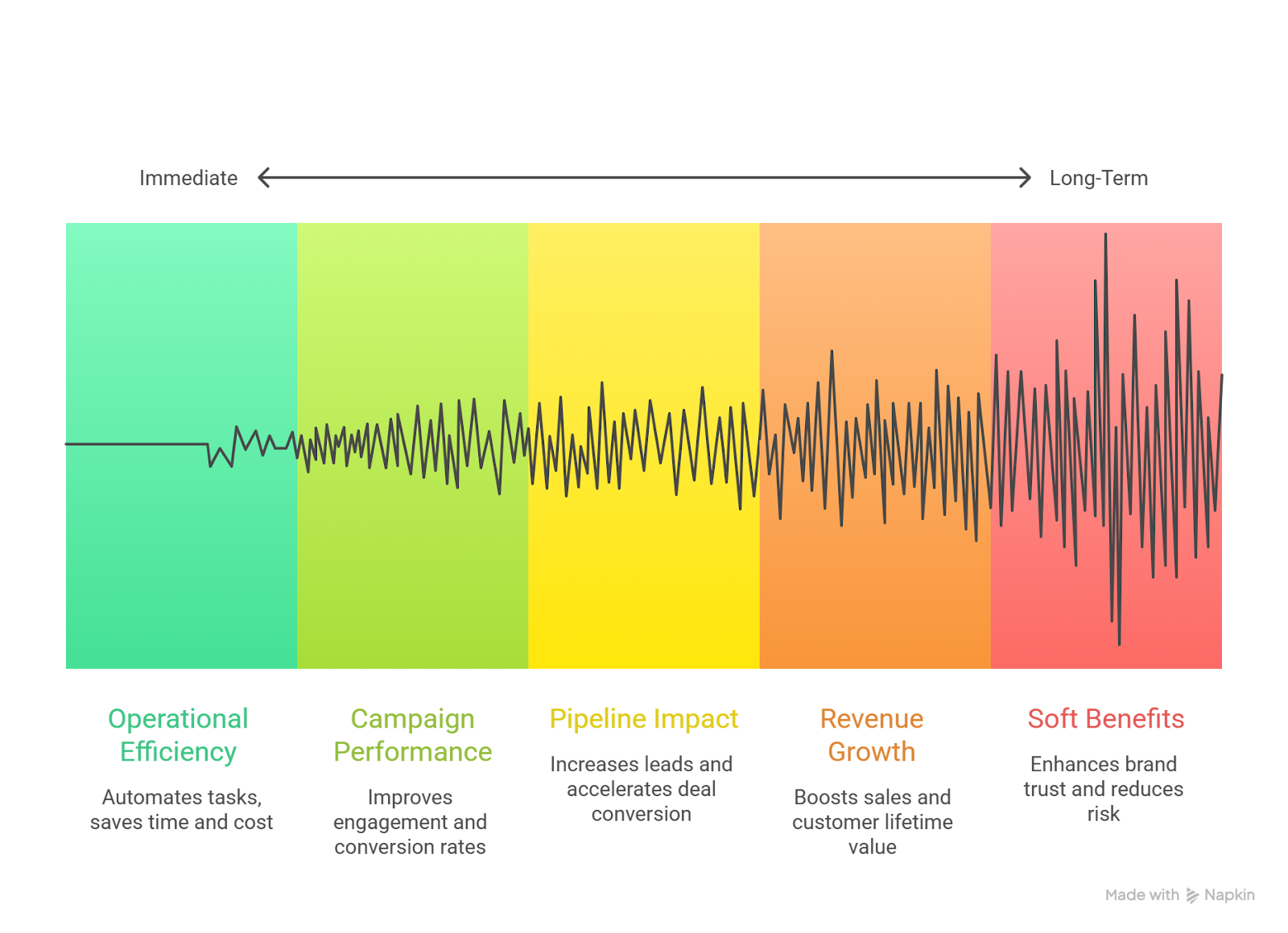
In 2026, simply adopting AI marketing tools is no longer enough. Marketing leaders are expected to demonstrate clear business impact, linking AI usage directly to revenue, pipeline growth, and operational efficiency. Measuring ROI requires a structured approach that goes beyond “hours saved” or “content generated.”
1. Define the Right Metrics
Before you evaluate any tool, decide what success looks like for your team. Common metrics include:
- Operational Efficiency: Time and cost savings from automating repetitive tasks.
- Pipeline Impact: Increase in qualified leads, faster lead-to-deal conversion, or reduced customer acquisition cost (CAC).
- Revenue Growth: Lift in sales, cross-sell or upsell performance, or higher lifetime value (LTV) of customers.
- Campaign Performance: Engagement rates, conversion rates, impressions, and ROI per channel.
Tip: Focus on outcome-driven metrics rather than vanity metrics like “number of AI-generated assets.”
2. Track Multi-Touch Attribution
AI tools often touch multiple stages of the marketing funnel. To measure ROI accurately:
- Use campaign tracking to monitor which assets influence conversions.
- Map AI-generated content across touchpoints: email sequences, social media, landing pages, or demo videos (like Puppydog.io outputs).
- Apply multi-touch attribution models to assign credit where AI contributions accelerate deals or pipeline velocity.
Benchmark: Companies integrating AI across the funnel report 5x higher ROAS on campaigns where AI-generated personalization is applied.
3. Compare Before vs After AI Implementation
To quantify improvements:
- Track baseline metrics before deploying AI tools (e.g., average content production time, cost per lead, CAC).
- Measure post-deployment performance after automation, personalization, or workflow optimization.
- Evaluate gains in both efficiency and revenue contribution.
Example:
- Jasper’s AI agents reduced content production time by 57% and operating costs by 45% for enterprise teams.
- HeyGen’s personalized video campaigns increased click-through rates by 200–300% and watch-through rates by 80%.
4. Leverage Built-In Analytics
Most modern AI marketing platforms provide performance dashboards and predictive analytics:
- Writesonic GEO tracking monitors brand presence in AI-powered search environments.
- Canva Enterprise and Marq track creative asset usage, localization efficiency, and content deployment ROI.
- Puppydog.io measures demo engagement, viewer interaction, and conversion impact per video.
Tip: Use these insights to prioritize high-impact campaigns and optimize future content production.
5. Factor in Soft Benefits
Not all ROI is immediate revenue. Consider qualitative gains that impact long-term business outcomes:
- Faster time-to-market allows teams to respond to market trends in real-time.
- Consistent brand voice and quality enhance customer trust and LTV.
- Automated governance reduces compliance risk and audit overhead.
Even if these benefits aren’t directly measurable in dollars, they contribute to scalable, sustainable growth.
6. Establish an ROI Review Cadence
Make ROI measurement a regular, repeatable process:
- Monthly: Track campaign performance and operational efficiency.
- Quarterly: Compare metrics against strategic business goals (CAC, LTV, pipeline growth).
- Annually: Review tool mix, integration success, and long-term value delivered.
This approach ensures that AI adoption is not just a trend, but a strategic investment aligned with business outcomes.
ROI from AI marketing tools is multi-dimensional. It combines operational efficiency, pipeline impact, revenue contribution, and brand consistency. The most successful teams in 2026 don’t just deploy AI, they measure, optimize, and tie every tool to tangible business outcomes, turning AI into a revenue-generating engine.
Conclusion: Embrace AI Marketing for Measurable Growth
AI marketing in 2026 is no longer about hype. it’s about driving real business outcomes. From copy and design to video personalization, the right tools can accelerate campaigns, reduce costs, and boost revenue. For teams ready to unlock these results, Puppydog.io offers a powerful way to create high-impact product demo videos that convert.
Start transforming your marketing today with Puppydog.
Frequently Asked Questions (FAQs)
What challenges do teams face when implementing AI marketing tools?
Common challenges are governance gaps, fragmented workflows, unclear ownership, and difficulty measuring direct revenue impact. Teams also struggle with integration overhead, data silos, and upskilling staff to use AI responsibly.
Should I be using more AI tools to stay competitive?
Not necessarily, usefulness beats quantity. Focus on tools that solve a specific bottleneck (speed, personalization, or quality) and tie directly to measurable outcomes like CAC, conversion rate, or time-to-market.
How do I know if a tool is worth keeping?
Measure usage, alignment to KPIs, and ROI: is it reducing costs, improving conversions, or shortening campaign cycles? If adoption is low, integrations are weak, or the cost-benefit doesn’t materialize after a trial, it’s a candidate to retire.
What outcomes should I track to evaluate AI tools?
Track operational efficiency (hours/cost saved), pipeline impact (qualified leads, conversion velocity), revenue lift (new ARR, upsell), and campaign performance (CTR, conversion rate, ROAS). Also track soft metrics like time-to-market and brand consistency.
How do I avoid AI tool overload?
Run a technology audit, map which tools touch each workflow, consolidate overlapping capabilities, enforce integration standards, and set a quarterly ROI review cadence. Choose fewer tools that plug into your stack cleanly.
What if I already use an all-in-one platform?
All-in-one platforms are great for speed and simplicity; keep using them for day-to-day ops. If you need deeper specialty (e.g., cinematic video or GEO optimization), bolt on a best-in-class tool and manage it via a lightweight governance layer.
What are the best AI marketing tools for improving ROI?
ROI depends on fit and use case: demo automation platforms (Puppydog.io) tend to lift demo-to-pipeline conversion; GEO/SEO tools (Writesonic) help organic reach; orchestration and copy agents (Jasper, Copy.ai, Writer) reduce time-to-market. Pick tools aligned to the metric you want to move.
How do AI marketing tools help marketing teams drive measurable ROI?
They speed content production, enable granular personalization at scale, automate repurposing, and improve testing velocity, each shortening experiment cycles and increasing conversion opportunities, which directly affects CAC and LTV.
What should marketing teams look for when choosing AI tools?
Look for measurable impact (case studies, dashboards), security/compliance, integration ability (APIs), governance features (brand kits, template locking), and pricing that scales with value rather than usage alone.
Are AI marketing tools worth the investment for small teams?
Yes, if selected wisely. Small teams should prioritize affordable all-in-one or hybrid stacks that accelerate time-to-value and automate high-ROI tasks like email personalization, social creative, and demo videos.
Which AI marketing tools deliver the highest ROI?
Tools that automate core revenue workflows typically deliver the fastest ROI: demo/video automation for sales, SEO/GEO platforms for organic growth, and workflow automation tools that convert long-form content into multi-channel assets.
How can marketers measure ROI from AI marketing tools?
Set baselines, use multi-touch attribution, track before/after metrics (CAC, conversion rate, deal velocity), and leverage built-in analytics from the tools. Combine quantitative results with periodic qualitative reviews (adoption, brand quality).
What marketing tasks benefit most from AI automation?
High-volume, repetitive, or scale-dependent tasks and creative variants, landing page copy, product demos, content repurposing, transcription and editing, localization, and campaign personalization benefit the most.
How do AI marketing tools reduce customer acquisition costs (CAC)?
By producing more targeted creatives faster, enabling A/B testing at scale, improving relevance with personalization, and reducing agency or production spend, resulting in more efficient spend per acquisition.
What is the best AI tool for marketing content creation?
It depends on needs: for enterprise GTM orchestration and brand depth, platforms like Jasper or Writer excel; for SEO and product catalog scale, Writesonic is strong; for workflow automation from recordings, Copy.ai is useful. Choose by outcome: speed, SEO impact, or governance.
What is the best AI tool for marketing design and creatives?
For broad, team-level design and brand governance, Canva Enterprise and Adobe Express are the most practical; Marq is excellent where CRM-driven personalization and locked templates are required.
What AI tools are best for video marketing?
For product demo automation and demo-to-pipeline lift, Puppydog.io is the top pick; for avatar-led personalization, use HeyGen; for cinematic, story-driven work, use LTX Studio; for enterprise training and localization, use Synthesia.
What are the best AI tools for podcast and audio marketing?
Descript and Riverside are the go-to platforms for transcription-first editing and studio-quality remote recording; ElevenLabs and Adobe Podcast are best for voice cloning, enhancement, and scalable localization.
How do you build an AI marketing stack without tool overload?
Start with a capability map: list the outcomes you need, then pick one tool per capability and require API compatibility. Establish governance (brand kits, template locks) and a quarterly review to retire or replace tools based on ROI.
Should marketing teams use all-in-one AI platforms or specialized tools?
Both use an all-in-one for day-to-day content efficiency and add specialized best-in-class tools for mission-critical capabilities where depth matters. A hybrid approach balances speed and performance.
What is the biggest mistake teams make when adopting AI marketing tools?
The biggest mistake is treating AI like a set of point solutions rather than core infrastructure: lack of measurement, no governance, and failing to define who owns outputs and outcomes.
How do AI engines like ChatGPT and Perplexity choose sources to cite?
Retrieval-augmented systems (like some Perplexity modes) actively fetch web content and cite sources they used. Pure LLM responses (like base ChatGPT without browsing) generate answers from learned patterns and don't reliably cite live sources unless combined with a retrieval layer.
How can I optimize my blog so AI tools cite it more often?
Create authoritative, original content; use clear structure and schema (structured data); publish accurate, well-sourced analysis; update content frequently; and build backlinks from reputable sites. Also optimize for semantic keywords and E-A-T (expertise, authority, trust).
What content format performs best for AI search visibility?
Concise, well-structured answers, FAQs, how-to guides, and authoritative long-form content with clear sections and schema markup tend to perform well in AI-driven discovery and generative search.
What are the best AI marketing tools for B2B teams?
B2B teams benefit from demo automation (Puppydog.io), GTM orchestration and copy agents (Jasper, Copy.ai, Writer), SEO/GEO tools (Writesonic), and robust audio/video repurposing tools (Descript, Riverside).
What are the best AI marketing tools for startups?
Startups should prioritize cost-effective, fast-to-deploy tools: Canva or Adobe Express for creative, Copy.ai or Writesonic for content, and Puppydog.io or HeyGen for high-impact demo or personalized outreach where immediate pipeline impact is needed.

Sarah Thompson is a storyteller at heart and Business Developer at PuppyDog.io. She’s passionate about creating meaningful content that connects people with ideas, especially where technology and creativity meet.